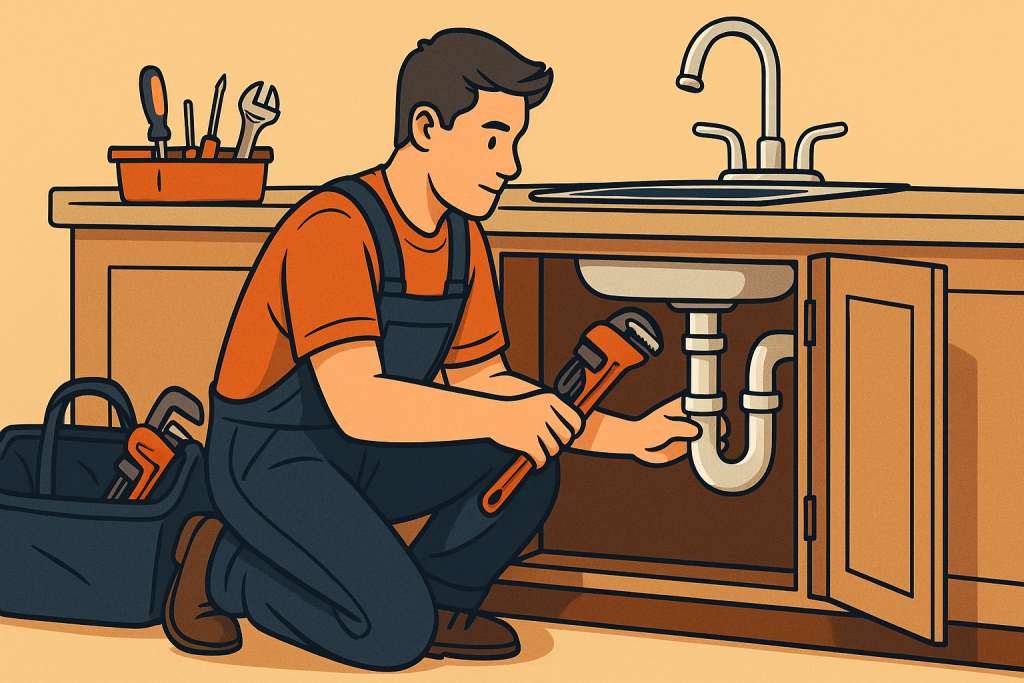
Many homeowners enjoy tackling small projects themselves, and plumbing is no exception. Whether it’s saving money or gaining confidence with tools, DIY plumbing can be rewarding. But it’s also filled with risks. One wrong move could lead to flooding, code violations, or major water damage. Knowing what you can legally and safely handle is essential.This guide walks you through which DIY plumbing repairs are typically safe and allowed—and which require a licensed plumber under California code or best practice.
DIY Plumbing Tasks You Can Usually Do Yourself
1. Unclogging Drains
Using a plunger, baking soda and vinegar, or a hand-crank drain snake to clear slow or clogged drains is usually safe and effective. Avoid harsh chemical drain cleaners that can damage pipes.
2. Replacing Faucet Aerators and Showerheads
These are easy to unscrew and clean or replace. No plumbing permit is needed for swapping a clogged aerator or upgrading to a water-efficient showerhead.
3. Fixing a Running Toilet
Replacing a flapper, fill valve, or float is a simple fix that requires no special tools or permits. Many homeowners can do this repair in under 30 minutes.
4. Installing a New Faucet
As long as the plumbing connections are compatible and no pipes are being moved, replacing a sink faucet is a common DIY project. Be sure to shut off water at the local shut-off valves before beginning.
5. Replacing a Dishwasher or Washing Machine Hose
Replacing supply hoses or drain hoses on appliances is generally safe, as long as you use the correct fittings and double-check for leaks after installation.
Plumbing Repairs That Require a Licensed Professional
1. Moving Pipes or Reworking Supply Lines
Moving or extending plumbing lines requires permits and code compliance. Mistakes can lead to major water damage or failed inspections.
2. Water Heater Repairs and Installations
In California, installing or even relocating a water heater requires a plumbing permit and compliance with venting, safety, and seismic strapping regulations. Call a licensed plumber like Zenon Plumbing for this work.
3. Sewer Line Work
Repairing or replacing sewer lines involves excavation, camera inspections, and code-compliant connections. DIY errors here can cause environmental and health issues.
4. Gas Line Repairs
Never attempt to work on gas lines yourself. Mistakes can lead to serious safety risks including fire, explosion, or carbon monoxide exposure.
5. Whole-Home Repiping
Replacing all the plumbing in your home is a major project. Not only does it require permits and code knowledge, but improper pipe routing or poor connections can lead to serious structural issues.
Legal Considerations: DIY Plumbing in California
California law allows homeowners to perform certain repairs themselves, but any work involving alterations to existing plumbing systems often requires permits and inspections. If you’re unsure whether your project is allowed, it’s best to consult your local building department or a licensed contractor.
Zenon Plumbing: Your Partner for Safe and Legal Repairs
At Zenon Plumbing, we believe in empowering homeowners to do simple plumbing fixes safely—and stepping in when it’s time for a professional. We handle complex plumbing projects, permitting, inspections, and emergency repairs throughout Los Angeles. Book an appointment today using our online form.
FAQs About DIY Plumbing Repairs
Can I do my own plumbing in California?
Yes, for minor repairs like changing a faucet or clearing a drain. But any major modifications or installations typically require a permit and inspection.
Do I need a permit to replace a toilet?
No permit is typically needed to replace an existing toilet, but check your city’s specific regulations to be safe.
What happens if I do illegal plumbing work?
You could face fines, insurance claim denial, or serious damage to your home. Always consult professionals when in doubt.
When should I not do plumbing myself?
If the repair involves gas lines, moving pipes, or changes to water heater or sewer lines, hire a licensed plumber.
Talk to a plumber
Real plumbing problem? Skip the article — call.
24/7 dispatch across LA County. Average response time: 45 minutes.
 Mon-Sat 9AM-6PM
 Make an
Appointment (818) 640-2944
Make an
Appointment (818) 640-2944 2115 W Magnolia Blvd Unit C, Burbank, CA 91506