 Mon-Sat 9AM-6PM
 Make an
Appointment (818) 640-2944
Make an
Appointment (818) 640-2944 2115 W Magnolia Blvd Unit C, Burbank, CA 91506
Water Damage After a Plumbing Leak: What to Do in the First Hour
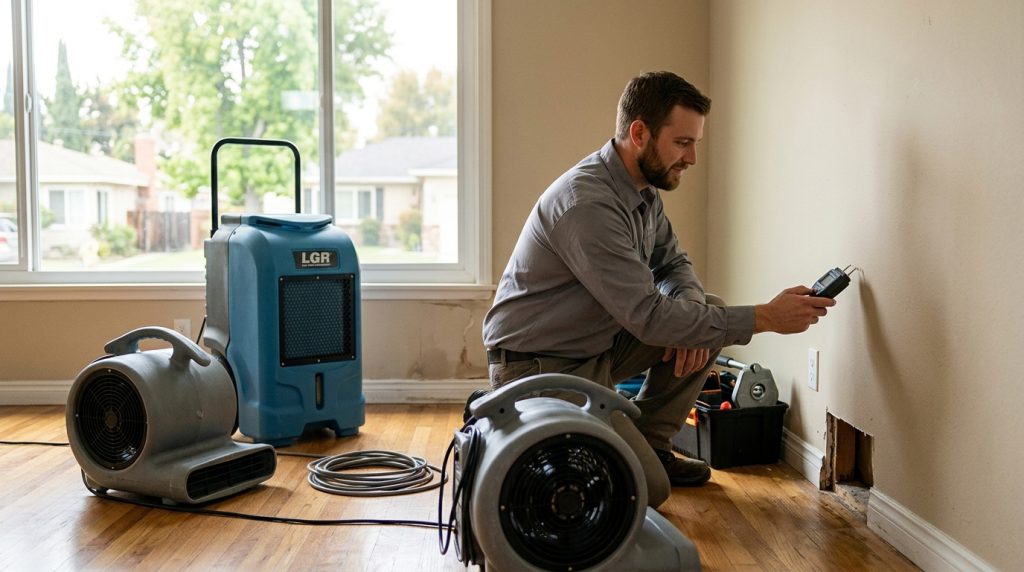
Fast answer: If a plumbing leak has left water on floors, walls, cabinets, or ceilings, start by stopping the water source if you can do it safely, move people and pets away from wet areas, avoid electrical hazards, and begin documenting what happened. Then call for plumbing help and water-damage guidance before moisture has time to spread deeper into drywall, flooring, and baseboards.
Water damage after a plumbing leak can feel chaotic because two problems are happening at once: the plumbing failure that caused the leak, and the moisture that remains after the water is shut off. The first hour is about limiting damage without taking unsafe risks or guessing at what is happening inside the wall or floor.
What should you do first after a plumbing leak causes water damage?
The safest first step is to control the source of water. If the leak is coming from a fixture supply line, toilet, sink, appliance connection, or visible pipe, use the closest shutoff valve if you know where it is and can reach it safely. If you cannot find a local valve, the main shutoff may be the better option.
Do not stand in water near outlets, electrical panels, extension cords, plugged-in appliances, or ceiling fixtures. If water is close to electrical equipment, back away and wait for professional help. It is not worth trying to save a cabinet or towel load if there is any chance of electrical contact.
- Shut off the water source if it is safe and obvious.
- Keep children, pets, and foot traffic away from wet rooms.
- Move dry belongings out of the path of spreading water.
- Take photos and short videos before moving too much.
- Call for help if the leak is active, hidden, or affecting walls, floors, or ceilings.
When is water damage from a leak more urgent?
A small puddle under a sink is different from water running into flooring, cabinets, drywall, or a downstairs ceiling. The more porous materials are involved, the faster the situation can become harder to dry correctly.
Call for help quickly if you see water spreading across flooring, dripping from a ceiling, soaking baseboards, entering a cabinet toe-kick, or coming from a wall you cannot open or inspect. Those signs can mean the visible water is only part of the problem.
For active leaks or urgent plumbing problems, Zenon’s water damage restoration support can help homeowners think through the next steps after the plumbing issue is under control.
Should you start drying the area yourself?
You can take simple steps, but keep the limits clear. If the area is safe, remove standing water with towels or a wet/dry vacuum designed for that use. Open nearby interior doors to improve air movement. Move rugs, boxes, paper items, and small furniture out of wet areas when they can be moved without spreading water through the house.
Do not open walls, pull up flooring, cut drywall, or disturb materials that may be contaminated or structurally affected. Do not use household fans if there is any electrical concern. And do not assume a surface is dry just because it feels dry to the touch. Moisture can remain behind baseboards, under flooring, inside cabinets, and in wall cavities.
If you smell mustiness, see staining, notice bubbling paint, or find dampness that keeps returning, the issue needs a closer look. A plumber or restoration professional can check the source and help determine whether drying equipment or additional inspection is needed.
What should you document in the first hour?
Before heavy cleanup begins, document the condition of the area. Photos are helpful because leaks change quickly once water is shut off and cleanup starts. Take wide photos of the room, closeups of the leak source if visible, and pictures of affected flooring, cabinets, walls, ceilings, and belongings.
Write down the time you first noticed the leak, what you did to stop the water, and any rooms or materials affected. If you are a tenant, property manager, or homeowner dealing with shared walls or upstairs/downstairs units, clear notes help everyone understand the sequence of events.
This documentation is not a substitute for professional evaluation, and it should not delay stopping an active leak. But once the immediate water source is controlled, it is worth capturing what happened while the evidence is still clear.
How do you know whether the plumbing leak is fully fixed?
Be careful with “it stopped, so it is fixed” thinking. Some leaks stop only because a valve was closed or because pressure changed. Others slow down, then return when a fixture, appliance, or irrigation line runs again.
Watch for repeat dampness, new stains, low water pressure, warm spots on flooring, running-water sounds, or a water meter that moves when fixtures are off. These do not prove one specific cause, but they are good reasons to have the plumbing system checked before repairing cosmetic damage.
In older Burbank and Los Angeles-area homes, plumbing materials, crawl spaces, slab foundations, additions, and past repairs can make leaks less obvious from the surface. A practical local approach is to find and stabilize the source first, then deal with drying and repairs in the right order.
What should you avoid after water damage from a plumbing leak?
In the rush to clean up, homeowners sometimes create bigger problems by moving too fast. Avoid painting over stains, closing wet cabinets without drying, putting rugs back too soon, or assuming a quick mop means the area is finished.
Also avoid strong claims or guesses about mold, structural damage, or safety without an in-person inspection. Moisture problems can vary widely depending on the source of the water, the materials affected, how long the water sat, and how much ventilation the area has.
- Do not ignore damp baseboards or swelling cabinets.
- Do not plug in fans or tools near wet outlets or standing water.
- Do not make hidden leak repairs based only on guesswork.
- Do not close up walls or flooring until the source and moisture concern are understood.
When should you call Zenon?
Call when the leak is still active, the source is hidden, water has reached walls or flooring, or you are not sure whether the area is drying correctly. A calm first-hour response can reduce the chance of secondary damage and help you avoid paying for cosmetic repairs before the plumbing issue is actually handled.
Zenon Plumbing & Restoration serves Burbank and nearby Los Angeles-area homeowners with practical plumbing and restoration support. The goal is simple: identify the source, stop the water, and help you take the next right step without panic or guesswork.
Zenon Plumbing & Restoration
Need help after a plumbing leak?
If water is spreading or you are unsure what is wet behind the surface, call Zenon for practical help in Burbank. Phone answered 24/7, on-site Mon-Sat 9 AM–6 PM.


