 Mon-Sat 9AM-6PM
 Make an
Appointment (818) 640-2944
Make an
Appointment (818) 640-2944 2115 W Magnolia Blvd Unit C, Burbank, CA 91506
What to Do If a Ceiling Starts Dripping After an Upstairs Plumbing Leak
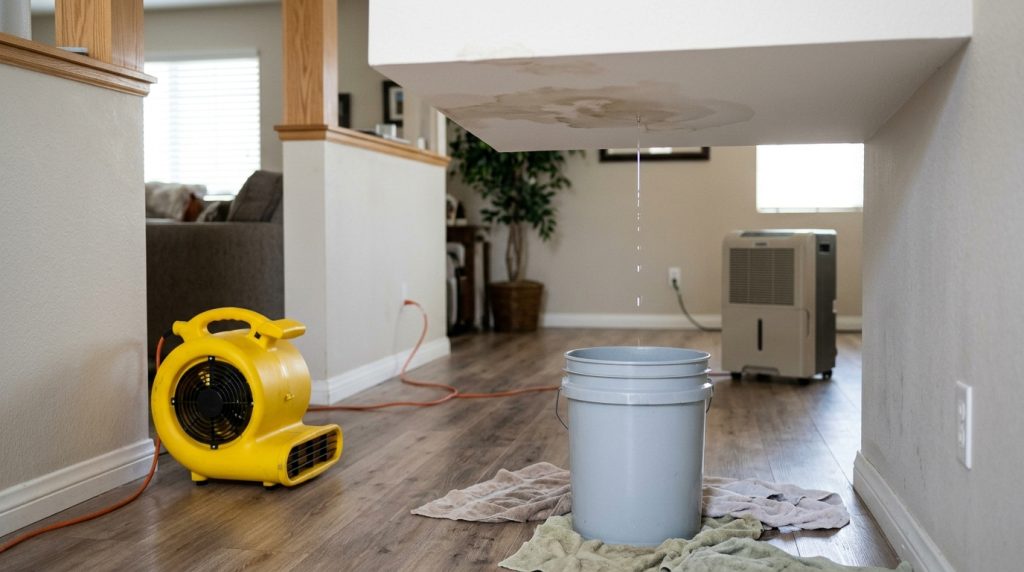
A dripping ceiling after an upstairs plumbing leak is one of those problems that needs a calm, fast response. The short version: stop the water source if you can do it safely, keep people away from the wet area, protect what you can, and get the plumbing and moisture issue checked before patching paint or drywall.
A ceiling drip can come from a toilet supply line, tub or shower drain, sink line, water heater, appliance hose, or another upstairs fixture. From below, it is not always obvious which one is responsible. That is why the first goal is not to guess the exact repair. The first goal is to limit water spread and make the area safer until the source can be inspected in person.
Fast answer: what to do first when the ceiling starts dripping
If water is actively dripping through the ceiling, take these first steps:
- Move people, pets, and valuables away from the wet ceiling and floor below.
- Do not stand under a bulging ceiling. Sagging drywall can release suddenly when it is holding water.
- Shut off the nearby fixture valve if the leak appears connected to a toilet, sink, washing machine, or water heater and you can reach the valve safely.
- Use the main water shut-off if the leak is active and you cannot identify the fixture source quickly.
- Avoid electrical risks. If water is near lights, outlets, fans, or the breaker panel, keep away and call for professional help.
- Take photos of the ceiling, upstairs fixture area, and any damaged belongings before cleanup if it is safe to do so.
Once the active leak is under control, the next question is whether the ceiling and surrounding materials are simply wet on the surface or whether water has moved into drywall, insulation, framing cavities, flooring, or wall assemblies. That part usually needs an in-person moisture check, not a guess from the room below.
Common upstairs plumbing sources behind a ceiling drip
In Burbank and nearby Los Angeles-area homes, ceiling leaks often trace back to ordinary upstairs plumbing parts rather than one dramatic pipe burst. Some common sources include:
- Toilet supply lines or shutoff valves that leak around the connection or valve stem.
- Wax ring or toilet base leaks that show up below after flushing.
- Tub overflow or shower drain problems that leak only when someone bathes or showers.
- Sink drain or P-trap leaks inside a vanity cabinet.
- Washing machine hoses or drain standpipe overflows in an upstairs laundry area.
- Water heater leaks if the heater is in an attic, closet, or upper-level utility area.
- Pressurized water line leaks that keep dripping even when fixtures are not being used.
The pattern matters. A drip that appears only during a shower points in a different direction than a steady drip that continues even when no fixture is running. Still, the pattern is just a clue. A plumber needs to inspect the upstairs fixtures, nearby supply lines, drains, and the affected ceiling area before calling the cause.
Should you poke a hole in a dripping ceiling?
Homeowners often hear that they should puncture a ceiling bubble to drain trapped water. That can sometimes reduce the chance of a sudden uncontrolled release, but it is not always safe as a DIY step. If the ceiling is sagging badly, if water is near electrical fixtures, or if you are not sure what is above the spot, do not stand under it or start cutting into drywall.
If the area looks stable and water is already dripping through a small opening, you can place a bucket below and protect the floor. For anything larger, spreading, electrical-adjacent, or structural-looking, it is better to stay clear and get help. The safest move is usually to stop the water source first, then let the ceiling area be evaluated before opening materials.
Why the ceiling can keep dripping after the water is shut off
A ceiling may continue dripping for a while after the fixture valve or main shut-off is closed. That does not always mean the shut-off failed. Water can sit inside insulation, drywall, ceiling cavities, light housings, or flooring layers and continue draining downward. In some cases, a leak that ran for only a short time upstairs can still leave enough water in the ceiling assembly to drip below.
That is one reason cleanup should not stop at wiping the floor. If the ceiling, wall, or flooring system stays wet, hidden moisture can create bigger repair problems later. Zenon’s Burbank water damage restoration service can help with the plumbing-related dry-out side after a leak, but the right approach depends on what is wet, how long it was wet, and whether building materials need to be opened.
What not to do while waiting for help
A few actions can make the situation worse or harder to diagnose:
- Do not keep testing the upstairs fixture over and over to “see if it still leaks.” More testing can send more water into the ceiling.
- Do not paint over a stain until the leak source is fixed and the material is confirmed dry.
- Do not run fans into hidden cavities blindly if there may be contaminated water, electrical exposure, or trapped moisture behind finished surfaces.
- Do not assume a small stain means a small leak. The visible mark is only where water appeared, not necessarily where it started.
- Do not remove large sections of ceiling without understanding what is above and whether the area is safe.
For a small, clean drip from a known fixture, a homeowner may be able to shut off the fixture valve, place towels, and wait for a scheduled inspection. For active water, sagging drywall, electrical-adjacent moisture, sewage-related overflow, or a leak that cannot be stopped, treat it as urgent.
How a plumber thinks through a ceiling leak
A good inspection starts with the simplest question: what is directly above the wet area? From there, the plumber may check nearby fixture valves, supply lines, drains, caulking transitions, toilet movement, tub overflow connections, and whether the leak happens under pressure or only when a fixture drains.
Sometimes the first visible drip is several feet away from the actual source because water travels along framing, pipes, or drywall seams before finding a low point. That is why “the spot on the ceiling” and “the actual plumbing problem” are not always in the same vertical line.
If moisture has spread beyond the immediate drip area, the restoration side may involve checking adjacent drywall, baseboards, cabinets, flooring, and ceiling cavities. The goal is not to make scare claims. It is to avoid closing everything up while material is still wet.
Local note for Burbank and LA-area homes
Many Burbank and Los Angeles-area properties have a mix of older building materials, remodel history, tight bathrooms, and plumbing that has been updated in stages. A ceiling drip may involve old piping in one area and newer fixture connections in another. Apartment and condo layouts can also make the source less obvious because the affected ceiling may sit below a neighbor’s bathroom, laundry area, or shared wall condition.
If you rent, contact the property manager quickly and document the issue. If you own the home, keep photos and notes showing when the leak started, what fixture was being used, and what shut-off steps were taken. Those details help the plumber narrow the source and help you keep a clean record of what happened.
When to call instead of waiting
Call for help if the ceiling is sagging, water is near electrical fixtures, the drip continues after shut-off, the upstairs source is unclear, the water covers a large area, or the ceiling leak followed a toilet overflow or drain backup. You should also call if the same stain returns after drying, because that usually means the source was not fully resolved.
Need help with an active ceiling drip or plumbing-related water damage? Call (818) 640-2944. Phone answered 24/7, on-site Mon-Sat 9 AM–6 PM.
Zenon Plumbing & Restoration
If a ceiling leak is spreading, shut off the water if safe and request help from Zenon. You can call (818) 640-2944 or use the contact page to reach the team.


