 Mon-Sat 9AM-6PM
 Make an
Appointment (818) 640-2944
Make an
Appointment (818) 640-2944 2115 W Magnolia Blvd Unit C, Burbank, CA 91506
Water Stains on Baseboards: Leak or Spill? How to Think Through It
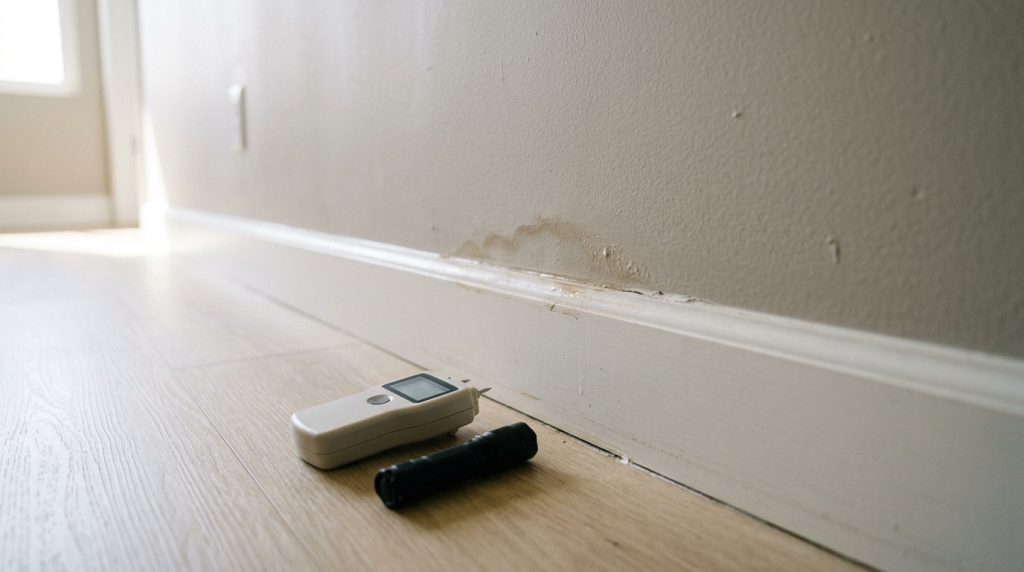
Water stains along a baseboard can be confusing because they do not always point to the same problem. Sometimes the cause is simple: a spill, a pet bowl, a recently mopped floor, or moisture tracked in from outside. Other times, that mark is the first visible clue that water is moving behind a wall, under flooring, or from a nearby plumbing line.
The fast answer: if a baseboard stain appears once, dries quickly, and has an obvious cause, you can usually clean it up and keep an eye on it. If it grows, returns, feels soft, smells musty, or appears near a bathroom, kitchen, laundry area, water heater, or exterior wall with plumbing nearby, treat it as a possible leak until a professional can inspect it. Do not open walls, cut flooring, or assume the source without seeing what is happening behind the surface.
Start With the Simple Question: Did Something Spill?
Before jumping straight to a leak, look for the ordinary explanations. Baseboards sit right where daily water accidents happen. A drink spills and runs toward the wall. A dog bowl gets knocked over. A child splashes bathwater. A mop leaves too much water along the edge of the room. In apartments and older Burbank homes, even condensation near a poorly ventilated area can leave a mark that looks worse than it is.
A likely spill usually has a clear event attached to it. The area may be wet on the surface, but the wall above it looks normal. The stain does not keep spreading after you dry it. The baseboard stays firm, and there is no repeating moisture after a day or two.
If that sounds like your situation, dry the area with towels, improve airflow, and check it again later. Take a photo with the date if you want an easy comparison. A stain that stays the same is very different from one that keeps creeping along the trim.
Signs the Baseboard Stain Could Be From a Plumbing Leak
A plumbing leak is more likely when the stain does not behave like a one-time accident. Watch for patterns instead of trying to diagnose the exact pipe yourself.
- The stain grows wider or darker over time.
- The baseboard feels swollen, soft, warped, or separated from the wall.
- Paint bubbles, peels, or looks wavy above the trim.
- The floor feels damp near the wall even after you dry it.
- The spot appears near a bathroom, kitchen, laundry line, water heater, or refrigerator water line.
- You notice a musty odor or recurring dampness.
- Your water bill has changed without an obvious reason.
One clue by itself does not prove a leak. But several clues together are enough reason to stop guessing and have the area checked. Water can travel along framing, flooring, and baseboards before it shows up where you can see it.
Why Baseboard Stains Can Be Tricky in Older LA-Area Homes
Many homes around Burbank, Glendale, and Los Angeles have been remodeled in layers. A bathroom may share a wall with a bedroom. A kitchen line may run behind cabinetry and then disappear behind trim. Flooring may have been replaced without fully exposing older plumbing routes. That can make a baseboard stain look isolated even when the actual source is several feet away.
Older housing stock can also hide small problems longer. A slow drip behind a wall, a failing angle stop, a refrigerator supply line, or moisture near a slab edge may not create a dramatic puddle. It may show up first as a stain, warped trim, or a soft corner near the floor.
That is why the safest homeowner approach is not to guess the final cause. The goal is to narrow what you can observe, reduce further water exposure, and call for inspection when the signs point beyond a simple spill.
Safe First Steps Before You Call Anyone
If the area is actively wet, start with basic, safe steps. Do not remove drywall or flooring, and do not disturb materials if you suspect contamination, mold, or electrical risk nearby.
- Dry the surface. Use towels to remove visible water around the baseboard and floor.
- Move furniture away. Give the wall and trim space to breathe and prevent damage to nearby items.
- Improve airflow. If it is safe, use a fan and open interior doors. Avoid blowing air into wall cavities you have opened yourself.
- Check nearby fixtures. Look under sinks, around toilets, behind appliances, and near the water heater for obvious dripping.
- Look for active water. If water is still appearing, shut off the closest fixture valve if you can do so safely.
- Use the main shutoff for major leaks. If water is spreading quickly and you cannot isolate it, shut off the home’s main water valve if you know where it is and can access it safely.
If the stain is near outlets, electrical panels, ceiling water, or significant standing water, do not touch wet electrical areas. Step back and get professional help.
When It Is Reasonable to Monitor the Spot
Monitoring can make sense when you have a clear spill, the surface dries, and nothing changes after a short period. The key is to actually monitor it, not forget about it.
Mark the edge of the stain lightly with painter’s tape, or take a photo from the same angle each day. Check whether the trim feels firm. Notice whether the odor changes. If the area stays dry and the stain does not grow, you may be dealing with cosmetic damage rather than an active plumbing issue.
Still, be honest about the pattern. A stain that dries in the afternoon but returns in the morning may be tied to shower use, toilet supply, irrigation, condensation, or another repeating water source. That is not the same as a one-time spill.
When to Schedule Leak Detection
Schedule a plumbing inspection when the stain grows, comes back, appears without a known spill, or sits near active plumbing. You should also get help if the baseboard is swollen, the floor is soft, or there is a musty odor. These signs do not prove the source, but they do mean the area should be checked before more materials are affected.
Zenon’s leak detection service can help homeowners narrow down whether moisture near a baseboard is tied to a plumbing line, fixture, or another source that needs follow-up. The important part is not guessing from the stain alone. A proper look at nearby fixtures, pressure behavior, visible moisture, and the surrounding area gives you a clearer next step.
What Not to Do With a Baseboard Water Stain
A few common reactions can make the situation harder to diagnose or repair later.
- Do not paint over it right away. Paint can hide whether the stain is growing.
- Do not keep mopping the same area without checking why it stays damp. Repeated moisture can damage trim and flooring.
- Do not cut into walls as a first step. You may miss the source or create more damage than needed.
- Do not assume it is mold. A musty smell or dark mark deserves caution, but the source should be inspected instead of guessed.
- Do not ignore a recurring stain because it seems small. Small visible signs can come from hidden moisture.
A Local Trust Note for Burbank Homeowners
Homes in the Burbank and greater Los Angeles area often have a mix of older plumbing, remodeled rooms, slab foundations, tight utility spaces, and hard-to-see water lines. That makes practical troubleshooting important. A calm inspection-first approach protects the home better than panic, but it also works better than waiting until a small stain becomes a bigger floor, wall, or trim problem.
For a free estimate or help figuring out the next step, contact Zenon Plumbing & Restoration. Phone answered 24/7, on-site Mon-Sat 9 AM–6 PM.
Bottom Line
A baseboard water stain is not automatically a plumbing leak, but it should not be ignored when it grows, returns, smells musty, or appears near plumbing. Dry what you can safely dry, look for obvious nearby fixture issues, document whether the mark changes, and call for inspection if the stain keeps coming back. The sooner you know whether water is still moving, the easier it is to choose the right repair path.
Zenon Plumbing & Restoration
Need help with this plumbing problem in Burbank? Call (818) 640-2944. Phone answered 24/7; on-site service Mon-Sat 9 AM–6 PM.


