 Mon-Sat 9AM-6PM
 Make an
Appointment (818) 640-2944
Make an
Appointment (818) 640-2944 2115 W Magnolia Blvd Unit C, Burbank, CA 91506
Washing Machine Hose Leak: What LA Homeowners Should Do Before Drywall Gets Worse
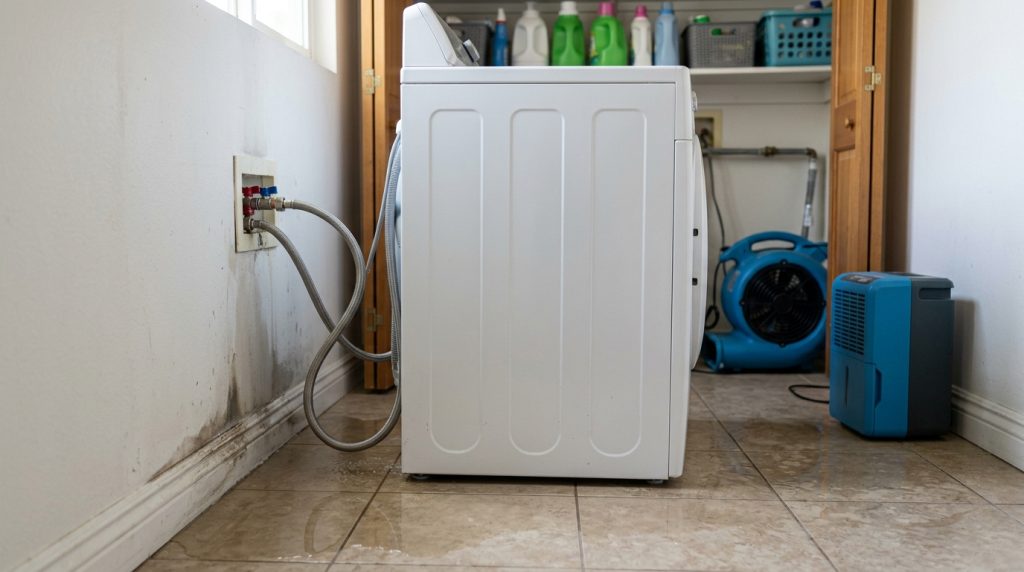
A washing machine hose leak can move fast. If water is coming from behind or around the washer, the first move is to stop the water source if you can do it safely, protect nearby electrical outlets and appliances, and keep people away from slippery flooring. Then check whether water has reached the wall, baseboard, hallway, or room below.
The short answer: a small laundry-room leak can still become a drywall and flooring problem when water sits behind the washer, under the baseboard, or inside the wall cavity. LA homes and apartments often have laundry spaces tucked into closets, hallways, garages, or upstairs areas where water can spread before anyone notices. If the area is more than surface-wet, or if the leak came from a pressurized supply hose, it is smart to get the plumbing source checked and start drying the affected materials quickly.
First, stop the washer leak if it is safe
Do not pull the washing machine forward if water is near an outlet, the floor is slippery, or the washer feels unstable. If you can safely reach the shutoff valves behind the washer, turn the hot and cold valves clockwise until they stop. Many laundry hookups have two small valves mounted in a recessed box. In older LA properties, the valves may be stiff, corroded, or hard to reach, so do not force them if they feel like they might break.
If water is still running and you cannot stop it at the laundry box, look for the home’s main shutoff valve. For apartments or condos, notify the property manager, HOA, or building maintenance right away. A washing machine hose is usually under pressure, so waiting to “see if it slows down” can let more water into the wall or flooring.
- Turn off the washer and avoid using the machine again until the source is checked.
- Keep children and pets away from wet floors.
- Move dry towels, storage boxes, and laundry baskets out of the wet area.
- Take photos of the leak path and visible damage before moving too much around.
Where washing machine hose leaks usually start
Washing machine leaks are not all the same. Sometimes the issue is a loose connection at the hose. Sometimes the rubber hose has split, the valve has failed, or the drain line is backing up during a cycle. The repair path depends on the source, so it helps to note what happened before the water appeared.
If the water showed up while the washer was filling, the supply hose or valve may be involved. If it appeared during draining or spinning, the drain hose, standpipe, or nearby drain line may need attention. If the leak is behind the wall or below an upstairs laundry area, the visible puddle may only be part of the problem.
Homeowners should avoid guessing from the puddle alone. Water often travels along baseboards, under floating floors, through ceiling cavities, or behind cabinets before it shows up in the easiest visible place.
How to tell whether drywall may be getting worse
Drywall can look fine at first even when the back side is wet. That is why the first few hours matter. If the leak reached the wall, baseboard, or floor seam, watch for signs that the moisture is not just sitting on the surface.
- Paint bubbling, wrinkling, or feeling soft near the laundry area.
- Baseboards swelling, separating, or darkening at the bottom edge.
- Laminate, vinyl plank, or wood flooring lifting at seams.
- A damp smell that remains after towels have picked up the standing water.
- Ceiling staining below an upstairs laundry room.
- Water that returns after you dry the visible puddle.
None of those signs proves the full extent of damage without an inspection. They do mean the water may have moved into materials that need more than a towel and a fan. If drywall is wet behind the washer or near a shared wall, drying the room air alone may not dry the hidden side of the material.
Why quick drying matters after a laundry leak
The goal is not to panic. The goal is to prevent a small plumbing leak from becoming a bigger restoration job. Wet drywall, trim, flooring, and underlayment can hold moisture after the surface looks dry. In closets and laundry rooms, airflow is often poor, which slows drying even more.
A safe first step is to remove standing water with towels or a wet-dry vacuum if you already own one and can use it safely. Open nearby doors to improve airflow. If the leak was clean supply water and the affected area is small, those steps may help while you arrange a proper check. If water has reached electrical components, a ceiling below, wall cavities, or a larger floor area, do not treat it like a simple spill.
For plumbing-related water damage in Los Angeles, Zenon’s water damage restoration team can help homeowners think through the plumbing source, affected materials, and next drying steps without turning the blog article into a diagnosis from a distance.
What not to do after a washing machine hose leak
A few common reactions can make the cleanup harder. Do not restart the washer to “test it” after a hose leak. The next fill or drain cycle may release more water. Do not push the washer tightly back into place before the wall and floor area are checked, because that can trap moisture. Do not paint over a stain or cover a swollen baseboard to make the laundry area look normal again.
Be careful with chemical cleaners or disinfectants if you do not know what materials are wet. Mixing products, spraying inside wall openings, or treating possible mold-like growth without knowing the situation can create more problems. If you see visible growth, heavy staining, or a strong odor, keep the area contained as much as practical and ask for professional guidance.
LA homes and apartments have a few extra leak risks
In Los Angeles-area homes, laundry hookups are not always in large, open utility rooms. They may be stacked in a closet, squeezed into a hallway, placed upstairs, or tucked into a garage with older supply valves. That setup matters. A small amount of water in a tight laundry closet can run under flooring, into a neighboring room, or down to a lower ceiling before the homeowner sees the full path.
Older properties may also have shutoff valves that have not been touched in years. Renters may not know where the main shutoff is. Condo owners may need to coordinate with a building manager before accessing shared plumbing. Those practical details are why the best first step is calm triage: stop the water if safe, document what happened, protect the area, and get the source checked before running the washer again.
When to call for help
Call for help when the supply hose or valve is actively leaking, the washer is upstairs, water has reached drywall or flooring, or you are not sure whether the leak is still active behind the machine. You should also call if the valves will not shut off, the drain backs up during a cycle, or the ceiling below the laundry area has a stain or drip.
If the visible water was tiny and the hose connection was clearly loose, you may be able to clean up and monitor the area. But if the leak came from a pressurized hose, if materials stayed wet, or if the drywall feels soft, it is worth taking seriously. A quick plumbing and moisture check is usually less stressful than discovering hidden damage later.
Zenon Plumbing & Restoration
Washer hose leak getting into drywall or flooring? Call (818) 640-2944. Phone answered 24/7, on-site Mon-Sat 9 AM–6 PM. You can also contact Zenon online.


