 Mon-Sat 9AM-6PM
 Make an
Appointment (818) 640-2944
Make an
Appointment (818) 640-2944 2115 W Magnolia Blvd Unit C, Burbank, CA 91506
Emergency Plumbing for Apartment Leaks: What Renters and Owners Should Do First
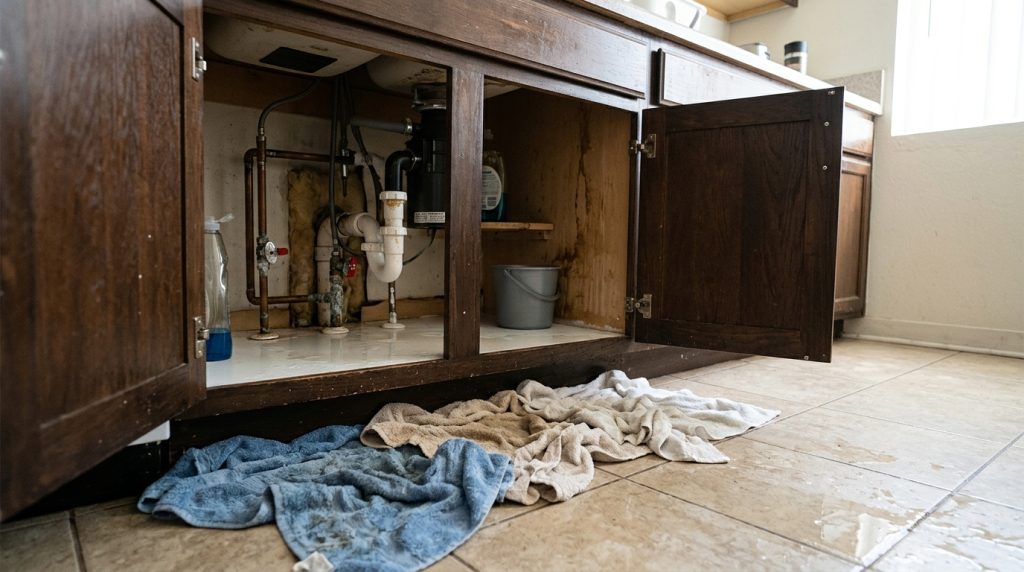
An apartment plumbing leak can feel different from a leak in a single-family home because there may be people above you, below you, or on the other side of a wall. The fast answer: stop the water if you can do so safely, protect people and belongings, document what you see, notify the right property contact, and call for help when the leak is active, spreading, or tied to a fixture, pipe, wall, ceiling, or floor you cannot safely inspect.
Do not try to open walls, work on gas lines, reset electrical equipment near water, or guess where the pipe is leaking. In apartments, the smartest first move is usually containment and clear communication, not DIY repair.
First, figure out whether the leak is active
Start by looking for signs that water is still moving. A steady drip from a ceiling, water running from under a cabinet, a toilet that will not stop overflowing, or a growing wet spot on the wall should be treated as active. If the water has stopped and the area is only damp, you may have a little more time, but it still needs attention because moisture can travel inside walls, under flooring, and between units.
If you can safely identify the fixture causing the problem, turn off the nearest shutoff valve. Common examples include the small valve under a sink, the valve behind a toilet, or the hot and cold valves behind a washing machine. Turn the valve clockwise until it stops. If the leak does not slow or you cannot find the valve, stop and move to building-level help.
Know when to use the unit or building water shutoff
Some apartments have individual shutoff valves for each unit. Others require access to a mechanical room, garage area, exterior shutoff, or property manager-controlled valve. If you are renting, do not force open locked utility areas or make changes to shared building plumbing. Call the property manager, landlord, maintenance line, or HOA contact right away.
If you own the unit and know where your dedicated shutoff is, using it may help limit damage until a plumber can inspect the system. If the shutoff is stuck, corroded, unlabeled, or shared with other units, do not force it. A stuck valve can make a bad leak worse.
Protect people and reduce immediate damage
Once the water source is slowed or you have called the building contact, focus on practical steps that reduce damage without creating risk:
- Move rugs, electronics, boxes, and furniture away from the wet area if safe.
- Place towels or a bucket under a small drip, but do not stand under sagging drywall.
- Avoid using ceiling lights, outlets, or appliances near active water.
- Do not run fans into a wall cavity or ceiling unless a professional has checked the area.
- Keep children and pets away from wet flooring and unknown water sources.
If water is near electrical outlets, breaker panels, ceiling fixtures, or built-in appliances, treat the situation as higher risk. Do not touch wet switches or cords. Contact the property manager and the appropriate professional help before doing anything else.
Notify the right people early
Apartment leaks are partly a plumbing problem and partly a coordination problem. The sooner the right people know, the easier it is to prevent confusion between units.
Renters should notify the landlord or property manager as soon as the immediate water issue is contained or while another adult is helping contain it. Condo owners may need to contact the HOA, building management, upstairs or downstairs neighbors, and their own insurance contact. If the leak may be coming from another unit, avoid accusations. Stick to what you can see: where water is appearing, when it started, and whether it is getting worse.
Take quick photos or short videos of visible water, wet walls, flooring, ceilings, shutoff valves, and affected belongings. Good documentation helps everyone understand the timeline. It also helps a plumber or restoration crew see what changed before they arrived.
Common apartment leak sources
Apartment leaks often start in predictable places, but the visible water may show up somewhere else. A ceiling drip may come from an upstairs tub, toilet, supply line, sink, dishwasher, washing machine, refrigerator line, or shared pipe. Water under your vanity may be from a trap, supply line, angle stop, faucet connection, or wall pipe. A wet hallway wall may come from a unit next door or a shared plumbing chase.
That is why it is risky to diagnose the exact source without seeing the system in person. Water follows gravity, framing, pipe paths, and tiny gaps. The stain you see may not be directly below the leak.
When an apartment leak becomes an emergency plumbing issue
Some leaks can wait for scheduled service after the water is off. Others need urgent plumbing attention because the leak is active, hard to isolate, or tied to shared systems. Call for plumbing help if:
- Water keeps running after fixture valves are turned off.
- A ceiling, wall, or floor is getting wetter by the minute.
- A toilet, tub, or floor drain is backing up.
- You hear water in the wall but cannot see the source.
- The leak may affect a downstairs unit or shared hallway.
- The shutoff valve is stuck, missing, or not controlling the leak.
For active apartment leaks in Burbank or the LA area, Zenon’s emergency plumbing team can help inspect the issue, control the plumbing source, and recommend next steps. Phone answered 24/7, on-site Mon-Sat 9 AM–6 PM.
What renters should avoid doing
If you rent, your lease may limit what repairs you are allowed to attempt. Even if you are handy, avoid removing fixtures, cutting drywall, opening shared access panels, or hiring someone without notifying the property manager when building rules require it. You can still take sensible steps like turning off a fixture valve, moving belongings, placing towels, documenting the leak, and reporting it quickly.
Also avoid pouring chemical drain cleaners into a backing-up tub, shower, or toilet. If the issue is a sewer or shared drain problem, chemicals may sit in the line, splash back, or create hazards for whoever clears the blockage later.
What owners and property managers should document
Owners and managers should keep a simple record: time reported, affected unit, visible source if known, whether the water was shut off, which units may be affected, and who was contacted. If a plumber inspects the leak, ask for clear notes on the likely source, visible conditions, and recommended repair path.
For multi-unit buildings in Burbank, Glendale, Los Angeles, and nearby communities, older plumbing, stacked bathrooms, shared drain lines, and limited access can make leak tracing more complicated. A calm, step-by-step response helps avoid unnecessary wall openings and helps everyone understand what has actually been confirmed.
After the water is controlled, watch the surrounding materials
Stopping the plumbing leak is only the first part. Wet drywall, baseboards, cabinets, flooring, and ceiling materials may continue to show changes after the water source is off. Look for spreading stains, bubbling paint, soft drywall, musty odors, lifted flooring, or water coming back after fixtures are used again.
Do not assume an area is dry just because the surface looks better. Moisture can stay behind walls or under flooring. If materials are wet, the property owner or manager may need to coordinate the next step for drying, repairs, or restoration. Avoid making health claims or mold assumptions without inspection; just take moisture seriously and document what you can see.
A calm apartment leak checklist
- Turn off the nearest fixture valve if safe.
- Call the property manager, landlord, HOA, or maintenance contact.
- Move belongings away from the water.
- Avoid electrical areas and sagging ceilings.
- Take photos and note the time the leak started.
- Do not open walls or force stuck valves.
- Call a plumber if the water is active, spreading, or hard to isolate.
Apartment leak help in the LA area
If an apartment leak is active or spreading, shut off the water if safe and call (818) 640-2944. You can also review Zenon’s plumbing and drain services to find the right next step.


