 Mon-Sat 9AM-6PM
 Make an
Appointment (818) 640-2944
Make an
Appointment (818) 640-2944 2115 W Magnolia Blvd Unit C, Burbank, CA 91506
Hydro Jetting for Grease Buildup: When a Kitchen Line Needs More Than Snaking
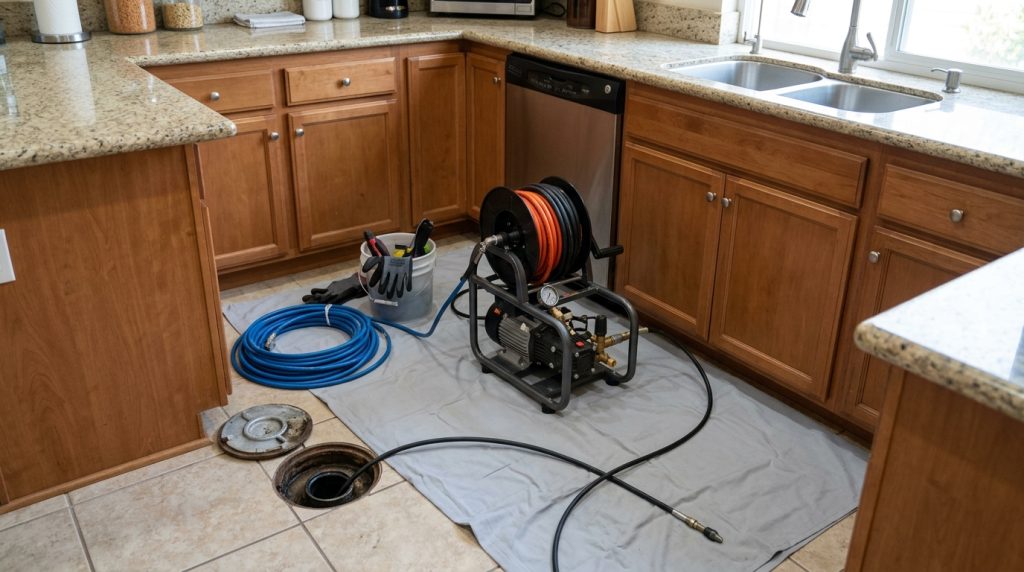
If your kitchen line keeps slowing down after snaking, the problem may be deeper than a simple surface clog. Grease can build up along the inside of the pipe, catch food debris, and narrow the drain until water has a hard time moving. In some cases, a cable can poke a temporary path through the blockage, but the line may keep backing up because the pipe walls are still coated.
The fast answer: hydro jetting may be worth discussing when a kitchen drain has recurring grease-related clogs, multiple slow fixtures, gurgling, or backups that return soon after ordinary drain cleaning. A plumber still needs to inspect the situation in person before recommending it, because not every pipe is a good candidate and older or damaged lines may need a different approach.
Why kitchen lines collect grease so easily
Kitchen drains handle more than water. Even careful households send small amounts of cooking oil, sauces, soap film, and food particles down the line over time. Hot water can move grease temporarily, but once it cools inside the pipe, it can cling to the walls and create a sticky layer.
That sticky layer becomes a collection point. Coffee grounds, rice, pasta, fibrous vegetables, and other small scraps can hang up inside the line instead of washing away cleanly. The drain may still work at first, but it slowly becomes less forgiving. Then one large cooking cleanup, holiday meal, or garbage disposal load can be enough to trigger a backup.
This is why recurring kitchen clogs can feel confusing. You clear the sink, it works for a few days or weeks, and then the same problem comes back. The visible clog may be gone, but the buildup that caused it may still be there.
When snaking may not be enough
A drain snake is useful for many clogs. It can break through soft blockages, pull out some material, and reopen the flow path. For a one-time clog near the fixture, that may be all the drain needs.
Grease buildup is different. If the line has a coating along the pipe wall, a snake may only create a tunnel through the middle. Water starts moving again, so the problem looks fixed. But the pipe may still be narrowed, and the rough buildup left behind can quickly collect new debris.
Homeowners often notice this pattern:
- The kitchen sink drains normally right after service, then slows again soon after.
- The garbage disposal side backs up into the other basin.
- Water rises when the dishwasher drains.
- There is a sour or greasy smell near the kitchen sink.
- Plunging or store-bought cleaners only help briefly.
Those symptoms do not prove hydro jetting is needed, but they are good reasons to have the line checked before the next backup creates a bigger mess.
What hydro jetting does differently
Hydro jetting uses controlled high-pressure water to scour the inside of the drain or sewer line. Instead of only punching through a clog, the water stream can help remove grease, sludge, and buildup from the pipe walls when the line is suitable for the service.
For grease-heavy kitchen lines, that cleaning action is the main advantage. A cleaner pipe has more room for water to move and fewer sticky edges for food particles to catch on. That can make hydro jetting a better fit for repeated grease buildup than another round of basic snaking.
If recurring kitchen line clogs are becoming a pattern, Zenon’s hydro jetting service page explains how this type of cleaning fits into drain and sewer maintenance. The right answer still depends on the condition, age, and layout of the line.
Why inspection matters before jetting
Hydro jetting is not something to use blindly. A plumber should first consider whether the pipe can handle the cleaning method and whether the problem might be caused by something other than grease.
For example, repeated backups may point to a belly in the line, root intrusion, a damaged section, a venting issue, or a sewer-side problem. If the pipe is cracked, offset, badly deteriorated, or already holding standing water because of a deeper structural issue, high-pressure cleaning may not be the first step.
That is why a proper drain visit is more than “clear it and leave.” The goal is to understand the pattern: where the clog is happening, how often it returns, what fixtures are involved, and whether the line shows signs of damage. In many homes, a camera inspection may be recommended before or after cleaning so the technician can see what is actually going on inside the pipe.
Signs the problem may be beyond the kitchen sink
A single slow kitchen sink is frustrating, but it is usually less concerning than multiple fixtures acting up at once. If the kitchen sink, laundry drain, tub, shower, or toilet are all showing symptoms, the issue may be farther down the drain system.
Pay attention to warning signs like:
- Gurgling from nearby drains after the sink empties.
- Water backing up in a tub or shower when the kitchen sink runs.
- Repeated sewer-like odors from more than one fixture.
- Backups that happen during heavy water use.
- A clog that returns even after careful use and repeated clearing.
If wastewater is backing up into fixtures, avoid running more water until the line is checked. Do not keep using chemical drain cleaners to force the issue. They can be harsh on plumbing, may not solve grease-coated lines, and can create a safer-working problem for anyone who later opens the drain.
What Burbank and LA-area homeowners should keep in mind
Many homes in Burbank, Glendale, and the greater Los Angeles area have older plumbing layouts, additions, mature landscaping, or drain lines that have been repaired in sections over time. That does not mean every slow kitchen drain is serious. It does mean recurring clogs deserve more attention than a one-time sink backup.
Local homes can also see heavy kitchen use, hard-water fixture wear, and main-line stress from roots or older pipe materials. A practical approach is to treat the first clog as a nuisance, but treat the second or third clog as a pattern. The pattern is what helps a plumber decide whether ordinary drain cleaning, hydro jetting, repair, or another step makes the most sense.
Simple habits that reduce grease buildup
You can lower the risk of grease-related clogs by changing what goes down the drain. These habits are simple, but they matter over months and years:
- Pour cooking oil and grease into a container, let it cool, and throw it away.
- Wipe greasy pans with a paper towel before washing.
- Use sink strainers to catch food scraps.
- Avoid sending coffee grounds, rice, pasta, and fibrous scraps through the disposal.
- Run plenty of cold water when using the garbage disposal.
- Schedule help if the same drain keeps slowing down instead of relying on chemicals.
These steps cannot fix a pipe that is already heavily coated, damaged, or backing up, but they can help keep a cleared line cleaner for longer.
When to call instead of trying another quick fix
It is reasonable to try basic, safe steps for a minor clog: check the disposal, remove visible debris, and avoid putting more grease down the sink. But if water is backing up, more than one fixture is affected, the same clog keeps returning, or you smell sewer odors, it is time to stop guessing.
A plumber can evaluate the line, explain whether hydro jetting is appropriate, and help you avoid turning a recurring kitchen drain problem into a larger cleanup. For broader plumbing help and service options, you can also start from Zenon’s Plumbing & Drains hub.
Zenon Plumbing & Restoration
Need help with a recurring kitchen drain or grease-heavy line? Call (818) 640-2944. Phone answered 24/7, on-site Mon-Sat 9 AM–6 PM.


