 Mon-Sat 9AM-6PM
 Make an
Appointment (818) 640-2944
Make an
Appointment (818) 640-2944 2115 W Magnolia Blvd Unit C, Burbank, CA 91506
Burbank Apartment Drain Backup: Tenant and Landlord First Steps
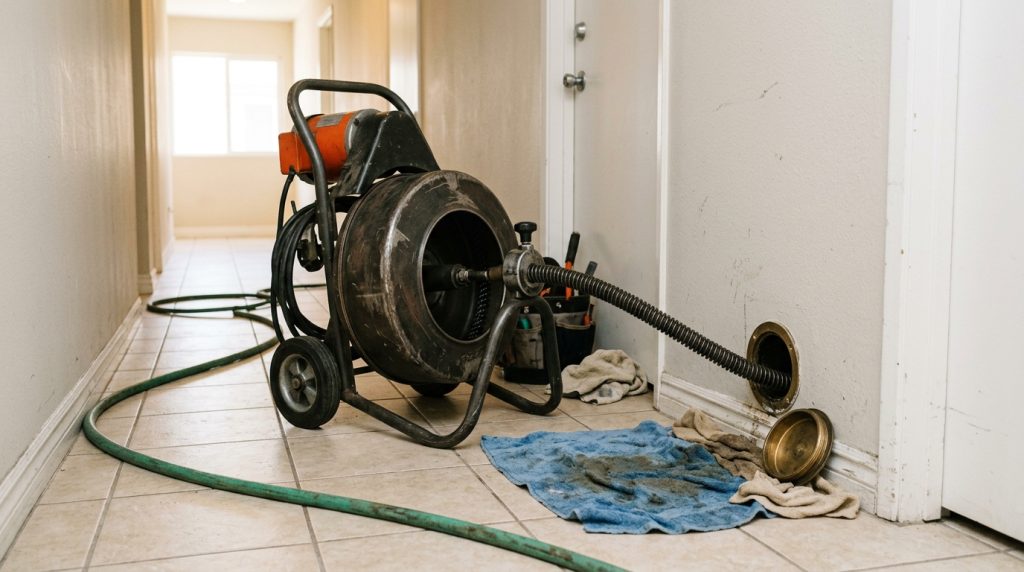
Apartment drain backups can get stressful fast because more than one person may be affected, and it is not always obvious whether the problem belongs to the tenant, the landlord, the building, or the city sewer line. The safest first move is simple: stop using the affected fixtures, contain the water if you can do so safely, document what happened, and get the right people involved before the backup spreads.
For renters, that usually means notifying the property owner or manager right away. For landlords and small building owners, it means treating a recurring or multi-fixture backup as a plumbing issue that needs prompt attention, not just another slow drain. In Burbank apartments, older pipes, shared drain lines, tree roots, grease buildup, and heavy fixture use can all contribute to backups. A plumber still needs to inspect the actual system before anyone can say what caused it.
Fast answer: what should you do first?
If an apartment drain backs up, take these first steps:
- Stop running water in sinks, showers, tubs, laundry areas, and toilets connected to the same drain line.
- Avoid chemical drain cleaners, especially if wastewater is already backing up or multiple fixtures are affected.
- Keep people away from dirty water and do not walk through standing water unless it is necessary and safe.
- Move rugs, boxes, and personal items away from the wet area if you can do it without spreading contamination.
- Take photos or short videos of the fixture, floor, nearby walls, and the time the backup happened.
- Notify the landlord, property manager, HOA, or building owner as soon as possible.
- Call a plumber if the backup is active, recurring, affecting more than one fixture, or coming from a tub, shower, laundry drain, or toilet.
Those steps do not replace an inspection. They simply help limit the mess and make it easier for the right person to understand what happened.
Is it a clogged fixture or a shared drain problem?
A single slow bathroom sink may be a small fixture clog. An apartment drain backup is more concerning when water shows up in a lower fixture, such as a tub, shower, floor drain, or laundry standpipe. That can point to a blockage farther downstream, especially if the backup happens when another fixture is used.
Watch for clues like these:
- The shower or tub gurgles when the toilet flushes.
- Laundry water backs up into a nearby drain.
- Two units report drain problems around the same time.
- Water returns after plunging or snaking one fixture.
- A sewer smell appears near drains before or after the backup.
- The problem gets worse during heavy use, such as mornings, evenings, or laundry days.
These signs do not prove the exact cause. They do suggest the issue may be beyond a simple sink trap or hair clog, which is why shared-line backups should be handled carefully.
What should tenants do before calling for help?
If you rent the apartment, your first job is to protect yourself, limit further water use, and report the issue quickly. Let the landlord or manager know which fixture backed up, when it started, whether other fixtures are affected, and whether there is visible standing water. If the backup is active, say that clearly instead of describing it as only a slow drain.
It also helps to ask nearby neighbors whether they are seeing the same issue, but avoid turning the situation into a blame game. Apartment plumbing can be shared in ways residents cannot see. A backup in one unit may come from a branch line, a main line, or building plumbing that needs professional clearing and inspection.
Do not remove toilets, open cleanouts, or pour strong chemicals into the drain. Those steps can make the cleanup harder and may create more risk if wastewater is already present. If water is near electrical outlets, appliances, or cords, step back and tell the property manager immediately.
What should landlords or property managers check?
For landlords, the main question is whether this is a one-fixture nuisance or a larger plumbing problem that could affect habitability, flooring, drywall, or other units. Start by confirming where the backup appeared, what fixture was being used at the time, and whether the same line has caused trouble before.
Useful questions include:
- Is the backup limited to one sink, or are tubs, showers, toilets, or laundry drains involved?
- Did another tenant report gurgling, odor, or slow drainage?
- Has the line needed repeated snaking in the past?
- Is there a known cleanout location for that section of the building?
- Are there large trees near the sewer path or older clay/cast-iron piping on the property?
Repeated backups deserve more than a quick temporary clear. Depending on the property, a plumber may recommend clearing the line, inspecting a cleanout, checking for main-line symptoms, or using camera inspection after the line is opened enough to evaluate.
Why Burbank apartment buildings can have recurring backups
Burbank has a mix of older apartment buildings, small multi-family properties, condos, ADUs, and updated homes divided into rental units. Plumbing systems in these properties can carry a lot of daily use through shared branch lines and main sewer lines. Grease from kitchens, wipes or paper products, laundry discharge, hair, soap buildup, scale, and root intrusion can all contribute to drain trouble over time.
Local housing stock matters because older drain lines may have different materials, slope issues, past repairs, or limited cleanout access. That does not mean every older building has a major sewer problem. It does mean a recurring backup should be evaluated in context instead of treated as an isolated clog every time.
If the issue appears tied to a shared sewer or drain line, Zenon’s Burbank drain and sewer repair team can help inspect the problem and explain the practical next step: Burbank drain and sewer repair.
When is an apartment drain backup urgent?
A backup should be treated as urgent when water is actively rising, wastewater is coming up from a tub or shower, more than one fixture is involved, water is moving toward walls or flooring, or the issue affects multiple units. It is also urgent if tenants cannot safely use a bathroom, kitchen, or laundry area because of the backup.
For active situations, do not keep testing fixtures to see if the drain clears. Running more water can add volume behind the blockage and push water into areas that were still dry. If there is a shutoff that controls the affected fixture safely, use it. If you are not sure what a valve controls, do not force it.
Phone answered 24/7, on-site Mon-Sat 9 AM–6 PM. That wording matters: it means someone can answer the phone and help route the problem, while actual on-site work follows the confirmed service schedule.
What information helps the plumber diagnose the issue?
Clear information can save time. Before the plumber arrives, gather the basics if you can:
- Which unit or units are affected
- Which fixture backed up first
- Whether the backup is sewage, gray water, or clean-looking water
- What was being used when the backup started
- Whether plunging, snaking, or chemicals were already tried
- Where cleanouts may be located
- Whether this has happened before
Photos are useful, but do not put yourself in contact with unsafe water just to document the scene. A few clear photos from a safe distance are usually enough for the first conversation.
What not to assume after the water goes down
Sometimes a backed-up drain slowly drains away. That does not always mean the problem is fixed. A partial blockage can release temporarily and then return when several fixtures are used again. In apartment buildings, that can create a frustrating cycle where one tenant thinks the problem is gone while another unit sees symptoms later.
A temporary improvement is especially suspicious when the same drain line has backed up before, when more than one fixture gurgles, or when the backup follows laundry, shower, or toilet use. In those cases, clearing the line may only be one part of the solution. The underlying cause still needs to be considered.
Bottom line for tenants and landlords
For tenants, the best first steps are to stop water use, document the problem, avoid harsh chemicals, and notify the property manager quickly. For landlords and managers, the priority is to determine whether the backup is isolated, shared, recurring, or active enough to risk damage to the building.
Apartment drain backups are not the place for guesswork. A careful inspection can help separate a simple fixture clog from a shared drain or sewer problem, and it can help prevent the same issue from coming back.
Zenon Plumbing & Restoration
Need help with a drain backup in Burbank? Call (818) 640-2944 — Phone answered 24/7, on-site Mon-Sat 9 AM–6 PM — or contact Zenon online.


