 Mon-Sat 9AM-6PM
 Make an
Appointment (818) 640-2944
Make an
Appointment (818) 640-2944 2115 W Magnolia Blvd Unit C, Burbank, CA 91506
When a Shower Drain Gurgles After the Washer Runs
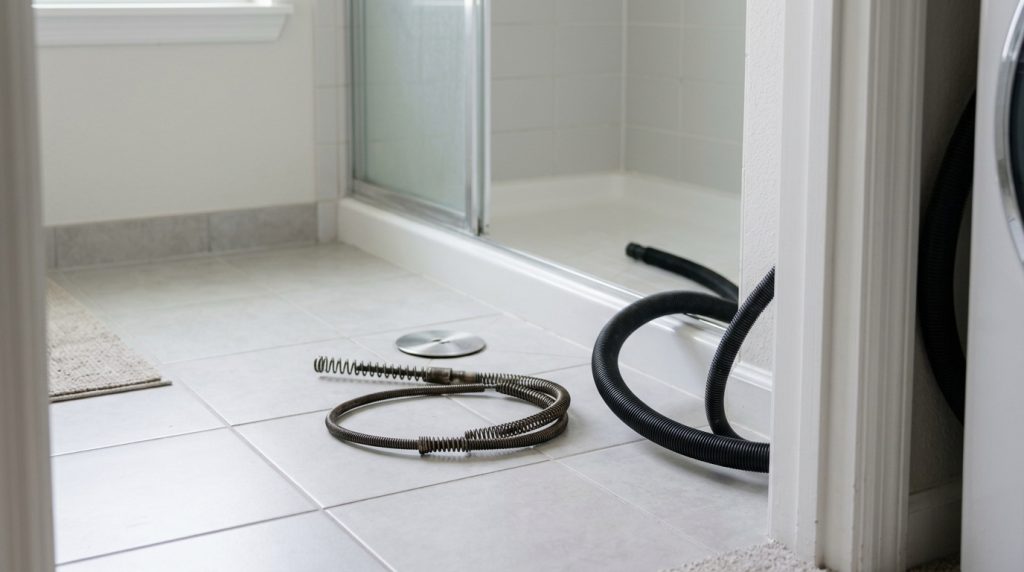
If a shower drain gurgles right after the washing machine starts draining, the safe short answer is this: water is moving through a shared drain or vent path and air is being pulled or pushed where it should not be. Sometimes the cause is a partial clog. Other times it is a venting issue, a main-line restriction, or a laundry drain problem that is starting to affect nearby fixtures.
For homeowners, the first step is not to keep running more water to “test it.” Pause the washer if the drain sounds worse, watch for water backing up in the shower or floor drain, and avoid chemical drain cleaners. If the gurgling repeats, gets louder, or comes with slow drainage or odors, it is time to have the drain line checked before it turns into a backup.
Why a shower drain can gurgle when the washer drains
A washing machine releases a large amount of water quickly. That surge has to travel through the home’s drain piping and out toward the sewer line. If the line is clear and properly vented, the water moves out and air moves through the plumbing vent system without making much noise.
Gurgling usually means the system is struggling to balance water and air. The washer discharge may be pulling air through the shower trap, pushing air through a nearby drain, or meeting resistance from buildup in the shared branch line. In many homes, especially older Burbank and Los Angeles-area homes with remodeled bathrooms or added laundry rooms, fixtures can share drain paths in ways that are not obvious from the room layout.
The noise itself is not a diagnosis. It is a clue. The important question is whether the gurgle is occasional and isolated, or whether it is part of a pattern: slow shower drainage, sewer odors, bubbling toilets, water standing in a tub, or backups when multiple fixtures run.
Common causes behind washer-to-shower drain gurgling
Several plumbing conditions can create this symptom. The right fix depends on where the restriction or air problem is happening.
- Partial clog in a shared drain line. Soap film, lint, hair, laundry debris, and sludge can narrow the pipe. The washer’s discharge then forces air movement through the closest available drain opening.
- Main drain or sewer line restriction. If more than one fixture reacts when the washer drains, the issue may be farther downstream than the shower itself.
- Vent problem. Plumbing vents allow air to enter the drainage system. If a vent is blocked, undersized, or affected by past remodeling, drains can pull air through traps and make gurgling sounds.
- Laundry standpipe or drain setup issue. A washer that drains too quickly for the standpipe or connected line can expose a weak spot in the drainage path.
- Older pipe buildup. In older homes, years of grease, soap, scale, or root intrusion can make a normal laundry cycle enough to reveal a developing problem.
When it is a drain issue instead of a washing machine issue
Homeowners often wonder whether the washer is the problem. A washing machine can have its own drain hose or discharge issues, but shower-drain gurgling usually points to the plumbing system, not the appliance itself.
Look at what happens outside the laundry area. If the shower drain gurgles, the bathtub drains slowly, the toilet bubbles, or a floor drain smells after the washer runs, the symptom is likely connected to drain flow or venting. If the washer itself leaks, fails to drain, or shows an appliance error code but nearby fixtures stay quiet, the issue may be more appliance-specific.
Either way, do not ignore fixture reactions. A washer puts a heavy load on the drain system in a short burst. If that burst causes noise in another room, the plumbing is giving you an early warning.
Safe first checks homeowners can make
You do not need to take apart plumbing to gather useful information. A few safe observations can help a plumber narrow the problem faster.
- Run the bathroom sink for a minute and see whether the shower drain gurgles or drains slowly.
- Flush the nearby toilet and watch for bubbling in the shower or tub.
- Check whether the washer causes the noise only on large loads or every cycle.
- Look for water backing up into the shower, tub, floor drain, or laundry standpipe.
- Notice any sewer smell, especially after the washer drains.
- Write down whether the problem is new, intermittent, or getting worse.
Stop testing if water starts backing up. More water can make cleanup harder and may spread damage into flooring, baseboards, or nearby rooms.
What not to do when drains are gurgling
A gurgling drain is frustrating, but some common DIY reactions can create more trouble.
Avoid pouring chemical drain cleaner into the shower or laundry drain. These products may not reach the real restriction, can be harsh on older piping, and can create a safety problem if a plumber later has to open the line. Avoid repeated plunging if more than one fixture is reacting, because pressure can move water and waste into another drain opening. Also avoid removing cleanout caps or opening drain lines if you are not prepared for possible wastewater release.
It is fine to clear visible hair from a shower strainer or check that the washer hose is not kinked. Beyond that, repeated gurgling usually needs proper drain inspection instead of guesswork.
When to call for professional drain cleaning
Call for help when the symptom repeats, affects multiple fixtures, comes with odor, or shows up with slow drainage. Those signs suggest the problem may be bigger than a simple shower clog.
Zenon’s drain cleaning service can help identify whether the issue is in the shower branch, laundry drain, main line, or a shared section between fixtures. Depending on what the plumber finds, the next step may be mechanical drain cleaning, camera inspection, hydro jetting discussion, or a repair recommendation if the line is damaged.
The goal is not just to quiet the gurgle. It is to understand why the washer discharge is affecting another fixture and prevent a backup from happening at the worst time.
Why this can be common in Burbank and LA-area homes
Burbank, Glendale, and nearby Los Angeles neighborhoods have a mix of older homes, apartment buildings, back-house laundry setups, remodeled bathrooms, and added fixtures. In homes where plumbing has been changed over time, the laundry and bathroom drain layout may not be simple. A symptom in the shower can begin with a restriction closer to the washer, a shared branch line, or a main drain that is starting to slow down.
Local soil, tree roots, aging sewer laterals, and older drain materials can also contribute to recurring drain symptoms. That does not mean every gurgle is a major sewer problem. It does mean repeated cross-fixture symptoms are worth checking before they become messy.
The bottom line
A shower drain that gurgles after the washer runs is usually a sign that water and air are not moving cleanly through the drainage system. Watch for backups, odors, slow drains, or bubbling in nearby fixtures. If the problem repeats, get the line checked rather than relying on chemical cleaners or repeated DIY testing.
If you are seeing this symptom in a Burbank or Los Angeles-area home, you can contact Zenon Plumbing & Restoration to request help and describe what happens when the washer drains.
Zenon Plumbing & Restoration
Need help with this plumbing problem in Burbank? Call (818) 640-2944. Phone answered 24/7; on-site service Mon-Sat 9 AM–6 PM.


