 Mon-Sat 9AM-6PM
 Make an
Appointment (818) 640-2944
Make an
Appointment (818) 640-2944 2115 W Magnolia Blvd Unit C, Burbank, CA 91506
Angle Stop Valve Stuck Under a Sink: What Homeowners Should Do Before It Leaks
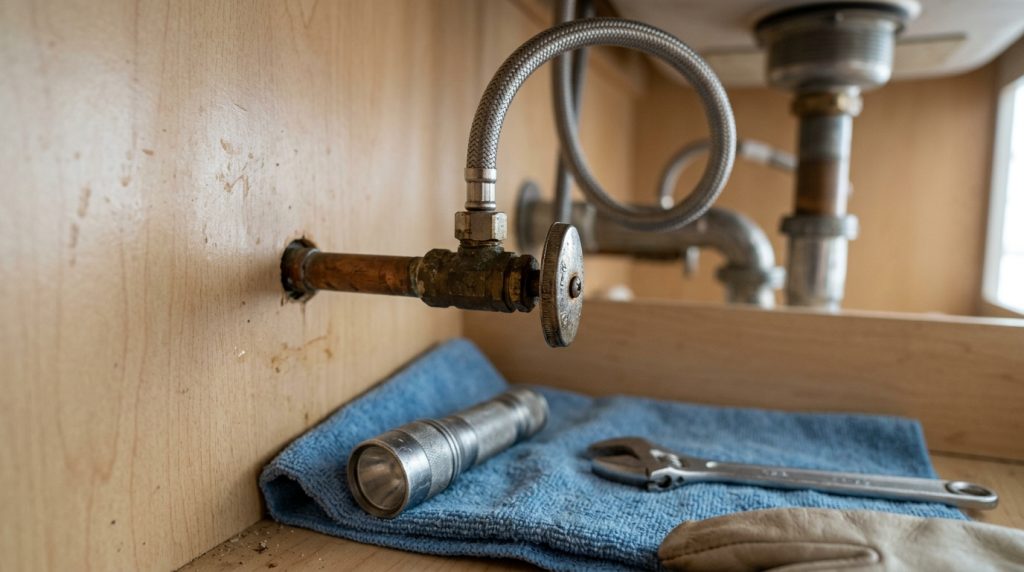
A stuck angle stop valve under a sink is one of those small plumbing problems that can become urgent fast. The valve is supposed to let you shut off water to a faucet, toilet, dishwasher, or supply line without turning off water to the whole property. If it will not move, leaks when touched, or feels corroded, do not force it. The safest first step is to stop using that fixture, keep the area dry, and know where the main shut-off valve is in case the line starts leaking.
The key question is simple: is this a slow maintenance issue, or is it close to becoming an active leak? A valve that is frozen, green with corrosion, damp around the stem, or connected to an aging braided supply line should be handled before it fails. If water is already dripping or the cabinet floor is wet, treat it as more urgent and consider calling for emergency plumbing help in Burbank.
What Is an Angle Stop Valve?
An angle stop valve is the small shut-off valve usually found under a sink or behind a toilet. It connects the wall water line to the fixture supply line. When it works correctly, turning the valve clockwise should reduce or stop water flow to that fixture. That lets a plumber replace a faucet, repair a toilet fill valve, or disconnect a supply line without shutting down the whole house.
In many older Southern California homes and multifamily buildings, these valves can sit untouched for years. Hard water, age, mineral buildup, paint, corrosion, and worn internal parts can make the handle stiff or completely frozen. The valve may look minor, but it is part of the pressurized water system. If the body cracks, the packing nut leaks, or the supply line breaks, water can run quickly inside a cabinet or wall cavity.
Fast Answer: Do Not Force a Stuck Valve
If an angle stop valve is stuck, avoid grabbing pliers and cranking it hard. That can snap the handle, twist the pipe in the wall, loosen old fittings, or turn a small leak risk into an active leak. A gentle hand check is one thing; forcing a corroded valve is different.
Instead, take these safer first steps:
- Stop using the sink, toilet, or appliance connected to that valve if there are signs of moisture.
- Place a towel or shallow pan under the valve if it is damp, but do not rely on that as a fix.
- Look for the main water shut-off valve for the home or unit before the problem gets worse.
- Check whether nearby drywall, cabinet material, or flooring is already wet.
- Call a plumber if the valve leaks, will not turn, or is connected to an old supply line.
If water is actively running and you can safely reach the main shut-off, turn off water to the home or unit first. If the valve is near electrical outlets, soaked flooring, or standing water, keep your distance and get professional help.
Signs the Valve May Be Close to Leaking
A stuck valve does not always mean water is about to spray everywhere. But certain clues suggest the valve should not be ignored.
Watch for:
- Green, white, or crusty buildup around the valve body, handle, or pipe connection.
- Dampness under the handle or around the small nut behind the handle.
- A handle that spins loosely without actually shutting water off.
- A valve that moves slightly, then sticks before fully closing.
- Wet cabinet flooring, swelling particle board, peeling cabinet finish, or musty odor.
- An aging braided or plastic supply line connected to the valve.
- Recent faucet, toilet, or dishwasher work where the valve was touched and started seeping afterward.
These symptoms do not prove exactly what is wrong without an in-person inspection. They do mean the fixture shut-off may not be reliable when you need it most.
Why Burbank and LA-Area Homes Run Into This Problem
Many homes around Burbank, Glendale, and Los Angeles have a mix of older plumbing, remodel updates, hard-water wear, and fixtures that have been changed over time. A kitchen may have a newer faucet connected to an older valve. A bathroom vanity may look updated, while the shut-off valves behind it are years older than the visible finishes.
That mismatch matters. Homeowners often find out a valve is stuck only when they are replacing a faucet, trying to stop a small drip, installing a dishwasher, or dealing with water under a cabinet. In older apartments and condos, access can be even trickier because one shut-off may affect more than one unit or may be controlled by the building.
A local plumber can help identify whether the issue is limited to the fixture valve, the supply line, or a larger shut-off/access problem. The goal is not to guess from the cabinet door. It is to confirm what can be safely isolated and repaired.
Can You Loosen an Angle Stop Valve Yourself?
Light maintenance is sometimes safe, but this is where homeowners should be careful. If the valve is dry, clean, and only slightly stiff, a gentle attempt by hand may be reasonable. But if the valve is corroded, old, leaking, connected to brittle piping, or sitting in a cabinet that already shows water damage, it is better not to force it.
Do not use excessive force, heat, or aggressive chemicals on the valve. Do not keep turning a valve that starts leaking as soon as it moves. Do not disconnect a supply line unless you know water is fully shut off and the fixture is safe to work on.
The bigger risk is not the handle itself. It is what happens behind the wall or under the cabinet if the fitting twists, the pipe moves, or the supply line fails. Pressure can damage cabinet boxes, baseboards, flooring, and drywall.
When a Stuck Valve Becomes an Emergency
A stuck valve is more urgent when water is active, spreading, or hard to isolate. Call for help sooner if:
- Water is dripping from the valve body or supply connection.
- The cabinet floor is wet or swelling.
- The fixture will not stop running and the local shut-off does not work.
- The valve handle breaks or spins without control.
- Water is near outlets, appliances, or soaked flooring.
- You cannot find or safely operate the main shut-off valve.
- You manage a rental unit and need to prevent damage to adjacent rooms or units.
If the situation is active, shut off water at the safest available point if you can do so without stepping into unsafe conditions. Then keep the area as dry as possible and document visible water damage with photos. For urgent plumbing problems, Zenon’s phone is answered 24/7, on-site service Mon-Sat 9 AM–6 PM.
What a Plumber Usually Checks
When a plumber looks at a stuck angle stop valve, the visit is not just about making the handle move. The plumber may check the valve type, pipe material, supply line condition, connection points, cabinet moisture, and whether the main shut-off works. If the valve needs replacement, the plumber needs a safe way to isolate water first.
Depending on the setup, the repair may involve replacing the angle stop, replacing the supply line, tightening or replacing fittings, or recommending a better shut-off arrangement for an older fixture. If there is visible moisture, the plumber may also help determine whether the issue is only at the valve or whether a faucet, drain, dishwasher line, or hidden leak is contributing.
That in-person check matters because two cabinets can look similar but have very different risks. A clean, newer compression valve is different from an old corroded valve connected to aging pipe in a wall.
How to Prevent the Same Problem Later
Once the immediate issue is handled, a few habits can reduce future surprises:
- Know where the main water shut-off is before you need it.
- Look under sinks every few months for dampness, corrosion, or swollen cabinet material.
- Replace aging supply lines before they show bulging, rust, or fraying.
- Ask a plumber to check shut-off valves during other plumbing work.
- Do not ignore a valve that seeps after being touched.
This is especially useful before vacations, remodels, appliance replacements, or tenant turnover. A small valve check can prevent a rushed repair later.
Need Help With a Stuck Sink Valve?
If an angle stop valve under your sink is stuck, leaking, or making you nervous, do not force it and hope it holds. Keep the area dry, locate the main shut-off if possible, and get the valve checked before it turns into cabinet or flooring damage.
Zenon Plumbing & Restoration helps local homeowners route plumbing problems to the right next step, from fixture shut-off issues to urgent leak response. You can also start from the main Plumbing & Drains service hub if you are not sure which service fits your situation.
Zenon Plumbing & Restoration
Need help with this plumbing problem in Burbank? Call (818) 640-2944. Phone answered 24/7; on-site service Mon-Sat 9 AM–6 PM.


