 Mon-Sat 9AM-6PM
 Make an
Appointment (818) 640-2944
Make an
Appointment (818) 640-2944 2115 W Magnolia Blvd Unit C, Burbank, CA 91506
Emergency Plumbing for a Broken Toilet Shutoff Valve: What to Do First
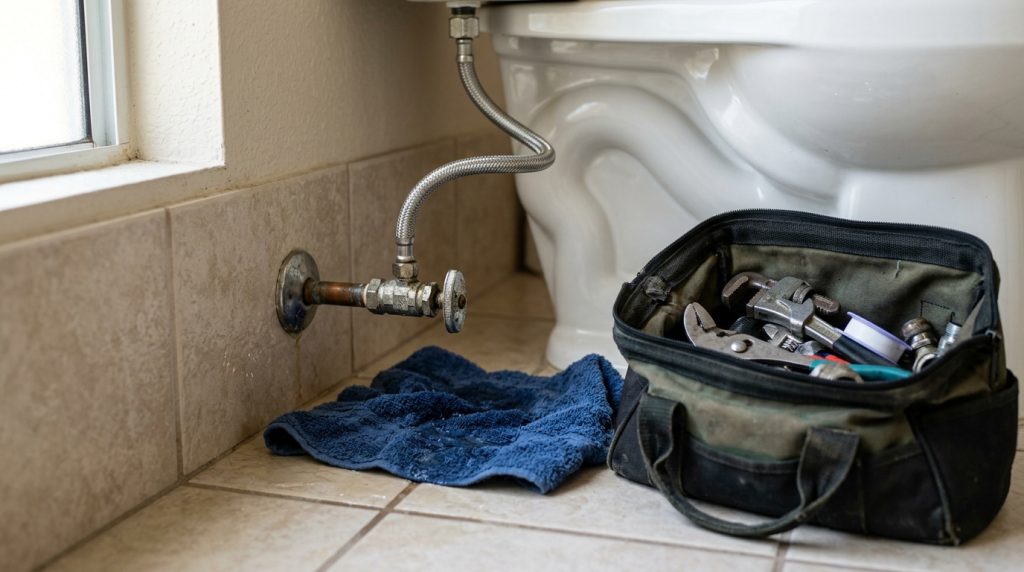
Fast answer: if a toilet shutoff valve breaks, leaks, or will not turn, do not force it. Stop using the toilet, protect the floor with towels or a small bucket if water is dripping, and shut off the home’s main water valve if the leak is active and you can do that safely. Then call a plumber for emergency help. A broken shutoff valve can look small, but it controls pressurized water, and forcing the handle can make the leak worse.
In Burbank and older Los Angeles-area homes, toilet shutoff valves can be stiff, corroded, painted over, or weakened by age. Some fail when a homeowner is trying to stop a running toilet, replace a supply line, install a bidet seat, or clean around the base of the toilet. The right next step depends on whether the valve is stuck, dripping slowly, spraying, or already broken off.
First, figure out what kind of problem you have
A toilet shutoff valve is usually located low on the wall or floor behind the toilet. It connects the home’s water supply to the toilet tank through a flexible supply line. When it works properly, turning the handle clockwise should stop water from entering the toilet.
Common shutoff valve problems include:
- The handle will not turn. This often happens when mineral buildup, corrosion, or age has made the valve stiff.
- The valve drips when touched. A small drip can appear around the stem, packing nut, or supply-line connection.
- The handle turns but water keeps running. The internal parts may be worn, so the valve is no longer sealing.
- The valve or supply line starts spraying. This is more urgent because pressurized water can damage flooring, baseboards, and nearby walls quickly.
- The pipe feels loose in the wall. Stop immediately. Pulling or twisting can create a bigger leak inside the wall.
If the valve is simply stiff and there is no leak, avoid using pliers to crank it harder. That can snap the handle, loosen an old connection, or damage the pipe behind the wall. If there is active leaking, move to water control first.
What to do right away if water is leaking
Start with the safest water-control step you can take. If the shutoff valve is spraying, leaking steadily, or will not close, locate the main water shutoff for the home or unit and turn it off if you know where it is and can reach it safely. In apartments or condos, the main shutoff may be in a utility area, garage, exterior box, or controlled by building management.
While you are getting help, take a few practical steps:
- Stop using the toilet and keep the area clear.
- Place towels around the base of the wall and toilet to slow water spread.
- Use a small bucket or container if the leak is dripping from a connection.
- Move bath mats, baskets, storage items, and anything absorbent away from the floor.
- If water is near electrical outlets, cords, or fixtures, stay clear and call for help.
- Take photos of the leak and visible damage before cleanup if you need documentation later.
Do not remove the supply line while the water is still on. Do not cut into the wall. Do not keep tightening parts if the valve body, pipe, or wall connection is moving. Those steps can turn a small bathroom leak into a wall or flooring problem.
When this becomes an emergency plumbing call
A broken toilet shutoff valve is an emergency when you cannot stop water, when the leak is reaching flooring or walls, or when the valve connection looks unstable. It is also urgent if the toilet is on an upper floor, above a garage, over a downstairs room, or near cabinetry. Water can travel under flooring or along baseboards before it looks serious from the surface.
Call for emergency plumbing in Burbank if the toilet shutoff valve is actively leaking, if the home’s main water needs to stay off until a repair is made, or if you are not sure whether the water has reached the wall or subfloor. A plumber can isolate the fixture, replace the failed valve, check the supply line, and look for signs that water moved beyond the visible bathroom floor.
Phone answered 24/7, on-site Mon-Sat 9 AM–6 PM. That means you can call when the problem starts, get guidance on the next safe step, and schedule the appropriate visit based on the condition of the leak.
Why toilet shutoff valves fail in older local homes
Many Burbank and Los Angeles-area homes have a mix of older plumbing, remodeled bathrooms, hard-water mineral buildup, and fixtures that have been repaired in stages over time. A shutoff valve may sit untouched for years, then fail the first time someone tries to turn it.
Common causes include age, corrosion, mineral deposits, a worn internal washer, a loose packing nut, an old compression fitting, or stress from a supply line that has been bent or pulled too many times. Sometimes the valve itself is not the only issue. The short pipe coming from the wall may be weak, the supply line may be cracked, or the toilet fill valve may be causing a homeowner to reach for the shutoff in the first place.
That is why a good repair should not stop at “the handle broke.” The full connection should be checked: wall stub-out, valve, supply line, toilet tank connection, floor area, and nearby baseboards. If there is moisture around the base of the wall, that may also need drying attention before it creates a larger restoration issue.
Can you replace a toilet shutoff valve yourself?
Some experienced homeowners can replace a simple toilet shutoff valve when the main water is off, the pipe is accessible, and the connection type is clear. But this is not a good DIY project when the valve is leaking actively, the pipe is loose, the home is older, or you are not sure whether the valve is compression, threaded, soldered, or push-fit.
The risky part is not only removing the old valve. It is knowing whether the pipe can handle the work, whether the new connection is seated correctly, and whether the repair will hold after the water is turned back on. A small mistake can leak behind the toilet or inside the wall, where it may not be obvious right away.
If you do try any basic troubleshooting, keep it limited: do not force the handle, do not keep tightening a moving pipe, and do not leave the water on if the leak is active. If the main water must stay off for the bathroom to be safe, it is time for a plumber.
What a plumber may check during the visit
For a broken toilet shutoff valve, a plumber will usually look at more than the visible handle. They may check whether the valve is closing fully, whether the supply line should be replaced, whether the toilet fill valve is contributing to the problem, and whether water reached the floor, wall, or nearby cabinet areas.
Depending on the setup, the repair may involve replacing the shutoff valve, replacing the supply line, adjusting or replacing toilet tank parts, checking the main shutoff, or recommending follow-up if moisture has spread. The exact solution depends on what is found in person. No article can diagnose the condition of the pipe behind the wall without seeing it.
Local trust: calm help for Burbank plumbing problems
Zenon Plumbing & Restoration serves Burbank and nearby Los Angeles-area homes with plumbing and water-damage restoration support. For a toilet shutoff valve issue, the goal is simple: stop the water, avoid unnecessary damage, and make the repair cleanly so the bathroom can be used again.
If you are dealing with an active leak, shut off the water if safe, protect the floor, and call before forcing the valve. If the situation is not actively leaking but the valve is stuck or unreliable, it is still worth handling before the next toilet repair or fixture update turns into an urgent problem.
Need help with a broken toilet shutoff valve? Contact Zenon Plumbing & Restoration or call (818) 640-2944. Phone answered 24/7, on-site Mon-Sat 9 AM–6 PM.
Zenon Plumbing & Restoration
Need help with this plumbing problem in Burbank? Call (818) 640-2944. Phone answered 24/7; on-site service Mon-Sat 9 AM–6 PM.


