 Mon-Sat 9AM-6PM
 Make an
Appointment (818) 640-2944
 2115 W Magnolia Blvd Unit C, Burbank, CA 91506

Refrigerator Water Line Leak Behind Cabinets: Safe First Steps Before Damage Spreads
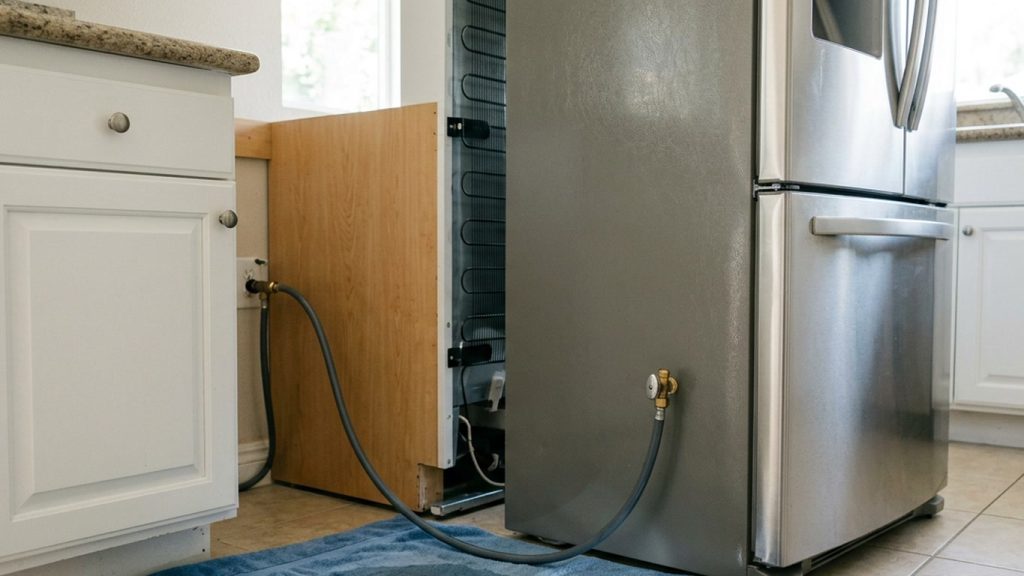
Fast answer: If you find water behind or beside the refrigerator, stop using the water dispenser and ice maker, close the refrigerator’s water-supply valve if it is easy to reach and safe to operate, and keep people away from any wet outlet or cord. Do not pull the appliance forward if doing so could stretch or tear the line. Dry visible surface water with towels, photograph the affected area, and call for help if water is still spreading or the shutoff will not stop it.
A refrigerator water line leak can stay hidden behind the appliance or cabinets for a while. The first sign may be a damp baseboard, a soft cabinet panel, a discolored seam in the flooring, or an ice maker that suddenly stops working. Those clues do not prove where the leak is. The source could be the supply tube, a connection, a shutoff valve, a filter housing, or the appliance itself. A careful inspection is the best way to separate a plumbing problem from an appliance problem.
What should you do first when water appears behind the refrigerator?
Start by slowing the situation down rather than immediately moving the refrigerator. A water line can be pinched, brittle, or already partly disconnected. Pulling the appliance forward without enough slack may turn a small leak into a faster one.
- Stop using the dispenser and ice maker. This may reduce demand on the line while you check the area.
- Look for the refrigerator shutoff valve. It may be in a nearby cabinet, under the kitchen sink, in the wall box behind the appliance, or in another accessible location. Close it only if you can reach it without stepping into water or forcing a stuck valve.
- Keep water away from electricity. Do not touch a wet plug, outlet, cord, power strip, or appliance control. If electrical equipment is wet or standing water is present, stay clear and get qualified help.
- Use towels to contain visible surface water. Do not remove attached flooring, cabinets, drywall, or electrical covers as a DIY investigation.
- Watch whether the wet area grows. Continued spreading after the appliance valve is closed may mean the valve did not stop the flow or the water is coming from somewhere else.
If the appliance shutoff is missing, inaccessible, damaged, or will not close, the home’s main water shutoff may be the safer next option if you know where it is and can use it without forcing it. When there is uncertainty, a plumber should assess the setup in person.
How can you tell whether the refrigerator line is leaking?
A refrigerator supply line usually carries water to an ice maker, dispenser, or both. Leaks commonly show up near a connection, along a damaged section of tubing, or around a shutoff valve. However, condensation, a clogged appliance drain, a loose filter, or another nearby plumbing source can create a similar puddle.
Clues worth documenting include:
- water that appears soon after the ice maker fills or the dispenser is used;
- moisture around the valve or where the supply tube enters the wall or cabinet;
- a kink, abrasion, or flattened area that is visible without moving the appliance;
- swelling at the cabinet toe-kick or side panel next to the refrigerator;
- flooring seams that darken, lift, or feel different from the surrounding area;
- a faint water sound when nearby fixtures are off; or
- water that continues returning after the surface has been dried.
None of these signs confirms the exact source by itself. Water can travel under flooring or along cabinet edges before it becomes visible. The wettest visible spot is not always directly below the failed connection.
Should you pull the refrigerator away from the wall?
Only move it if the floor is dry, the path is clear, the appliance is stable, and you know the water line has enough slack. Many refrigerators are heavy, and their feet or wheels can damage softened flooring. A short or tangled supply tube can also tear when the appliance moves.
Do not move the refrigerator if water is near the outlet, you cannot see how the line is routed, the floor has started to buckle, or the unit sits tightly between cabinets. In those situations, leave the appliance in place and let a plumber or appliance technician expose the connection safely.
When does a small refrigerator leak become urgent?
Treat the problem as urgent when water is actively spreading, the shutoff valve does not work, water is near electrical components, the ceiling below is wet, or flooring and cabinets are changing quickly. It is also important to act promptly when you cannot tell whether the supply line is still pressurized.
For Burbank homeowners dealing with an active appliance supply-line leak, Zenon’s Burbank emergency plumbing page explains how to request an in-person assessment. Phone answered 24/7, on-site Mon-Sat 9 AM–6 PM.
If the visible water stops after the refrigerator valve is closed, the immediate flow may be controlled, but the area still deserves attention. A slow leak can leave moisture beneath cabinets or finished flooring even when the surface looks dry. Avoid assuming that a dry towel means every affected material is dry.
What should you photograph and document?
Simple documentation helps a plumber understand what changed and can help you track whether moisture is spreading. Before cleaning up, when safe, take wide and close photographs of:
- the first visible puddle or damp area;
- the cabinet edges, baseboards, and flooring seams nearby;
- the shutoff valve and visible supply tubing;
- any staining on the wall or ceiling below; and
- the area again after the valve is closed and surface water is removed.
Write down when you first noticed the water, whether the dispenser or ice maker had just operated, which valve you closed, and whether the area continued getting wetter. Do not delay stopping an active leak just to take pictures.
Who should inspect the problem: a plumber or an appliance technician?
A plumber is generally the right first call when the leak appears to involve the home’s shutoff valve, the water connection in the wall or cabinet, or the supply tubing connected to the plumbing system. An appliance technician may be needed when the leak originates inside the refrigerator, such as at an internal filter assembly or appliance component.
Sometimes both are involved. The important step is identifying the source before replacing parts or closing up the area. Because the source cannot be confirmed from a puddle alone, avoid buying a new refrigerator line or opening cabinets based only on a guess.
Why are hidden kitchen leaks easy to miss in Burbank homes?
Kitchens in Burbank and nearby Los Angeles communities vary widely. Some have original cabinets with tight appliance openings, while others have been remodeled with water lines routed through adjacent cabinets or walls. Flooring may also run underneath the refrigerator and cabinets, allowing water to travel before it appears. Those differences are why an in-person look matters: the same wet spot can point to very different sources in two homes.
What can help prevent another refrigerator-line leak?
Once the current source is identified and repaired, ask the person doing the work to check the accessible shutoff, connection, tubing route, and clearance behind the refrigerator. The line should not be crushed by the appliance or rubbed against a sharp edge. It also helps to know where the valve is before the refrigerator is moved for cleaning or replacement.
Periodically look along the cabinet toe-kick and flooring edge for new discoloration, swelling, or moisture. If the refrigerator is moved, inspect the visible line before pushing it back. These checks cannot prevent every failure, but they can make a developing problem easier to notice.
Get the source checked before the damage spreads
A puddle behind the refrigerator may come from a small connection leak, but its location alone is not enough to diagnose the problem. Control the water if it is safe, avoid wet electrical components, document what you see, and arrange an inspection when the source is uncertain or water continues to spread.
To ask about service or share the details of what you found, contact Zenon Plumbing & Restoration. A technician can inspect the setup in person and explain the appropriate next step without guessing from surface signs alone.
Zenon Plumbing & Restoration
Need help with this plumbing problem in Burbank? Call (818) 640-2944. Phone answered 24/7; on-site service Mon-Sat 9 AM–6 PM.


