 Mon-Sat 9AM-6PM
 Make an
Appointment (818) 640-2944
 2115 W Magnolia Blvd Unit C, Burbank, CA 91506

Water Appears After Rain: How to Separate a Plumbing Leak From Exterior Intrusion
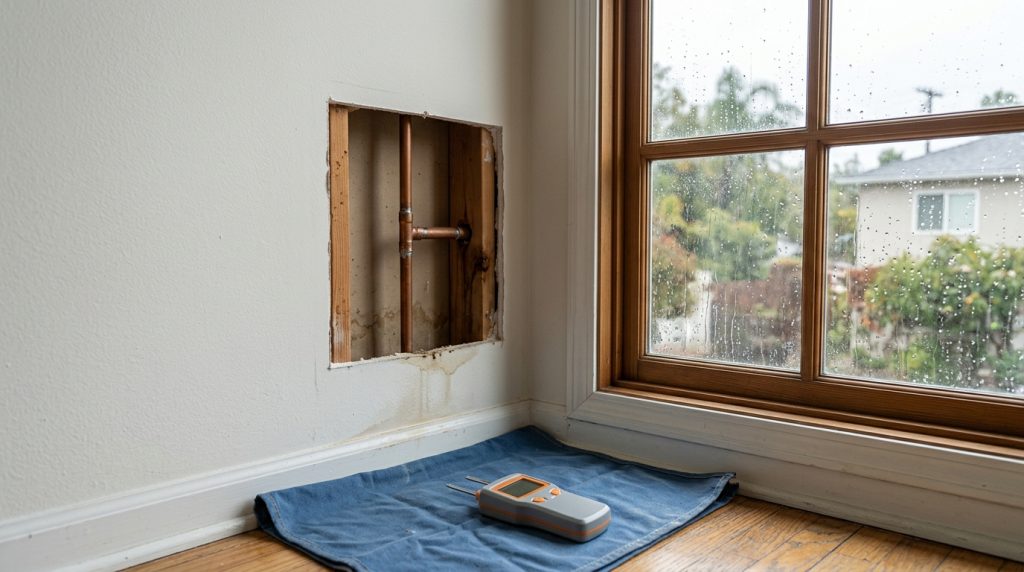
Water that appears during or after rain does not automatically mean the roof is leaking, and it does not automatically mean a plumbing pipe failed. The timing, location, weather pattern, and behavior of the moisture can help narrow the possibilities, but they usually cannot confirm the source by themselves.
Fast answer: if the moisture shows up only during wind-driven rain, exterior intrusion is more likely. If it appears regardless of weather, grows while a fixture is running, or continues after the storm has passed, a plumbing source becomes more likely. Protect the area, stop using nearby fixtures if that is safe, photograph what you see, and arrange an in-person inspection before opening walls or covering the stain.
Why rain and plumbing leaks are easy to confuse
Water rarely travels in a straight, visible line from its entry point to the stain you notice. It can move along framing, pipes, wiring penetrations, drywall seams, or the underside of flooring before it becomes visible. A ceiling stain may begin several feet from the actual opening. Water at a baseboard may have come down inside the wall rather than through the floor directly below it.
The timing can also be misleading. A slow plumbing leak may go unnoticed until a rainy day keeps everyone indoors and increases water use. On the other hand, moisture from a storm may continue dripping after the sky clears because water collected inside a wall or ceiling cavity. That is why one clue should not be treated as a diagnosis.
What points more toward exterior water intrusion?
Exterior intrusion usually follows a repeatable relationship with weather. The following clues make that source more likely:
- The stain appears only during rain or shortly afterward.
- The problem is worse when wind pushes rain toward one side of the home.
- Moisture is near a window, exterior door, chimney, roof edge, balcony, vent, or wall penetration.
- The same area stays dry during long periods without rain, even while plumbing fixtures are used normally.
- Exterior caulk, flashing, stucco, roofing, or drainage details near the area look damaged or incomplete.
- Water appears on more than one level along the same exterior wall.
These signs still do not prove exactly where rain entered. A small exterior opening can admit water only under a certain wind direction, and the visible damage may be far from that opening. A roofer, building-envelope specialist, or restoration professional may need to evaluate the exterior and the concealed area.
What points more toward a plumbing leak?
A plumbing leak often follows fixture use, water pressure, or a continuous supply line rather than the weather. Watch for patterns such as:
- The damp area grows when someone showers, flushes a toilet, runs a sink, uses the dishwasher, or starts the washing machine.
- Moisture appears on dry days or continues returning between storms.
- The stain is below a bathroom, kitchen, laundry area, water heater, or known supply or drain line.
- You hear dripping or running water when fixtures are off.
- A nearby cabinet, wall, or floor becomes damp before the rain starts.
- The water meter changes when every fixture and water-using appliance is off, although irrigation and other connected equipment must also be considered.
A fixture-related pattern can offer a useful clue. Water that appears only while a shower is used may involve the drain, supply connection, valve, enclosure, or another nearby component. It does not identify which part failed. Likewise, a wet wall near a bathroom could still be receiving rain from above. A plumber needs to see the system in person before calling the cause.
What if the water continues after the rain stops?
Continued dripping is important, but it does not settle the question. Rainwater can remain trapped in insulation or framing and release slowly. A plumbing line can also keep feeding moisture until the fixture is stopped or the water is shut off.
Note how long the dripping lasts and whether its pace changes when nearby fixtures are used. If the area keeps getting wetter well after surfaces outside have dried, or if it changes with indoor water use, prioritize a plumbing inspection. If it returns only with storms from one direction, exterior entry deserves close attention.
Safe first steps before anyone opens the wall
- Move belongings away. Protect furniture, rugs, electronics, and stored items without entering an area that feels unsafe.
- Do not touch wet electrical devices. If moisture is near an outlet, light fixture, electrical panel, appliance, or visible wiring, keep clear and contact an appropriate professional.
- Stop nearby fixture use. If using a bathroom, kitchen, or laundry appliance seems connected to the leak, stop using it until the source is checked.
- Shut off water only when appropriate and safe. For an active supply-line leak, a working local valve or the main shutoff may limit additional water. Do not force a stuck or corroded valve.
- Document the pattern. Take photos and write down when the moisture began, whether it was raining, which fixtures were running, and how the stain changed.
- Leave concealed spaces alone. Avoid cutting drywall, removing roofing, or entering a wet attic or crawlspace without the right training and precautions.
If water is actively spreading, a ceiling is sagging, or the area is close to electrical components, keep people away and get professional help rather than continuing DIY checks.
How professionals narrow down the source
A useful inspection starts with the pattern, then tests the likely sources in a controlled way. A plumber may inspect accessible supply and drain connections, look for pressure or meter clues, and run specific fixtures while monitoring the affected area. Depending on the property and the symptoms, moisture-detection tools can help identify where materials are damp without assuming the first visible stain is the origin.
If plumbing tests do not reproduce the issue, the next step may be an exterior, roof, window, balcony, or drainage inspection. Some situations require more than one trade. The goal is to identify and stop the source before cosmetic repairs hide evidence or new drywall and paint are damaged again.
Once a plumbing source has been addressed, the affected materials still need to be evaluated. Zenon’s Los Angeles water damage restoration service can help property owners assess plumbing-related moisture and plan the next steps for the affected area. The right scope depends on what is wet, how far the moisture traveled, and what an on-site inspection finds.
Why local Los Angeles conditions matter
Los Angeles homes vary widely in age, additions, rooflines, stucco details, balconies, and plumbing layouts. Long dry periods can make the first strong rain especially revealing around aging sealants, roof penetrations, and exterior drainage paths. Older supply or drain lines may create a separate moisture problem at the same time. In Burbank, Glendale, and Los Angeles neighborhoods, a careful inspection matters more than assuming every rainy-day stain has the same cause.
Questions to note before scheduling an inspection
- When did the stain or dampness first appear?
- Was rain falling at the time, and was it windy?
- Does the area change when a specific fixture or appliance runs?
- Is the moisture on an exterior wall, below a bathroom, or near a water-using appliance?
- Has the same spot appeared during an earlier storm?
- Does the dripping stop when household water use stops?
- Are there photos showing how the area changed over several hours?
These details can shorten the troubleshooting process, but they should be treated as evidence rather than a homeowner diagnosis.
Do not repair the stain before the source is confirmed
Fresh paint can hide a mark without solving the problem. Replacing drywall too early can also remove useful clues and expose the new material to more moisture. First identify and stop the source. Then determine what materials need drying, cleaning, removal, or repair based on the conditions found on site.
Water showing up after rain?
If you suspect a plumbing source, contact Zenon Plumbing & Restoration or call (818) 640-2944. Phone answered 24/7, on-site Mon-Sat 9 AM–6 PM.


