 Mon-Sat 9AM-6PM
 Make an
Appointment (818) 640-2944
 2115 W Magnolia Blvd Unit C, Burbank, CA 91506

A Bathtub Spout Keeps Dripping After the Water Is Off: What It Usually Points To
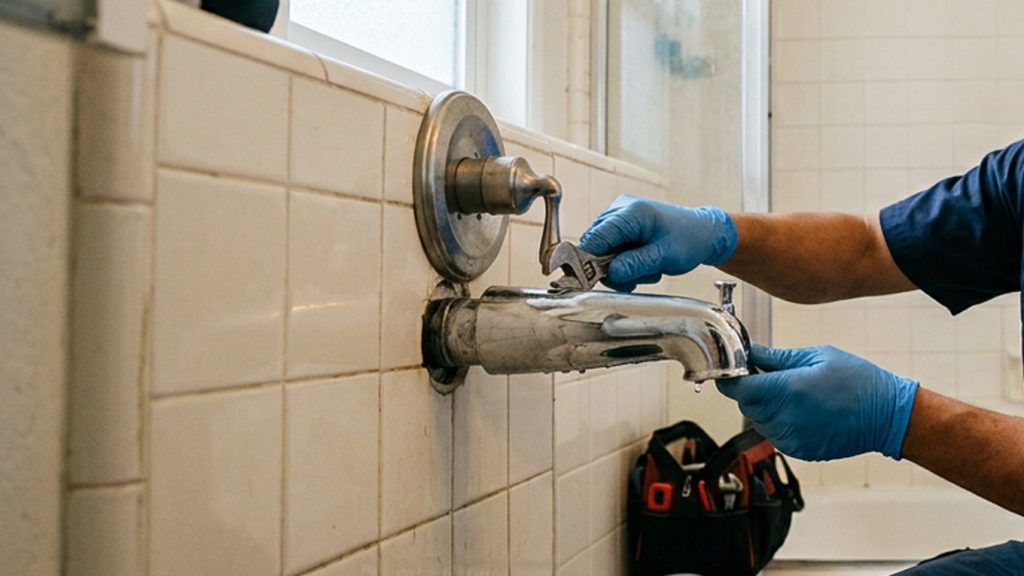
A bathtub spout that drips for a few moments after you turn off the water may simply be releasing water left in the spout or shower riser. A drip that continues for several minutes, returns after stopping, or never fully quits usually points to a problem farther upstream—often inside the tub or shower valve rather than in the spout itself.
The useful first step is not to guess at a repair. Notice how long the dripping lasts, whether it happens after hot or cold use, and whether the showerhead drips too. Those details can help a plumber narrow down the source without treating every drip as the same problem.
Is a Little Dripping After a Bath or Shower Normal?
Sometimes. Water remains inside the tub spout, shower arm, and vertical pipe after the handles are turned off. Gravity can release that water in a short series of drips. If a shower diverter was engaged, lowering it may also let trapped water drain through the tub spout.
Residual drainage usually has a clear pattern: it begins right after shutoff, slows steadily, and stops. It should not continue at the same pace for a long time. It also should not restart much later when nobody has used the fixture.
A simple observation test can help. Dry the end of the spout, place a clean dry container underneath it, and leave the fixture alone. Do not remove trim or force a stuck handle. Check whether the dripping steadily fades or continues at a regular rate. This does not identify the exact failed part, but it helps separate leftover water from an active seep.
Why Can the Spout Drip When the Handle Is Off?
The tub spout is usually just the exit point. The part that controls flow sits behind the handle and trim. Depending on the fixture, that control may use a cartridge, stem, washer, seat, or another internal sealing component. When a seal wears, mineral buildup interferes with movement, or a component no longer closes cleanly, a small amount of water can pass through even though the handle appears to be off.
That is why replacing the visible spout alone may not solve a persistent drip. A damaged spout can create other issues, but the shutoff function normally belongs to the valve assembly. The exact cause cannot be confirmed without inspecting the fixture and, in some cases, checking the valve components.
A worn cartridge or valve component
Single-handle tub and shower fixtures commonly use a cartridge to control temperature and flow. Repeated use, aging seals, sediment, or mineral deposits can keep it from closing fully. Two- or three-handle fixtures may use stems, washers, and seats that wear in different ways. Similar symptoms can therefore require different parts and repair methods.
Hard-water mineral buildup
Mineral deposits are common around Southern California fixtures. Buildup can collect on the spout opening, diverter, handle trim, or internal valve surfaces. Surface deposits around the outlet do not prove that the internal valve is damaged, but stiffness, uneven handle movement, and recurring drips together are worth noting.
A pressure-related symptom
Water pressure can influence how a marginal seal behaves. If the drip changes noticeably when other fixtures run, or if you also hear banging, whistling, or unusually forceful flow elsewhere, mention that during the inspection. Those clues may justify checking more than the bathtub fixture. They do not, by themselves, confirm a pressure problem.
A diverter that is not returning cleanly
If your tub spout has a pull-up diverter, trapped water can continue draining after a shower. A diverter that sticks can also make the drainage pattern confusing. Try lowering it gently after the water is off. Do not force it or pry on it. A diverter issue may affect whether water exits through the spout or showerhead, but it is not the usual shutoff mechanism for the main water flow.
What Details Should You Check Before Calling?
A few observations can make a service visit more efficient. Write down or take a short video of the pattern instead of disassembling the fixture.
- Duration: Does the drip stop within a minute or continue much longer?
- Rate: Is it an occasional drop, a steady drip, or a thin stream?
- Temperature: Does it happen after hot use, cold use, or both?
- Outlet: Is water coming from the tub spout, the showerhead, or both?
- Handle feel: Has the handle become stiff, loose, or difficult to position?
- Surrounding area: Is there moisture around the trim, wall, baseboard, or room on the other side?
- Other symptoms: Have you noticed pressure changes, noise, staining, or a higher-than-usual water bill?
These clues help distinguish a fixture-level nuisance from a possible hidden leak concern. If there is moisture outside the tub, staining below the bathroom, or water appearing inside a wall, stop treating it as a simple spout drip. If safe, avoid using that fixture until it can be checked.
Can You Fix a Dripping Tub Spout Yourself?
Homeowners can safely clean accessible mineral deposits from the outside of the spout and observe whether the diverter moves freely. Beyond that, the right answer depends on the valve design, the condition of the shutoff, and access to the plumbing.
Removing a cartridge or stem without identifying the fixture can lead to a mismatched part, a damaged valve body, or water that cannot be turned back on correctly. Older fixtures may also have corroded fasteners or brittle components. If you cannot isolate the fixture confidently, if the handle is stuck, or if access requires opening a wall, leave the repair to a plumber.
Do not rely on tightening the handle harder each time. Extra force may temporarily change the drip, but it can damage trim or internal components and does not address why the seal is failing.
When Does a Small Drip Need Faster Attention?
A slow drip is not always an emergency, but it should move higher on the list when it is constant, becomes a stream, appears with water outside the tub, or is accompanied by staining in an adjacent room or ceiling below. The same is true when a shutoff will not operate or when the fixture suddenly behaves differently after plumbing work.
If water is actively escaping into a wall, floor, or ceiling, use the appropriate water shutoff only if you can reach and operate it safely. Keep away from wet electrical fixtures or outlets. For an urgent plumbing concern, phone answered 24/7, on-site Mon-Sat 9 AM–6 PM.
Why Local Housing Details Can Matter
Burbank homes and apartments include a mix of newer renovations and older plumbing layouts. A recently updated handle and trim do not always mean the valve behind the wall was replaced at the same time. Mineral buildup, older multi-handle assemblies, limited rear access, and past remodel work can all change the repair approach. A local inspection should account for the actual fixture and piping rather than assuming every bathtub uses the same parts.
What a Plumber May Inspect
A plumber may begin by reproducing the symptom and checking the handle, trim, spout, diverter, and nearby surfaces. The next step depends on what is found. It may involve identifying the fixture, testing how the valve shuts off, examining an accessible cartridge or stem, and looking for signs that water is escaping somewhere other than the outlet.
If the drip appears alongside wall moisture, unexplained water use, or other hidden-leak clues, a broader evaluation may make sense. Zenon’s Burbank leak detection service explains the local inspection path when the source is not obvious. A plumber still needs to see the system in person before confirming the cause or recommending a repair.
The Bottom Line
A brief, fading drip can be normal drainage. A steady drip that continues after the fixture is off usually deserves a closer look at the valve or related components. Track the pattern, avoid forcing the handle or opening the wall, and watch for moisture beyond the tub.
If the drip is persistent or you see signs of water where it should not be, contact Zenon Plumbing & Restoration to request an in-person inspection. Clear observations now can help the technician focus on the right part of the system when they arrive.
Zenon Plumbing & Restoration
Need help with this plumbing problem in Burbank? Call (818) 640-2944. Phone answered 24/7; on-site service Mon-Sat 9 AM–6 PM.


