 Mon-Sat 9AM-6PM
 Make an
Appointment (818) 640-2944
 2115 W Magnolia Blvd Unit C, Burbank, CA 91506

Kitchen Sink Backs Up When the Garbage Disposal Runs: What That Pattern Suggests
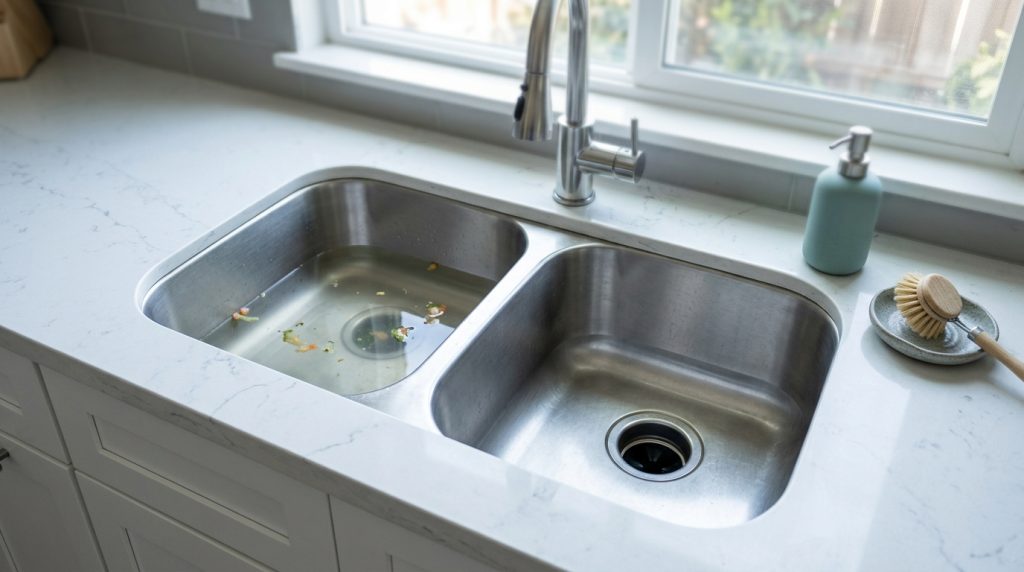
When a kitchen sink backs up as soon as the garbage disposal runs, the disposal may not be the real problem. The spinning unit pushes food particles and water into the drain quickly. If the trap or kitchen branch line is partly restricted, that extra flow can send water back into the sink instead of carrying it away.
Fast answer: stop running the disposal, avoid adding more water, and do not put your hand into the disposal opening. If the sink is holding water, both basins are affected, or the problem keeps returning after a simple surface-level check, the drain should be inspected in person. The timing is useful evidence, but it does not confirm the exact location or cause of the blockage.
Why does the sink back up only when the garbage disposal runs?
A disposal does two things at once: it breaks food into smaller pieces and moves a concentrated rush of water and debris toward the drain. A clear kitchen line can usually handle that flow. A restricted line may drain slowly when the faucet runs gently but fail when the disposal sends more material through it.
That pattern often suggests resistance somewhere after the disposal outlet. Common possibilities include buildup in the trap, grease or food residue in the kitchen branch line, or a connection that is not moving water as freely as it should. In a double-basin sink, water may rise in the other basin because both sides join the same drain path.
The disposal itself can still be involved. A jammed or poorly draining unit, a connection problem, or improper use may contribute. However, replacing the disposal without checking the drain can leave the backup unchanged. A plumber needs to see how the sink, disposal, trap, dishwasher connection, and branch line behave together before identifying the right repair.
Does this mean the garbage disposal is broken?
Not necessarily. A disposal that hums without turning, trips its reset, leaks from its body, or does not make any sound may have an electrical or mechanical problem. A disposal that runs normally while water rises into the sink points more toward a drainage restriction, although the two problems can happen at the same time.
Pay attention to what you can observe without touching moving or electrical parts:
- Does the disposal sound normal, or has the sound changed?
- Does water rise in the same basin or the second basin?
- Does the sink drain slowly after the disposal is switched off?
- Does the backup happen only after food cleanup, or even with plain water?
- Do you hear gurgling from the sink or another nearby drain?
- Is there water under the cabinet, around the trap, or near the disposal body?
These details help narrow the inspection. They are not a reliable way to diagnose the system from a distance, especially when the line is concealed behind a cabinet or wall.
What commonly restricts a kitchen drain line?
Grease and cooking residue
Liquid grease may look harmless while it is warm, but it can cool and cling to the inside of a drain. Oils, sauces, and fine food particles then collect on that layer. The opening gets smaller over time, so the sink may seem fine until a larger volume of water reaches the restriction.
Fibrous or starchy food
Celery fibers, onion skins, corn husks, potato peels, rice, pasta, and similar foods can create difficult drain material even after passing through a disposal. A garbage disposal is not a trash can, and grinding something smaller does not guarantee that the pipe can carry it away.
Food packed into the trap or branch line
The curved trap below the sink holds water to block sewer odors. It can also catch debris. Farther downstream, residue may build up in the kitchen branch line. If clearing a nearby section only brings temporary relief, the restriction may extend deeper than the visible plumbing.
A problem with the shared sink connection
Double-basin sinks use connected piping before reaching the wall drain. If water moves from the disposal side into the other basin, the shared path may be restricted. The exact layout varies, so the location should be confirmed rather than guessed.
What should you do when the sink starts backing up?
- Switch off the disposal. Do not keep cycling it in hopes that more grinding will clear the line.
- Stop adding water. Running the faucet can raise the water level and increase the chance of an overflow.
- Keep hands and tools out of the disposal. Never reach into the opening, even when the wall switch is off. Electrical and mechanical components require proper isolation and safe handling.
- Remove loose items from below the sink. If there is a leak, this helps protect stored items and lets you spot dripping without taking piping apart.
- Note the pattern. Record which basin fills, whether the dishwasher was running, and how long the sink takes to drain.
- Pause use until the cause is checked. This is especially important when water returns quickly, appears under the cabinet, or affects another fixture.
Avoid pouring chemical drain cleaner into a sink connected to a disposal. It may not remove the underlying buildup, can remain in standing water, and can create an exposure risk for anyone who later opens the drain. Do not dismantle the disposal, electrical connection, or concealed piping as a trial-and-error fix.
Can a plunger fix a disposal-side backup?
A plunger may move a small, nearby blockage, but it does not tell you why the clog formed or whether buildup remains. On a double-basin sink, pressure can also move between the two openings instead of reaching the restriction. Improper plunging may loosen a connection below the sink and create a leak inside the cabinet.
If the sink has backed up more than once, drains slowly between incidents, or improves only briefly, repeated plunging is not a long-term answer. A professional assessment can determine whether ordinary cleaning is appropriate or whether the line needs a different approach. Zenon’s Burbank drain cleaning service is the relevant next step when a recurring kitchen backup needs an in-person inspection.
When is the backup a sign of a larger drain problem?
Call for help sooner when the backup is not limited to one brief event. Warning patterns include water rising in both sink basins, gurgling from nearby fixtures, sewage-like odor, repeated clogs, a dishwasher discharge that fills the sink, or water appearing under the cabinet. If several fixtures back up together, stop using water because the restriction may be beyond the kitchen sink line.
Standing water that contains food waste should be handled cautiously and kept away from children and pets. If water reaches cabinetry, drywall, or flooring, note where it traveled and avoid assuming the visible surface is the full affected area. The source and the wet materials may require separate attention.
Why is this pattern common in LA-area kitchens?
Burbank and greater Los Angeles have a mix of older homes, remodels, additions, apartments, and newer kitchens installed over existing drain layouts. Pipe material, slope, prior repairs, and years of kitchen use can all affect how well a line carries disposal discharge. That does not mean an older home automatically needs major work. It means the observed pattern and the actual pipe condition matter more than a guess based on age alone.
A useful local inspection looks at the specific setup: how the sink is connected, whether the problem is confined to the kitchen, and whether buildup or another condition is limiting flow. Homeowners can review Zenon’s main plumbing and drain services for the broader service path without trying to select a repair before the system is examined.
How can you help prevent the backup from returning?
Scrape plates and pans into the trash before rinsing them. Keep grease, coffee grounds, fibrous scraps, rice, pasta, and large food loads out of the disposal. When the disposal is used, feed small amounts rather than forcing a full basin of scraps through at once. Follow the equipment manufacturer’s operating directions, including its guidance on water flow.
Most importantly, treat a recurring backup as a symptom rather than a disposal habit you must work around. If you have to run less water, restart the unit repeatedly, or wait for the second basin to empty after every cleanup, the drain is not performing normally.
Kitchen drain backing up?
Stop running the disposal and call (818) 640-2944 for help. Phone answered 24/7, on-site Mon-Sat 9 AM–6 PM.


