 Mon-Sat 9AM-6PM
 Make an
Appointment (818) 640-2944
 2115 W Magnolia Blvd Unit C, Burbank, CA 91506

Rust-Colored Hot Water From One Faucet vs the Whole House: What the Pattern Suggests
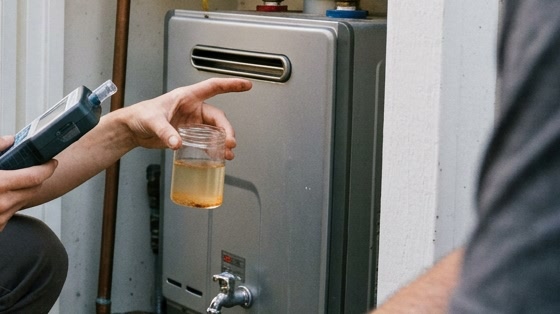
Fast answer: Rust-colored hot water from one faucet usually points toward that fixture, its supply line, or a short section of nearby piping. When the discoloration appears at every hot-water faucet but the cold water stays clear, the water heater or the hot-water piping becomes a stronger suspect. If both hot and cold water are discolored throughout the home, the cause may be farther upstream.
The pattern is useful, but it is not a diagnosis. Color alone cannot show exactly which part is deteriorating or establish water quality. Compare fixtures carefully, note whether the color appears only at startup or continues to flow, and arrange an in-person inspection if the discoloration persists, returns, or comes with leaks, unusual sounds, or changes in water pressure.
What should you check first?
Begin by narrowing the problem without taking plumbing apart. Use a clear glass or white bowl so the color is easier to see. Test the affected faucet on cold only, then hot only. Let each side run briefly, and avoid mixing the two during the comparison.
Next, check another faucet in the same room and at least one fixture elsewhere in the home. A simple sequence can help:
- Test cold water at the original faucet.
- Test hot water at the original faucet.
- Repeat the cold-and-hot comparison at a nearby fixture.
- Repeat it at a fixture farther from the water heater.
- Note whether the color clears quickly, fades slowly, or stays consistent.
Write down what you see rather than relying on memory. Also note whether the issue started after plumbing work, a water shutoff, a period when the property was vacant, or water-heater maintenance. Those details can help a plumber separate a fixture-level issue from a broader hot-water problem.
What does rust-colored hot water from one faucet suggest?
If only one faucet produces rusty-looking hot water, the water heater is less likely to be the only source. The affected fixture may have internal corrosion, a deteriorating connector, or buildup that releases when hot water begins moving. A short branch of older metal piping can also contribute discoloration before the water reaches that faucet.
Compare the hot and cold sides at the same fixture. If the cold water is clear and the hot side is discolored, attention shifts toward the hot-side components. If both sides show the same color only at that faucet, the aerator, faucet body, or shared connection may deserve a closer look.
Homeowners can remove and visually inspect an easy-to-access aerator only if they are comfortable doing so and the faucet manufacturer allows it. Do not force a corroded part or use harsh chemicals. An aerator may hold visible debris, but cleaning it does not explain why that material reached the faucet. If discoloration returns, the underlying source still needs to be identified.
What if every hot-water faucet is discolored?
When several fixtures show rust-colored hot water while their cold water remains clear, the common hot-water source becomes more important. Sediment may have been disturbed inside the water heater, or corrosion may be affecting the tank or hot-water piping. The age and type of the heater, recent maintenance, and whether the color appears after the water sits can all change the likely explanation.
Do not drain, flush, or open a water heater just to test a theory unless you know the correct procedure for that exact unit. Hot water, pressurized connections, fuel or electrical components, and a drain valve that may not reseal can turn a simple check into a larger problem. If the unit is leaking, making new popping or rumbling sounds, or showing corrosion around connections, stop experimenting and arrange an inspection.
Discoloration that appears only for a few seconds after long periods of no use may reflect water sitting in a particular section of piping. Discoloration that continues at every hot fixture suggests a different pattern. Neither observation proves the cause, but both are useful to report.
What if both hot and cold water look rusty?
If the color appears on both sides at multiple fixtures, look beyond the water heater. Recent utility work, a neighborhood water interruption, sediment disturbed after a shutoff, or corrosion in the building’s supply piping may affect the whole system. In a multi-unit property, ask whether nearby units are seeing the same change.
Check notices from the local water provider if work or an interruption recently occurred. Follow any provider instructions for flushing or use rather than improvising a whole-house procedure. If neighbors have clear water but your property does not, or if the discoloration continues, the building plumbing should be evaluated.
Visual appearance cannot determine whether water is suitable for a particular use. Questions about public water quality should go to the serving water utility or the appropriate local authority. A plumber can evaluate the property-side piping and equipment.
Does the timing of the discoloration matter?
Yes. The timing can help narrow the inspection:
- Only at startup: Water may be picking up material while sitting in a fixture, connector, or section of piping.
- After a shutoff: Restored flow can disturb sediment or corrosion already inside the plumbing.
- After water-heater service: Sediment may have shifted, or a valve and connection may need to be checked.
- After the home was vacant: Water may have remained still in the system for an extended period.
- Continuously at all hot fixtures: The shared hot-water equipment or piping deserves prompt attention.
- Intermittently with pressure changes: Note which fixtures were running and whether the color appeared after high demand.
A photo of the water in a clear container can help document the color, especially when the problem is intermittent. Record the date, fixture, hot-or-cold setting, and how long the faucet had been running. Do not collect samples from several fixtures in unlabeled containers; mixed observations make the pattern harder to interpret.
When does a water heater need professional attention?
Schedule an inspection when rusty hot water continues at several faucets, comes back after it clears, or appears with signs of deterioration around the heater. Moisture at the base, corrosion on connections, a changing hot-water supply, and new sounds from the unit are all reasons to have the system seen in person.
A technician may compare water at different fixtures, inspect accessible piping and connectors, review the heater’s condition, and determine whether maintenance, a component repair, piping work, or replacement should be considered. The right recommendation depends on what is actually found. Discolored water does not automatically mean the heater must be replaced.
For homeowners in Glendale, Zenon’s water heater repair service can evaluate the unit and the surrounding hot-water system rather than guessing from color alone.
What should Glendale homeowners and property managers keep in mind?
Glendale includes older houses, remodeled properties, and multi-unit buildings where plumbing materials may differ between the main line, individual units, and newer fixture connections. One faucet can be connected to a different generation of piping than another. In an apartment or shared building, comparing observations across units can help show whether the issue is isolated or building-wide.
Property managers should record which units and fixtures are affected, whether the cold water is clear, and when the issue began. Avoid assuming that every resident is seeing the same cause. A targeted inspection is more useful than repeatedly flushing fixtures without understanding the pattern.
What can you do while waiting for an inspection?
Avoid dismantling the water heater, opening pressurized connections, or adding chemical cleaners to the plumbing. Keep the area around the heater clear so visible leaks are easier to spot. If water is actively leaking from the heater or a nearby connection, use the appropriate shutoff only if you can do so safely and know which valve controls the supply. Keep away from wet electrical components and do not force a stuck valve.
Bring your notes and photos to the appointment. The most useful details are whether the color affects hot water only, how many fixtures are involved, whether it clears, and what changed just before it started.
To request an in-person evaluation, contact Zenon Plumbing & Restoration or call (818) 640-2944. Phone answered 24/7, on-site Mon-Sat 9 AM–6 PM.
Zenon Plumbing & Restoration
Need help with this plumbing problem in Burbank? Call (818) 640-2944. Phone answered 24/7; on-site service Mon-Sat 9 AM–6 PM.


