 Mon-Sat 9AM-6PM
 Make an
Appointment (818) 640-2944
 2115 W Magnolia Blvd Unit C, Burbank, CA 91506

A Hairline Crack Appears in the Toilet Tank: When to Shut Off the Water
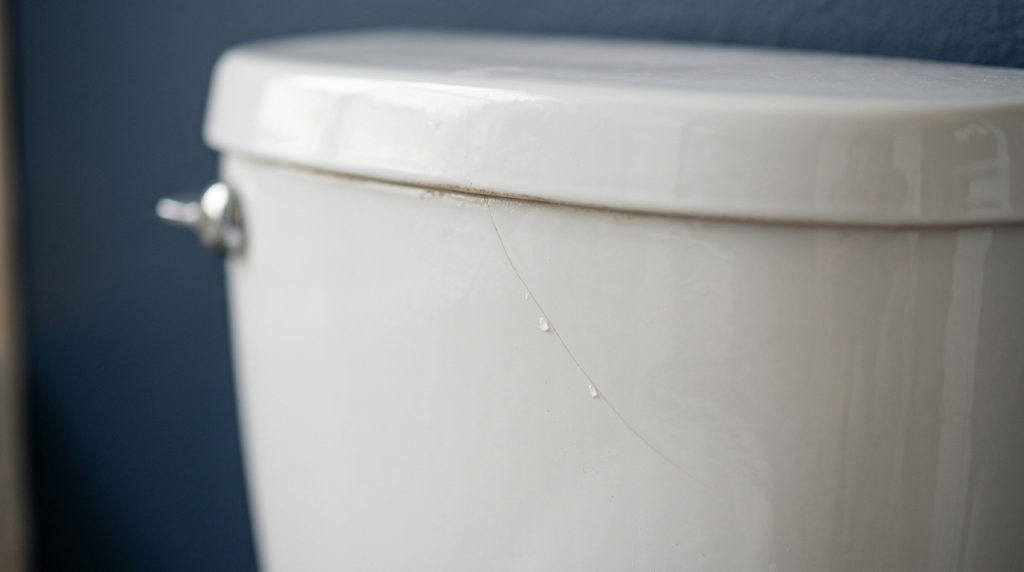
A hairline crack in a toilet tank should be treated as a warning, not a cosmetic issue. If the crack is wet, growing, discolored by seepage, or located low on the tank, turn the toilet’s shutoff valve clockwise, flush once to lower the water level if the tank is still stable, and stop using the toilet. Even a dry-looking crack deserves prompt inspection because porcelain can fail without much additional warning.
Do not try to prove the crack is harmless by leaning on the tank, tightening bolts, or repeatedly flushing. A plumber needs to see the tank, its mounting points, and the surrounding floor before anyone can say whether the tank can remain in service or should be replaced.
When should you shut off the water right away?
Shut off the toilet’s water supply promptly if you notice any of the following:
- Water beading, weeping, or running from the crack
- A crack that reaches the bottom of the tank or a bolt opening
- A damp wall, floor, or baseboard beside the toilet
- A crack that appears longer after a flush
- A new snapping, ticking, or shifting sound from the tank
- A tank that rocks, tilts, or no longer sits evenly on the bowl
- Water collecting around the toilet after the tank refills
If water is actively escaping and the toilet valve will not close, use the home’s main water shutoff if you can reach and operate it safely. Keep people and pets away from the wet area, especially if water is moving toward an electrical outlet or powered appliance. Do not touch electrical equipment while standing on a wet floor.
How do you safely stop using the toilet?
The small valve on the wall or floor behind the toilet controls water entering the tank. Turn it clockwise without forcing it. Older valves can be stiff, and excessive pressure can damage the valve or nearby supply line. If it does not move with reasonable hand pressure, stop rather than using pliers.
Once the valve is closed, the tank should stop refilling. If the porcelain appears stable and no water is escaping, one flush can lower the tank level. Do not flush if the tank is shifting, leaking quickly, or making cracking sounds. Place towels around the area to limit minor seepage, but do not use a bucket, brace, or tape setup that presses against the porcelain.
Tell everyone in the home that the toilet is out of service. In a multi-bathroom property, use another toilet until this one has been inspected. In a one-bathroom home, explain that situation when you call so the plumber understands the practical urgency.
Why can a toilet tank develop a hairline crack?
There is no reliable way to identify the cause from appearance alone. A crack may follow an impact, stress around a mounting point, uneven contact between the tank and bowl, temperature change, or an existing weakness in the porcelain. It may also become visible after someone tightens hardware in an attempt to stop movement or a leak.
Can a dry crack wait?
A crack above the normal waterline may look less urgent than one near the bottom, but “dry” does not automatically mean safe. The mark could be limited to the glazed surface, or it could extend into the tank wall. Photos can help document whether it changes, but they cannot confirm depth or strength.
If there is no moisture, the tank remains level, and the mark is not changing, shutting off the supply between uses may reduce immediate exposure while you arrange an inspection. That is a temporary precaution, not a repair recommendation. Stop using the toilet completely if the crack grows, becomes wet, or approaches a bolt hole, connection, or lower edge.
Should you seal a cracked toilet tank?
Adhesives, sealants, and patch kits may be marketed for porcelain, but a toilet tank stores several gallons of water under constant load. A surface patch can hide seepage without showing whether the crack is spreading through the tank wall. It can also make the area harder to evaluate later.
For that reason, do not rely on a DIY patch to return a questionable tank to regular use. The safer decision is based on an in-person look at the crack, tank condition, fittings, and mounting points. Depending on what is found, replacement of the tank or the complete toilet may be more appropriate than an attempted patch. Compatibility also matters because not every replacement tank fits every bowl.
What should you check around the toilet?
Without moving the toilet or putting pressure on the tank, look for clues that help a plumber understand what happened:
- Where the crack starts and ends
- Whether it changes after the tank fills
- Whether moisture appears only during refilling or continuously
- Whether the shutoff valve or supply connector is also wet
- Whether water is coming from a tank bolt, the tank-to-bowl connection, or the porcelain itself
- Whether the floor feels damp or shows staining nearby
Dry the outside gently and observe from a safe distance. Do not add dye, hot water, or cleaning chemicals to test the crack. Water near the toilet can also come from a supply connection, condensation, or another seal, so the visible crack and the moisture may not have the same cause. An in-person inspection is the right way to separate those possibilities.
Why quick action matters in Glendale and the LA area
Many Glendale and greater Los Angeles homes have compact bathrooms where a leaking tank can send water under a vanity, through flooring seams, or toward the wall before the amount looks large. In apartments and multi-story homes, water can also move beyond the room where the leak begins. Acting early means shutting off the source, protecting the immediate area, and getting the toilet evaluated before normal use resumes.
If the crack is leaking, spreading, or affecting the only usable bathroom, Zenon can help assess the immediate plumbing problem through its Glendale emergency plumbing service. The exact repair depends on what the technician finds at the property; a photo or description alone is not enough to diagnose the tank safely.
Take a clear photo only if you can do so without touching or leaning over an unstable tank. For help arranging an inspection, use Zenon’s contact page or call (818) 640-2944. Phone answered 24/7, on-site Mon-Sat 9 AM–6 PM.
The practical takeaway
A hairline crack in a toilet tank is not something to monitor while continuing normal use. Shut off the supply immediately if there is moisture, movement, growth, or a crack near the bottom or mounting hardware. Avoid force, repeated flushing, and DIY patching. Then have the toilet inspected in person so the source of the moisture and the condition of the porcelain can be evaluated before the fixture is used again.


