 Mon-Sat 9AM-6PM
 Make an
Appointment (818) 640-2944
 2115 W Magnolia Blvd Unit C, Burbank, CA 91506

A Braided Supply Line Looks Bulged or Rusty: Warning Signs Before It Leaks
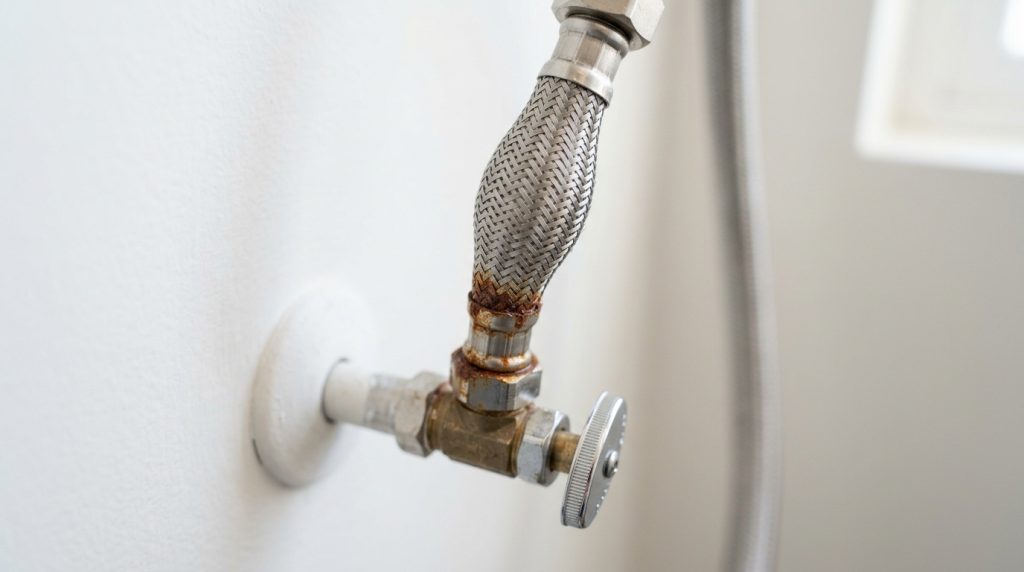
Fast answer: A braided supply line that looks swollen, kinked, frayed, rusty, or damp should be treated as a warning—not something to watch indefinitely. The visible braid is only the outer reinforcement; the water-carrying tube inside can weaken before a steady drip appears. Avoid squeezing, twisting, or tightening a questionable connector. If water is already leaking, close the nearby fixture shutoff only if it turns easily and you can do so safely, then arrange an in-person inspection.
Braided supply lines are the short flexible connectors that carry water from a shutoff valve to a toilet, faucet, dishwasher, washing machine, or other fixture. They are easy to overlook because they usually sit under a sink, behind a toilet, or beside an appliance. A quick visual check can help a homeowner notice trouble before a small connector problem becomes an active leak.
What does a bulge in a braided supply line mean?
A bulge means the connector is no longer holding its original shape. The internal tube may have expanded, shifted, or weakened beneath the metal braid. You cannot confirm the exact condition from appearance alone, but a new lump or swollen section is a good reason to stop using the fixture when practical and have the line checked promptly.
Do not press on the bulge to see whether it feels soft. Do not bend the line back into shape or wrap it with tape. Those actions do not repair the inner tube and may add stress to an already compromised area.
Is rust on the braid always a sign of a leak?
Not always. Surface discoloration can come from humidity, cleaning products, an older spill, or moisture from a nearby connection. Rust can also develop when a fitting has been seeping slowly. The important question is not just whether the braid looks brown; it is whether other clues appear around the same area.
Look without moving the connector. Warning signs may include:
- orange or dark corrosion concentrated near a nut or crimp;
- green or white mineral deposits around a metal fitting;
- a damp shutoff valve, cabinet floor, wall, or baseboard;
- a musty odor or material that looks newly swollen;
- a braid that is frayed, flattened, or pulling away from the end fitting;
- water that appears only while the fixture or appliance is running;
- a connector rubbing against a sharp cabinet edge or wall opening.
Because water can travel along the outside of a hose, the wettest spot is not always the source. A plumber may need to inspect the valve, connection, fixture, and supply line together rather than assuming the braid itself is responsible.
Why do braided connectors bulge, rust, or fray?
Several conditions can contribute, and more than one may be present. A connector may have been installed with a tight bend or twist. It may be too short for the route, causing constant tension at the fitting. Moisture from a slow seep can sit against the braid. Household items stored under a sink can push or pull on the line. Cleaning chemicals may also affect nearby materials or finishes.
Age may be part of the picture, but appearance alone cannot tell you how much useful life remains. Installation, material, water conditions, movement, and exposure all matter. That is why a plumber should evaluate the actual connector instead of making a diagnosis from a photo or from the age of the home.
Which supply lines deserve a closer look?
Toilet connectors
Check the line between the wall valve and the toilet tank. It should have a smooth route with no sharp fold. Look around both ends and the valve for fresh moisture, corrosion, or mineral buildup. Do not lean on the connector while cleaning behind the toilet.
Under-sink faucet lines
These lines can be hidden behind bins and cleaning supplies. Clear enough space to see them without tugging on anything. Check the cabinet floor for stains, raised seams, soft-looking material, or dampness near the rear wall.
Dishwasher and washing machine connections
Appliance lines may be difficult to inspect without moving the appliance. Do not pull out a heavy appliance if doing so could strain the hose, cord, drain, gas connection, flooring, or cabinetry. If the line cannot be viewed safely, leave that inspection to a professional.
Water heater connectors
Water heater connections are not a good place for experimental DIY repairs. Heat, pressure, electrical equipment, gas components, and hot water can create additional hazards. If you see corrosion, dampness, or a distorted connector around a water heater, avoid touching or tightening it and schedule an inspection.
What should you do if the line is damp but not spraying?
Start by keeping people and stored belongings away from the area. If it is safe to do so, place a dry paper towel near—but not wrapped around—the suspected connection to help you notice new moisture. Do not use that step near electrical components, a water heater, or any area where reaching the line would be unsafe.
Avoid repeatedly operating the fixture to “test” the leak. If the local shutoff valve turns smoothly and you know it controls that fixture, closing it can limit additional water. Never force a stuck or corroded valve. Forcing it may damage the valve or nearby piping and turn a small concern into a larger leak.
If moisture is spreading, the connector is actively dripping, or the local valve will not close, use the home’s main water shutoff only if you already know where it is and can reach it safely. Then contact a plumber. For urgent help in Glendale, Zenon’s emergency plumbing page explains the local service path.
When is a supply line problem urgent?
Prompt action is sensible when the hose is bulging, water is actively appearing, the braid is separating from a fitting, or nearby cabinet or wall material is getting wet. Shut the water off safely when possible and avoid using the connected fixture.
If water is near an outlet, appliance cord, electrical panel, or powered equipment, do not step into standing water or reach through a wet area to unplug anything. Keep clear and contact the appropriate qualified professionals. If a connector has burst or water is spreading quickly, focus on safe water shutoff and damage limitation rather than trying to patch the hose.
Can you tighten the fitting yourself?
A loose-looking nut can be tempting to tighten, but that is not always the right fix. The leak may come from a worn seal, damaged valve, cross-threaded connection, cracked fitting, or weakened hose. Overtightening can damage parts or make removal harder. If the connector is corroded, distorted, frayed, or already leaking, replacement and inspection are usually more appropriate than guessing with a wrench.
A plumber can check whether the line is the actual source, whether the shutoff valve operates, whether the connector is correctly sized and routed, and whether surrounding material has become wet. No one can reliably diagnose all of that without seeing the system in person.
A practical habit for Glendale and LA-area homes
Many Glendale and greater Los Angeles homes combine older plumbing components with newer fixture or appliance updates. That can leave small connectors hidden behind remodeled cabinets or tightly fitted appliances. Add visible supply lines to a simple household check: look under sinks, behind toilets, and around accessible appliance connections when you clean or before leaving home for an extended trip. You are not trying to predict failure—just noticing changes early and keeping storage from pressing against plumbing.
Take a clear photo if you see corrosion, a bulge, or moisture. Note whether the fixture was running and whether the area was dry before. Those details can help the plumber understand what changed, but they do not replace an on-site inspection.
A questionable supply line is worth checking before it leaks
If a braided connector is bulged, rusty, damp, or frayed, avoid disturbing it and request an in-person inspection. Phone answered 24/7, on-site Mon-Sat 9 AM–6 PM.


