 Mon-Sat 9AM-6PM
 Make an
Appointment (818) 640-2944
 2115 W Magnolia Blvd Unit C, Burbank, CA 91506

A Patio Drain Holds Water Long After Rain: When the Drain May Need Cleaning
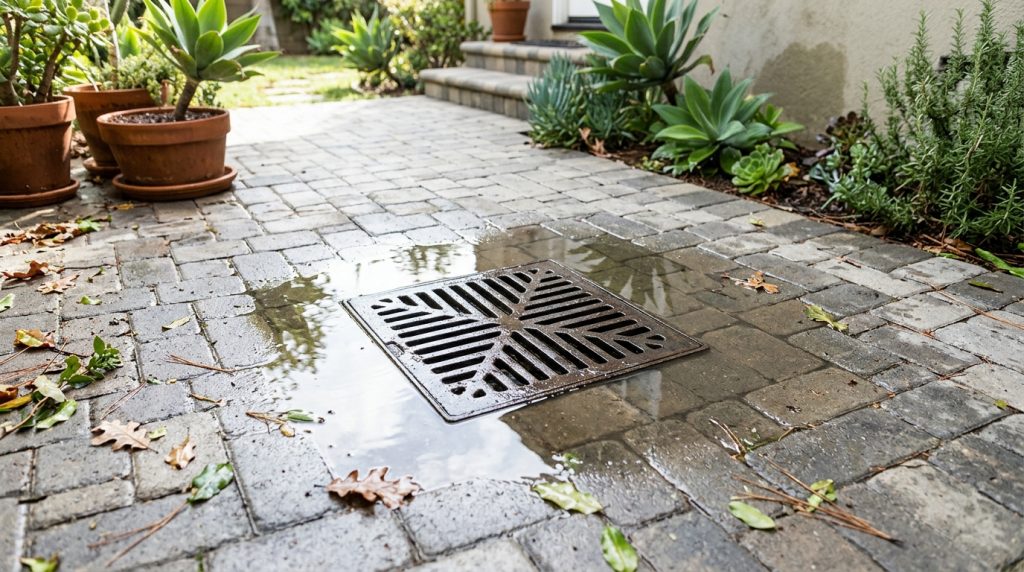
Fast answer: If a patio drain still holds water well after the rain has stopped, first clear loose leaves and debris from the grate and watch whether the water level begins to drop. Water that remains, drains very slowly, returns after a brief improvement, or affects more than one outdoor drain can point to buildup inside the drain line, a blocked outlet, or a drainage problem that needs an in-person inspection. The visible puddle alone cannot confirm the cause.
Patio drains are easy to overlook during Southern California’s long dry stretches. Then a storm arrives, and the drain has to handle leaves, soil, dust, and runoff at once. Knowing what to observe after the rain can help you decide whether this is routine surface cleanup or a sign that the drain may need professional attention.
How long is too long for water to remain over a patio drain?
A shallow film of water can remain briefly on textured concrete or between pavers because the surface itself may not be perfectly level. The more useful question is whether the water is moving toward and through the drain.
After rainfall ends, look at the water level from a safe, dry spot. If it is steadily falling, the system may simply be catching up with heavy runoff. If the level barely changes over several hours, stays above the grate, or leaves the same deep puddle into the next dry part of the day, the drain is not moving water as expected.
Also pay attention to the pattern. A one-time slowdown during unusually heavy rain is different from standing water after every modest storm. Repeated pooling is the stronger clue that the grate, drain body, connecting pipe, or discharge path needs closer attention.
What can make a patio drain slow after rain?
Several issues can create the same visible symptom, which is why it is better to observe than to guess. Common possibilities include:
- Debris over the grate. Leaves, mulch, dirt, and small trash can form a mat that restricts water before it enters the drain.
- Sediment inside the drain. Fine soil and grit can wash through the grate and settle in low sections of the line over time.
- Organic buildup. Roots, decomposed leaves, and landscaping material may reduce the open space inside an outdoor drain.
- A blocked outlet. Even a clear inlet cannot drain correctly when the downstream discharge point is obstructed.
- A damaged or poorly pitched line. A shifted, crushed, separated, or sagging pipe may hold water or collect debris. This cannot be confirmed from the patio surface alone.
- A grading issue. If the patio slopes away from the drain or has settled, water may remain in a low spot even when the drain line itself is open.
These causes call for different fixes. Clearing the grate may solve a surface blockage, but it will not correct a damaged pipe or a low section of patio. An inspection helps separate a drain-cleaning problem from a grading or repair problem.
What can a homeowner safely check first?
Wait until active rain has passed and the area is stable enough to approach. Remove loose material sitting on top of the grate by hand while wearing appropriate gloves, or use a small brush. If the grate is designed to lift out easily without forcing fasteners, check the drain opening for debris that is plainly within reach.
Do not reach deep into a drain, force tools into the pipe, or open a cover that is secured or difficult to move. Avoid pouring chemical drain cleaner into an outdoor drain. Outdoor drainage systems can be configured in different ways, and a product meant for a household fixture may not address soil, roots, damaged piping, or a blocked discharge point.
Once the visible debris is gone, note whether the water begins to move. A photo of the water level, the time the rain stopped, and how long the puddle remains can give a plumber useful context. If several drains are affected, make a note of that too.
When does a patio drain probably need more than surface cleaning?
It is reasonable to arrange an inspection when the drain repeatedly shows one or more of these signs:
- Water remains over the grate long after nearby surfaces have dried.
- The drain improves briefly after the grate is cleared, then slows again.
- Water rises from the drain instead of entering it during rainfall.
- More than one patio, courtyard, or area drain is slow at the same time.
- You hear gurgling or see debris wash back toward the surface.
- The patio floods during ordinary rain that it previously handled without trouble.
- Pooling is getting deeper or lasting longer from one storm to the next.
Those clues do not prove that a particular blockage or pipe defect is present. They show that the problem extends beyond loose debris on top of the grate. A plumber can inspect the line and determine whether cleaning is appropriate or whether another drainage issue is involved.
Can regular drain cleaning help an outdoor patio drain?
It can, when accumulated debris or buildup inside the line is restricting flow. The method should match the line and the material causing the restriction. A technician may first check accessible inlets and outlets, consider how multiple drains connect, and decide whether additional inspection is needed before cleaning.
That inspection-first approach matters because not every standing-water problem is a clog. If the patio surface directs water away from the drain, if the outlet is buried, or if the pipe has shifted, cleaning alone may not solve the full problem. Zenon’s Los Angeles drain cleaning service can help homeowners narrow down whether the drain line needs cleaning and what the next practical step should be.
What should you notice before the next storm?
Outdoor drains are easier to assess during dry weather. Before the next forecasted rain, clear loose leaves from the patio, confirm that the grate is visible, and look for soil or mulch that can wash toward it. Check the outlet only if it is known, accessible, and safe to view; do not dismantle piping or enter a confined space.
During the next rainfall, observe from indoors or another protected location. Notice whether water reaches the grate evenly, pools somewhere else first, or backs up from the drain. These details can reveal whether the main concern is surface grading, inlet blockage, or restricted flow farther along the line.
Why patio drainage can be a local Los Angeles issue
Los Angeles-area homes include a wide mix of older properties, remodeled yards, hillside lots, paved courtyards, and compact outdoor spaces. Landscaping changes, added hardscape, soil movement, and long dry periods can all affect what reaches an outdoor drain when rain finally arrives. A solution that fits one property may not fit the next, so the line and surrounding patio should be evaluated as a system rather than diagnosed from a puddle alone.
Zenon Plumbing & Restoration is based in Burbank and serves homeowners across the greater Los Angeles area. When you call, it helps to share where the drain is located, whether other drains are slow, how long water remains after rain, and whether the problem is new or recurring.
When should you request help?
If standing water keeps returning after visible debris is removed, or if the drain backs up during routine rainfall, schedule an inspection before the next storm puts the system under pressure again. Avoid aggressive DIY methods that could damage the grate or line without showing why the drain is slow.
Patio drain still holding water?
Call Zenon at (818) 640-2944 or request an inspection online. Phone answered 24/7, on-site Mon-Sat 9 AM–6 PM.


