 Mon-Sat 9AM-6PM
 Make an
Appointment (818) 640-2944
Make an
Appointment (818) 640-2944 2115 W Magnolia Blvd Unit C, Burbank, CA 91506
Burbank Older Homes: Pipe Corrosion Signs That Should Not Be Ignored
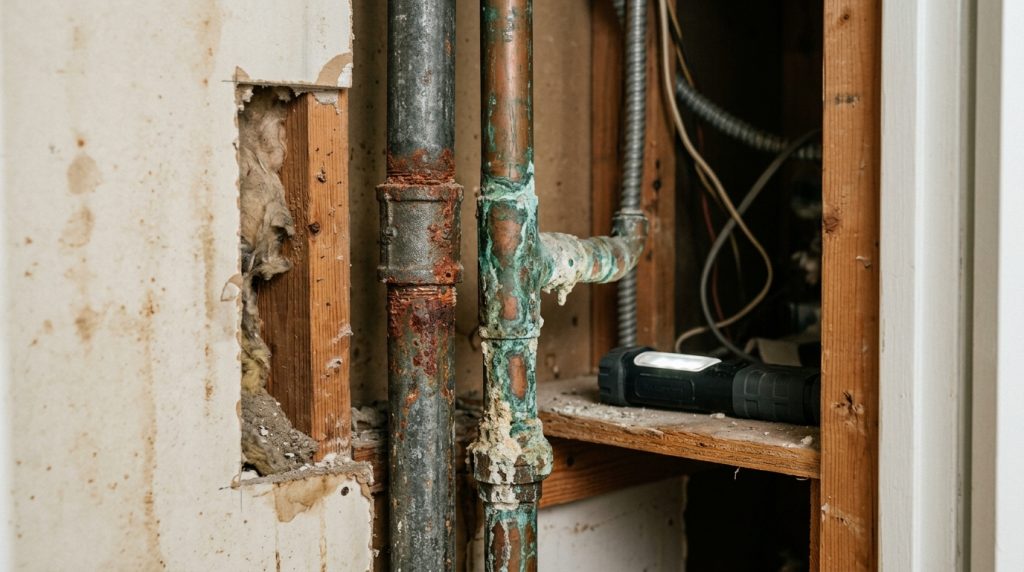
Older homes around Burbank can have beautiful details, mature landscaping, and plumbing that has been through decades of use. When pipe corrosion starts showing up, the first signs are often subtle: a rusty tint in the water, a small stain near a wall, lower pressure in one area, or a pinhole leak that seems to come out of nowhere.
The fast answer: pipe corrosion should not be ignored, but it also should not be diagnosed from one symptom alone. Shut off water to the affected fixture or area if you see an active leak, avoid opening walls or floors on your own, and have the plumbing checked before small warning signs turn into water damage. If the concern is a hidden leak in a Burbank home, Zenon’s Burbank leak detection service can help identify where the problem is coming from without turning the whole house into a guessing game.
Why older Burbank homes are more likely to show pipe corrosion signs
Many Burbank and Los Angeles-area homes have been remodeled in stages. A kitchen may have newer fixtures, a bathroom may have been updated years later, and some supply or drain lines may still be older than the finishes around them. That mixed history can make corrosion harder to spot because the visible parts of the home do not always tell you what is happening inside walls, under floors, or near the slab.
Corrosion is also not always one single problem. It can involve aging pipe material, water chemistry, old fittings, past repairs, moisture around a pipe, or wear at connections. Sometimes the issue is obvious. Other times, the symptom looks like a normal plumbing annoyance until it repeats or spreads.
The goal is not to panic. The goal is to notice patterns early and get the right inspection before the repair becomes more disruptive.
Rust-colored water from one fixture
Discolored water can happen for more than one reason, so it should be read in context. If rusty or brownish water appears only from one faucet after it has not been used for a while, the issue may be close to that fixture or branch line. If it appears throughout the house, the concern may be broader and should be checked more carefully.
Homeowners should avoid assuming the cause based only on color. Run the cold water briefly and note where the discoloration appears, whether it clears, and whether it returns. That information can help a plumber narrow the likely source. If the water stays discolored, smells unusual, or appears alongside pressure changes, stop using guesswork and have it inspected.
Repeated pinhole leaks or damp spots
One small leak can be an isolated failure. Repeated small leaks are different. If you have had more than one pinhole leak, damp cabinet base, ceiling stain, or wet patch near plumbing lines, corrosion may be part of a larger pattern.
Look for clues such as:
- small stains that return after drying
- paint or drywall bubbling near a bathroom, kitchen, or laundry area
- moisture around pipe penetrations under sinks
- greenish, bluish, or white buildup around exposed pipe or fittings
- a musty smell near cabinets, closets, or baseboards
Do not cut into drywall, flooring, or cabinets just to “see what is going on.” Opening finishes without a plan can make the cleanup harder and may still miss the actual leak source. A careful inspection is usually the better first step.
Low water pressure that keeps getting worse
Lower water pressure can come from clogged aerators, fixture problems, valve issues, pressure regulators, mineral buildup, or piping concerns. In an older home, corrosion inside a line can sometimes restrict flow over time. The key clue is whether the pressure problem is isolated or house-wide.
If one faucet is weak, start with simple observations: is the hot side worse than the cold side, or is the whole fixture affected? If several fixtures on the same side of the home have changed, the issue may be connected to a shared branch line. If the whole home has pressure trouble, the main supply, shutoff valves, or pressure regulation may need attention.
Pressure changes are worth taking seriously when they appear together with discolored water, recurring leaks, noisy pipes, or damp areas. That combination is stronger than any single symptom by itself.
Visible buildup on exposed pipes and fittings
Some corrosion signs can be seen without opening anything. Under sinks, near the water heater area, in a garage, or in a crawlspace, look for crusty mineral deposits, staining, or corrosion around joints. A small amount of surface discoloration does not automatically mean a pipe is about to fail, but it should be watched if it grows, flakes, or appears near moisture.
Connections matter. Many leaks begin around fittings, shutoff valves, supply lines, and transitions between materials. If you see moisture, do not keep tightening parts aggressively. Over-tightening an older valve or fitting can make the problem worse.
Noisy pipes, metallic taste, or water quality changes
Homeowners sometimes notice that the plumbing “sounds different” before they find a leak. Knocking, vibration, or a change in flow noise can come from several causes, including pressure changes or loose lines. A metallic taste or recurring discoloration may also point to a system that needs a closer look.
These signs do not prove corrosion. They are reasons to document what is happening. Note when the symptom appears, which fixtures are affected, and whether it happens on hot water, cold water, or both. The more specific you can be, the easier it is to avoid unnecessary exploratory work.
What to do if you suspect corrosion in a pipe
If you see an active leak, shut off the nearest fixture valve if it is safe to do so. If that does not stop the water, use the main water shutoff. Move items away from the wet area, place a container or towel only if it can be done safely, and avoid using electrical devices near standing water.
If there is no active leak, do not ignore the warning signs just because the plumbing is still working. Take photos of stains, corrosion, or damp areas. Write down which fixtures have pressure or water-color changes. Then schedule an inspection before the problem spreads behind walls or under flooring.
For broader plumbing questions or help deciding which service fits the issue, Zenon’s plumbing and drains hub is a useful starting point.
When pipe corrosion may point to a hidden leak
Corrosion and leaks often overlap, but they are not the same thing. A corroded fitting may be dry today and leaking later. A damp wall may come from a supply line, drain line, appliance connection, roof issue, or another source entirely. That is why it is important not to diagnose the exact cause without checking the system in person.
Call for help sooner if you notice:
- a warm or damp area on the floor
- unexplained water meter movement when fixtures are off
- new stains near baseboards or ceilings
- repeated pinhole leaks in different areas
- water pressure changes plus discolored water
In slab-on-grade homes, hidden leaks can be especially disruptive if they are allowed to continue. A focused leak detection visit can help determine whether the issue is near a fixture, inside a wall, under a floor, or connected to another plumbing component.
Local note for Burbank homeowners
Burbank homes vary widely by age, remodel history, and plumbing layout. Some properties have a mix of older and newer pipe sections, which can make symptoms confusing. A newer bathroom fixture does not always mean the line behind it is new. A clean-looking cabinet does not always rule out moisture nearby. Local homeowners and property managers are usually better served by a calm, practical inspection than by guessing from a generic online checklist.
Do not wait for a small sign to become a bigger repair
Pipe corrosion signs are easiest to handle when they are caught early. Rust-colored water, repeated small leaks, worsening pressure, or visible buildup around fittings should be treated as a reason to investigate, not a reason to panic. The right next step is usually simple: protect the area, document what you see, and have the plumbing checked before the damage spreads.
If water is actively leaking, shut it off if safe and call for help. If the signs are slower or intermittent, schedule an inspection before the next stain, leak, or pressure change tells you the problem has moved further along.
Zenon Plumbing & Restoration
Need help with this plumbing problem in Burbank? Call (818) 640-2944. Phone answered 24/7; on-site service Mon-Sat 9 AM–6 PM.


