 Mon-Sat 9AM-6PM
 Make an
Appointment (818) 640-2944
 2115 W Magnolia Blvd Unit C, Burbank, CA 91506

Carpet Feels Damp Along One Wall After a Leak Repair: Why the Moisture Path Matters
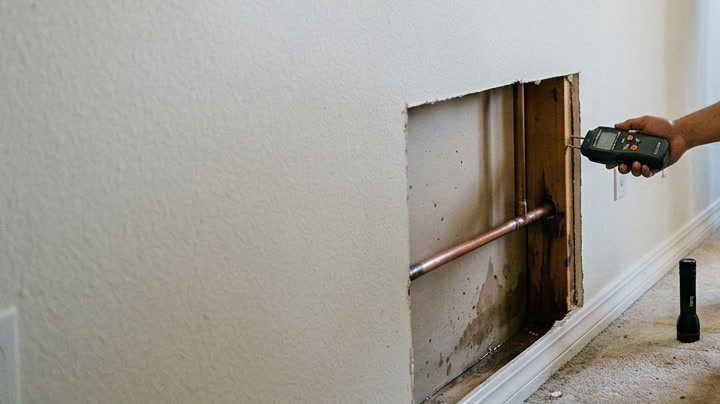
Fast answer: If carpet still feels damp along one wall after a plumbing leak has been repaired, do not assume the remaining moisture is limited to the carpet surface. Water can travel beneath carpet, through padding, along the edge of a slab, or behind a baseboard before showing up somewhere other than the original leak. Note where the damp area begins and ends, avoid covering it, and arrange a professional moisture assessment if it is not drying or seems to be spreading.
A repaired pipe stops the source, but it does not instantly remove water that already moved into nearby materials. The location, shape, and timing of the dampness can help a restoration professional decide where to inspect. They still need to see the area in person before identifying the cause or the extent of the damage.
Why can carpet stay damp after the leak is fixed?
Carpet is only the visible layer. Most carpeted rooms also have padding, tack strips, baseboards, and a subfloor or concrete slab underneath. Water may settle in one or more of those layers. The carpet fibers can feel almost dry while the padding below remains wet, or the reverse can happen when moisture wicks back toward the surface.
The amount of time involved varies with the material, the volume of water, ventilation, room temperature, and how far the water traveled before the plumbing repair. A small spot that steadily improves is different from an area that stays the same size, returns after drying, or expands overnight.
One damp strip along a wall does not prove that a pipe is still leaking. It can also reflect water left behind from the original event. A hands-on inspection is the safer way to distinguish retained moisture from a continuing plumbing problem.
What does the moisture path along a wall suggest?
Water follows gravity, low points, seams, and gaps. In a finished room, those routes are mostly hidden. A wet area along a wall may be connected to the original source even when that source was several feet away.
Common paths a professional may evaluate include:
- Under the carpet pad: Padding can hold moisture and carry it beyond the visibly wet carpet.
- Along the slab edge: Minor variations in a concrete surface can direct water toward a wall or doorway.
- Behind the baseboard: Water can enter the narrow gap where the wall meets the floor and spread sideways.
- Through a shared wall: A bathroom, laundry area, kitchen, or water heater space may be on the other side.
- From an upper or adjacent area: Water can move through framing and appear lower or farther away than expected.
These are inspection clues, not a diagnosis. The visible edge of a damp patch may not show the full boundary underneath, which is why simply touching the carpet cannot confirm that the entire assembly is dry.
How can you tell whether moisture is shrinking or spreading?
Simple documentation can make the pattern easier to explain without pulling up flooring or opening a wall yourself. Start by taking clear photos from the same angle. Place a removable piece of painter’s tape near the outer edge of the damp area, but do not tape over wet material. Add the date and time to your notes.
Check whether the boundary moves, whether the dampness returns after seeming to improve, and whether it changes when a nearby fixture or appliance is used. Record the original leak location, when the repair was completed, and any drying steps already taken. If water use seems connected to the dampness, stop using the suspected fixture until it can be checked.
Do not rely on color alone. Carpet may look normal while padding remains wet, and old staining can remain after moisture has left. Consumer moisture meters can also produce confusing readings across different materials. Professional equipment and an in-person evaluation provide better context than a single number.
What should you do right now?
- Confirm the known leak was repaired. Keep the repair information and note when the water source was stopped.
- Keep people and pets off the damp area. This limits tracking and avoids pressing more water through the carpet and pad.
- Move nearby belongings if it is easy and safe. Lift dry items away from the wall rather than placing them elsewhere on the damp floor.
- Document the boundary. Take photos and note changes over several hours.
- Leave the area accessible. Do not cover it with rugs, plastic, boxes, or furniture.
- Get the affected materials assessed. A professional can check the carpet, padding, baseboard, wall edge, and floor below instead of judging only the surface.
If water is close to outlets, cords, appliances, or an electrical panel, do not enter the wet area or handle nearby electrical items. Contact the appropriate professional for instructions. If the carpet is wet from a toilet overflow, drain backup, or another potentially contaminated source, avoid contact and arrange professional help rather than attempting routine cleanup.
When should the plumbing be rechecked?
A plumbing recheck makes sense when the damp area grows, returns after drying, or seems to change when water is used. Other clues include a fixture that continues to drip, a supply valve that remains wet, recurring water sounds when fixtures are off, or unexplained moisture on the opposite side of the wall.
None of those signs identifies the exact source by itself. The original leak may have been repaired correctly while a second issue remains nearby, or trapped water may simply be taking a hidden route. A plumber can evaluate the water source; a restoration assessment can determine which materials remain affected. Sometimes both parts of the problem need attention.
Why is surface drying not enough?
A fan aimed at the carpet may make the fibers feel better while doing little for dense padding or a closed wall cavity. Household dehumidifiers can help room conditions, but they do not confirm that hidden materials have reached an appropriate moisture level. Shampooing the carpet or adding more cleaning solution can introduce more liquid and make the pattern harder to evaluate.
Pulling up carpet without the right tools can also damage the edge, tack strip, or seams. Removing baseboards or cutting drywall can disturb concealed wiring or plumbing. It is usually more useful to leave the area accessible and let a professional decide what needs to be lifted, opened, dried, cleaned, or replaced after inspection.
What might a professional assessment include?
The process depends on the room and the original leak. A technician may compare moisture readings in the affected area with readings from nearby materials that appear dry. They may inspect the carpet edge, pad, baseboard, wall surface, and floor beneath while tracing the most likely route from the repaired source.
The goal is not to remove every material automatically. It is to understand the boundary of the moisture and choose a practical response. Some assemblies can be dried in place; others may need limited access or removal. That decision should be based on the material condition and on-site findings, not a general rule from an online article.
For an overview of local help with inspection, drying, and cleanup after a plumbing leak, see Zenon’s Glendale water damage restoration service. The page explains the service path without assuming what your carpet or wall needs before it is inspected.
A local note for Glendale-area homes
Glendale and nearby Los Angeles neighborhoods include apartments, remodeled homes, and older properties where plumbing may pass through tight wall and floor assemblies. Room layouts, shared walls, slab floors, and layers from past renovations can make a moisture path less obvious from the surface. Local context can guide the inspection, but it does not replace checking the specific room and materials in person.
The most useful information you can provide is straightforward: where the leak started, when it stopped, where the carpet first felt damp, and how the boundary changed. That timeline helps the team focus on the actual path rather than guessing from the newest visible spot.
When is it time to request help?
Request an assessment when dampness remains after the plumbing repair, spreads beyond the original area, returns after appearing to dry, or reaches a wall, cabinet, doorway, or adjoining room. It is also reasonable to call when you cannot tell how far the moisture traveled beneath the carpet.
If you are unsure what kind of visit to request, contact Zenon and describe the source, the repair, and the current damp area. Photos and a short timeline can help the team understand the situation before the on-site inspection.
Zenon Plumbing & Restoration
Need help with this plumbing problem in Burbank? Call (818) 640-2944. Phone answered 24/7; on-site service Mon-Sat 9 AM–6 PM.


