 Mon-Sat 9AM-6PM
 Make an
Appointment (818) 640-2944
Make an
Appointment (818) 640-2944 2115 W Magnolia Blvd Unit C, Burbank, CA 91506
Drying a Wet Closet Wall After a Plumbing Leak: When Surface Dry Is Not Enough
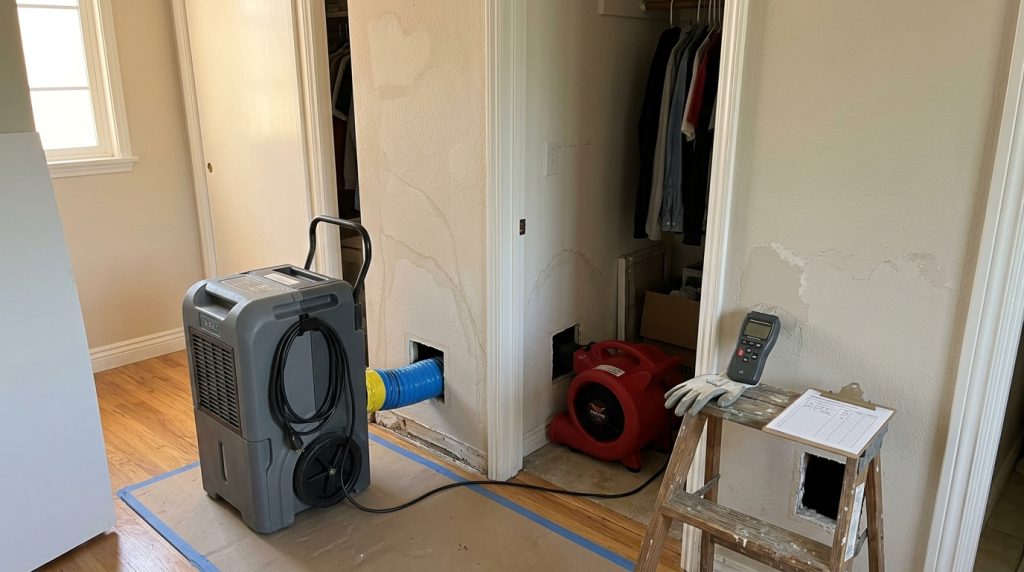
A wet closet wall after a plumbing leak is easy to underestimate because the surface can start looking dry before the materials behind it are actually dry. The fast answer: stop the water source if you can do it safely, move stored items away from the wall, document what you see, and avoid closing the closet back up until the area has been checked for trapped moisture.
Closets can hide plumbing damage longer than kitchens, bathrooms, or hallways because they have less airflow and often sit against bathrooms, laundry rooms, water heater closets, or exterior walls. If the wall feels damp, smells musty, has soft baseboards, or the flooring is lifting near the edge, it is worth treating the problem as more than a cosmetic stain.
Why a Closet Wall Can Stay Wet After the Leak Looks Fixed
When a pipe, valve, supply line, drain, or upstairs fixture leaks, water does not always stop at the visible stain. It can move along framing, baseboards, insulation, flooring underlayment, or the back side of drywall. A closet makes that harder to notice because boxes, shoes, storage bins, and hanging clothes can block airflow and hide the damp area.
In Glendale and older Los Angeles-area homes, small plumbing leaks can also travel through tight wall cavities before showing up in a closet. The stain may appear a few feet away from the actual plumbing source. That is why a wall can feel “mostly dry” on the outside while the baseboard, bottom plate, or material behind the wall still holds moisture.
The goal is not to panic or start tearing out drywall right away. The goal is to slow the spread, keep the area visible, and decide whether a plumber or restoration team should inspect the moisture path before cabinets, flooring, or wall materials get worse.
First Steps to Take When You Find a Wet Closet Wall
Start with simple, safe steps before guessing at repairs:
- Stop the source if it is obvious. If a nearby shutoff valve controls the leaking fixture and it turns easily, shut it off. If the leak is active and you cannot isolate it, use the main water shutoff if you know where it is.
- Move stored items out of the closet. Shoes, boxes, linens, and clothing can trap moisture against the wall and floor. Move them to a dry area so you can see the full affected section.
- Take photos before cleanup. Photograph the wall, baseboard, flooring, ceiling above, nearby plumbing fixtures, and any visible water path. This helps you compare changes later.
- Do not seal the area up too quickly. Closing the door, replacing storage bins, or painting over a stain can hide a problem that still needs drying or leak detection.
- Avoid unsafe electrical-adjacent work. If water is near outlets, wiring, fixtures, or appliances, do not touch wet areas around electricity. Keep the area clear and call for help.
If the leak is still active, the wall feels soft, or water is spreading into flooring, it is reasonable to call for professional help instead of waiting to see whether it dries on its own.
Signs Surface Drying May Not Be Enough
A closet wall can look better after a towel, fan, or open door, but the following signs suggest the moisture may have gone deeper:
- Paint bubbling, peeling, or wrinkling near the baseboard
- Baseboards pulling away from the wall
- A damp or musty smell when the closet door opens
- Soft drywall, swollen trim, or crumbling texture
- Flooring that cups, lifts, stains, or feels uneven near the wall
- A stain that gets darker again after appearing to dry
- Moisture appearing on the opposite side of a bathroom, laundry, or water heater wall
These clues do not prove exactly where the leak started. They do mean the area deserves a closer look. A plumber may need to check nearby supply lines, drain lines, shower valves, toilet connections, washer hoses, or water heater components before restoration work begins.
Common Plumbing Sources Behind a Wet Closet Wall
The source depends on what is near or above the closet. In many homes, the culprit is not inside the closet itself. It may be behind an adjacent wall or ceiling.
Bathroom plumbing nearby: A shower valve, tub drain, toilet supply line, wax ring issue, or sink drain leak can send water toward a shared wall. This is common when a closet backs up to a bathroom.
Laundry connections: Washer hoses, standpipes, and drain overflows can create damp closet walls if the laundry area is nearby or upstairs.
Water heater closets: A small leak from a pan, valve, connection, or relief line can travel under nearby flooring and show up in a storage closet.
Slab or hidden supply leaks: If the wall is damp near the floor and there is no obvious fixture leak, a hidden line may need inspection. This is not something to diagnose by appearance alone.
Drain or sewer line issues: A drain leak can wet walls or floors without the steady pressure of a supply leak. Odor, repeated backups, or dampness after fixture use can be important clues.
When to Call for Water Damage Restoration Help
If the wall has been wet for more than a short period, the floor is affected, or the moisture path is unclear, a restoration-focused inspection can help determine what needs drying, removal, or monitoring. For Glendale homeowners, Zenon’s water damage restoration service can help with plumbing-related moisture problems after the source is controlled or while the source is being identified.
Professional drying is not just about placing a fan in the room. Depending on the situation, the team may need to check moisture levels, look at the wall base, evaluate flooring edges, and decide whether the affected area can dry in place or needs more direct access. The right answer depends on what actually got wet, how long it stayed wet, and whether the leak has fully stopped.
What Not to Do With a Wet Closet Wall
A few common reactions can make the problem harder to evaluate later:
- Do not paint over the stain right away. Paint can hide the visible clue while moisture remains underneath.
- Do not put storage bins back against the wall. Leave space for airflow and inspection.
- Do not assume a dry surface means the wall cavity is dry. Drywall, trim, and flooring can dry at different speeds.
- Do not cut open walls unless you know what is behind them. Plumbing, wiring, and structural materials may be nearby.
- Do not rely on odor alone. Some moisture problems smell obvious; others do not.
If you are unsure whether the leak is active, check nearby fixtures after use. Does the wall get damp after a shower? Does it worsen after laundry? Does the baseboard change after the toilet flushes or the sink drains? Those timing clues can help a plumber narrow the source.
Local Trust for Glendale and LA-Area Homes
Homes around Glendale, Burbank, and the greater Los Angeles area often have a mix of older plumbing, remodeled bathrooms, tight closets, slab foundations, and storage-heavy utility spaces. That combination can make small leaks hard to spot early. A practical local approach is to look for the source first, protect the surrounding materials, and avoid turning a plumbing repair into a bigger wall or flooring project because the moisture stayed hidden.
Zenon Plumbing & Restoration helps homeowners think through both sides of the problem: the plumbing source and the affected materials around it. That matters when a wet closet wall sits next to a bathroom, laundry room, water heater area, or shared wall in an older home or apartment.
Need Help With a Wet Closet Wall?
If a closet wall is wet after a plumbing leak, do not rush to cover it up. Move items away, keep the area visible, take photos, and call if the moisture is spreading, the source is unclear, or the wall or floor feels soft.
Need help now? Call (818) 640-2944 — Phone answered 24/7, on-site Mon-Sat 9 AM–6 PM. You can also contact Zenon Plumbing & Restoration online to request service or ask for the next best step.
Zenon Plumbing & Restoration
Need help with this plumbing problem in Burbank? Call (818) 640-2944. Phone answered 24/7; on-site service Mon-Sat 9 AM–6 PM.


