 Mon-Sat 9AM-6PM
 Make an
Appointment (818) 640-2944
Make an
Appointment (818) 640-2944 2115 W Magnolia Blvd Unit C, Burbank, CA 91506
Emergency Shutoff Steps for a Leaking Angle Stop Valve
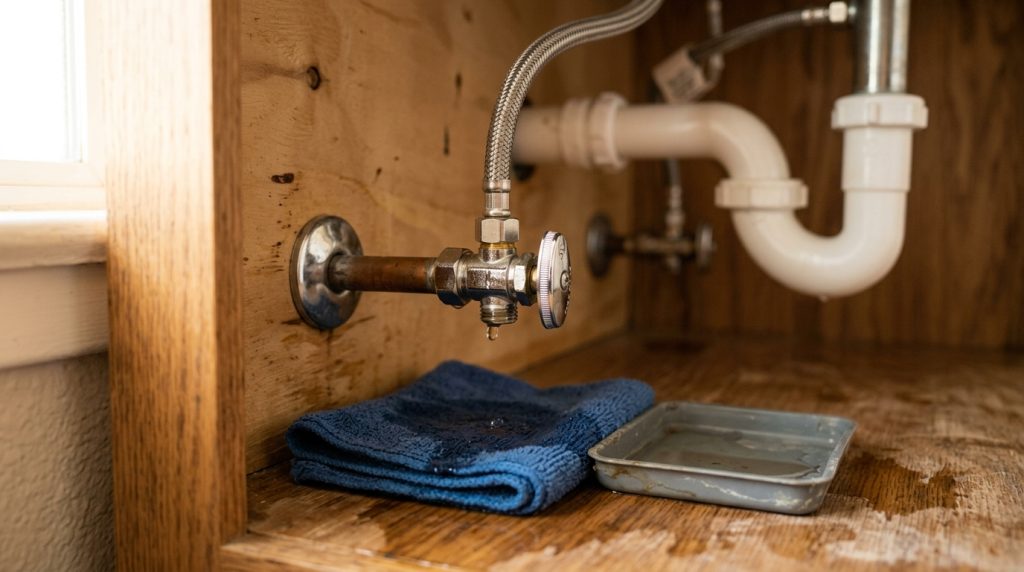
A leaking angle stop valve can turn a small cabinet drip into a bigger plumbing problem if it is ignored. The fast answer: do not force the valve, protect the area from spreading water, shut off the fixture or main water supply if you can do that safely, and call a plumber if the valve keeps dripping, sprays when touched, or will not fully close.
Angle stops are the small shutoff valves usually found under sinks, behind toilets, and near some appliances. They are easy to overlook until one starts leaking. In many Burbank and Los Angeles-area homes, these valves may be old, stiff, painted over, corroded, or installed in tight cabinet spaces where a simple drip can damage the cabinet floor before anyone notices.
What should you do first when an angle stop valve is leaking?
Start with the safest, lowest-risk steps. A small leak does not always mean the whole home is flooding, but it does mean you should slow the water down and avoid making the valve worse.
- Move stored items out of the cabinet. Towels, cleaning bottles, cardboard, and paper products can hide water and keep surfaces damp.
- Place a towel or shallow pan under the drip. This helps you see how fast the leak is happening and protects the cabinet for a short time.
- Do not crank hard on a stuck handle. If the handle will not turn with normal hand pressure, forcing it can break the stem or make the leak worse.
- Find the main water shutoff. If the angle stop begins spraying or the fixture cannot be isolated, shutting off water to the home may be the safer move.
- Keep electrical items away. If water is near outlets, power strips, appliances, or wiring, step back and get help.
If the leak is active and you cannot stop it safely, Zenon’s Burbank emergency plumbing team can help with urgent shutoff and repair situations. Phone answered 24/7, on-site Mon-Sat 9 AM–6 PM.
Where are angle stop valves usually located?
Most homeowners know about the main shutoff valve, but angle stops are the local shutoffs for individual fixtures. Common places include under bathroom sinks, under kitchen sinks, behind toilets, near ice maker lines, and sometimes near laundry or utility fixtures depending on the home.
The point of an angle stop is simple: it lets you turn off water to one fixture without shutting down the whole house. That is useful when a faucet, toilet supply line, or small fixture connection needs repair. The problem is that valves that sit untouched for years can stiffen, corrode, or start leaking around the handle or supply connection the first time they are moved.
Why do angle stop valves start leaking?
An angle stop can leak for a few different reasons. Sometimes the packing nut around the stem is loose. Sometimes the internal washer or seal has worn out. In older homes, corrosion can weaken the valve body or connection. Under a kitchen sink, leaks may also be confused with a faucet supply line, garbage disposal connection, dishwasher line, or drain leak, so it is worth slowing down and checking where the water is actually coming from.
Do not assume the valve itself is the only issue until the area is inspected. A wet cabinet floor may come from a pressurized supply leak, a loose drain connection, condensation, a dishwasher discharge problem, or water running from another part of the sink assembly. The right fix depends on the source.
Should you tighten the leaking valve yourself?
For a very minor seep around the valve handle, some homeowners are tempted to tighten the small packing nut. That can work in some situations, but it is not always the safest choice. If the valve is corroded, fragile, installed on old pipe, or hard to access, too much pressure can crack a connection or turn a manageable drip into an active leak.
A good rule of thumb: if the valve looks clean, the leak is tiny, and you know exactly what you are adjusting, be gentle. If the valve is old, green or white with corrosion, damp around the wall, connected to a brittle supply line, or difficult to turn, stop and call a plumber. Guessing is not worth the risk when the valve controls pressurized water.
When is a leaking angle stop an emergency?
It becomes more urgent when the leak is spreading, the valve will not close, water is spraying, the cabinet floor is swelling, water is running toward walls or flooring, or the leak is near electrical components. It is also urgent if the angle stop serves a toilet and you cannot stop a running or overflowing fixture.
In apartments, condos, and older multi-unit buildings around LA, water can move quickly into shared walls, ceilings, and lower units. If you rent or live in a condo, notify the property manager or HOA when appropriate, but do not wait on paperwork if water is actively spreading. The first job is to stop or reduce the water safely.
What if the valve breaks while you are trying to shut it off?
If a valve handle breaks, the stem starts leaking faster, or the supply line comes loose, go to the main shutoff if you know where it is and can reach it safely. Once the water is off, open a low faucet to relieve pressure, keep towels in place, and document visible water with photos if there is cabinet, flooring, or wall damage.
Do not remove drywall, cut flooring, or open walls just to “check” unless a qualified professional has looked at the situation. Hidden water can create restoration concerns, but unnecessary demolition can make the repair more complicated. A plumber can confirm whether the problem is limited to the valve and supply connection or whether moisture has spread into nearby materials.
How can homeowners prevent angle stop problems?
Prevention is mostly about awareness. Check under sinks every so often, especially in older cabinets where stored items can hide damp spots. Look for mineral buildup, staining, swollen cabinet bottoms, rust, musty smells, or supply lines that look kinked or brittle. If you are planning to replace a faucet or toilet, ask whether the angle stop and supply line should be replaced at the same time.
It also helps to know where the main shutoff is before you need it. Many homeowners only look for it during a stressful leak. Walk the property once, identify the shutoff, and make sure the path to it is clear. For broader plumbing help, Zenon’s Plumbing & Drains hub explains the main service areas homeowners may need.
Local note for Burbank and older LA-area homes
Homes and apartments in Burbank, Glendale, and nearby LA neighborhoods often have a mix of older pipes, remodeled fixtures, tight under-sink cabinets, and previous repair work from different eras. That does not automatically mean something is wrong, but it does mean small shutoff valves deserve attention. A valve that has not been touched in years may not behave the way it should when a leak starts.
If you are not sure whether the water is coming from the angle stop, the supply line, the faucet, or the drain, it is better to have the fixture inspected than to keep wiping up the same drip. A plumber can isolate the source, replace the failing part when needed, and check whether nearby cabinet or flooring materials have stayed dry enough to avoid a separate restoration concern.
Bottom line
A leaking angle stop valve is usually small at first, but it should not be ignored. Protect the area, avoid forcing a stuck valve, shut off water safely if the leak gets worse, and get help when the valve will not close or water is spreading. The sooner the source is confirmed, the easier it is to limit damage around the fixture.
Zenon Plumbing & Restoration
Need help with this plumbing problem in Burbank? Call (818) 640-2944. Phone answered 24/7; on-site service Mon-Sat 9 AM–6 PM.


