 Mon-Sat 9AM-6PM
 Make an
Appointment (818) 640-2944
Make an
Appointment (818) 640-2944 2115 W Magnolia Blvd Unit C, Burbank, CA 91506
Garage Water Heater Closet Smells Damp: Leak Clues Homeowners Should Not Ignore
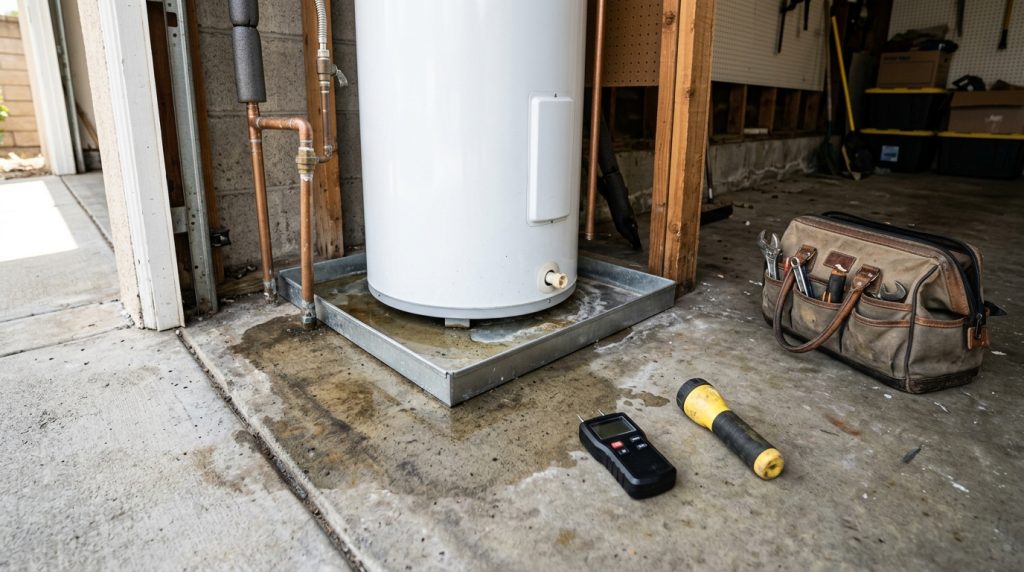
If a garage water heater closet smells damp, musty, or unusually humid, treat it as a clue instead of brushing it off. The fast answer: a damp smell near a water heater can come from a small plumbing leak, condensation, poor airflow, a drip pan that is holding water, a relief valve discharge line, or moisture that has already reached nearby drywall or flooring. You do not need to take the system apart to start safely. Look for visible water, move stored items away from the heater, keep the area clear, and call for help if moisture returns after you dry it or if water is spreading.
Because water heaters combine plumbing, hot water, pressure, and sometimes gas or electrical connections, this is not the place for risky DIY repairs. A homeowner can observe, document, and shut off water only if it is safe and familiar. The actual cause should be checked in person by a qualified technician, especially when the smell is new or the closet shares a wall with living space.
Why does a garage water heater closet smell damp?
A damp odor usually means moisture is present often enough for the surrounding materials to absorb it. In a garage closet, that moisture can hide behind boxes, at the back of the pan, under a raised platform, inside base trim, or along the wall behind the heater. The smell may be strongest when the garage door has been closed, when outdoor humidity is higher, or after the water heater has been running heavily.
Common causes include:
- Water in the drain pan. Even a small amount of standing water can create a stale smell if it sits long enough.
- A slow drip at a fitting. Supply lines, shutoff valves, flex connectors, and pipe joints can seep before they create an obvious puddle.
- Relief valve discharge. A temperature and pressure relief valve may release water if there is a pressure or temperature issue, or if the valve is not seating correctly.
- Condensation or airflow problems. Some closets trap humidity, especially when storage blocks ventilation or airflow.
- Moisture in drywall, baseboards, or flooring. If water has already left the pan area, the source may be small but the damage path can grow.
The key is not to assume the cause from smell alone. A damp odor is a symptom. The right next step depends on whether there is active water, how often it returns, and what materials are getting wet.
First safe checks before you call anyone
Start with simple observation. Use a flashlight and look around the heater without moving pipes, opening covers, or touching wiring. If the closet is crowded, remove cardboard boxes, cleaners, towels, holiday storage, or anything else that can absorb water. This makes it easier to see whether moisture is coming from the heater, nearby piping, the pan, the wall, or the floor.
Then check these areas:
- The floor around the water heater. Look for a crescent-shaped damp area, stains, swollen base trim, or water trails.
- The pan under the heater. If there is water in the pan, dry it if safe and see whether it comes back.
- The cold and hot water connections. Look for beads of water, corrosion, mineral buildup, or dark staining around fittings.
- The relief valve and discharge line. Do not cap or block this line. Just note whether it is wet or dripping.
- Nearby drywall. Soft drywall, bubbling paint, staining, or a musty smell that lingers can suggest moisture has moved beyond the heater area.
If you smell gas, see active water near electrical components, cannot safely access the shutoff, or the tank appears to be leaking from the body itself, stop the inspection and call for help. Do not try to patch, seal, plug, or force a water heater component closed.
When a damp smell points to a water heater leak
A damp closet smell becomes more concerning when it is paired with repeated moisture. One dry pan after a one-time spill is different from a pan that refills, a valve that keeps dripping, or drywall that feels cool and soft. Repeated moisture around a water heater can damage garage storage, framing, drywall, flooring transitions, and nearby wall cavities.
Homeowners should pay attention to timing. Does the smell get worse after showers, laundry, or heavy hot-water use? Does moisture appear after the heater recovers? Does the area dry out completely, or does it always feel slightly damp? Patterns like these help a plumber narrow the problem without guessing.
For hands-on diagnosis and repair, Zenon’s water heater repair service in Glendale can inspect the heater, connections, pan, discharge line, and nearby plumbing to figure out what is actually happening. The goal is to catch the source before a small drip turns into a larger water damage problem.
What not to do around a damp water heater closet
It is tempting to spray air freshener, run a fan, or wipe the floor and move on. Those steps may reduce the smell temporarily, but they do not tell you why the moisture is there. If the source is a recurring leak, the closet can smell better while hidden materials keep absorbing water.
Avoid these common mistakes:
- Do not ignore water in the pan. A pan is there to catch water, not to store it long term.
- Do not plug a dripping relief valve line. That valve is a safety component and should not be blocked.
- Do not use sealants as a repair for active leaks. Temporary patching can hide the problem and delay proper repair.
- Do not stack storage tight around the heater. Boxes and fabric can hold moisture and make leaks harder to spot.
- Do not diagnose mold from smell alone. If materials are damp or stained, the area needs a careful in-person look.
If you can safely turn off the water supply to the heater and the leak is active, that may help slow damage while you wait for service. If you are not sure which valve to use, or if the area feels unsafe, do not force it.
Why garage closets in Glendale and LA-area homes need extra attention
Many LA-area homes and townhomes use garage closets, side-yard closets, utility rooms, or tight alcoves for water heaters. These spaces often double as storage, which means a small leak can stay hidden behind cardboard, tools, or household items. Older piping, hard-water mineral buildup, and tight access can also make early warning signs easier to miss.
That local context matters because a small plumbing issue may show up first as odor, staining, or damp storage before it becomes a visible puddle. In attached garages, moisture can also affect shared walls, baseboards, or flooring transitions near interior rooms. The safest approach is practical: keep the closet visible, check it when you notice a smell, and get recurring moisture evaluated before it spreads.
When should you schedule service?
Schedule service if the damp smell is new, if water comes back after you dry the pan, if you see corrosion or mineral buildup at connections, if the relief valve discharge line is wet, or if nearby drywall or trim looks stained. You should also call sooner if the heater is older, the closet is attached to living space, or stored items have already become wet.
Not every damp smell means the water heater must be replaced. Some problems involve a valve, connector, pan drainage issue, nearby pipe, or ventilation concern. But guessing can get expensive if the moisture path reaches walls or flooring. A clear inspection is usually the best way to separate a small repair from a bigger risk.
Zenon Plumbing & Restoration
Smell dampness near a garage water heater closet? Call (818) 640-2944. Phone answered 24/7, on-site Mon-Sat 9 AM–6 PM. You can also contact Zenon online to request help.
Bottom line
A damp smell in a garage water heater closet is worth checking because it may be the first sign of a slow leak, a pan problem, relief valve discharge, or moisture reaching nearby materials. Start with safe observation, keep the closet clear, and do not take apart the heater or block safety components. If the smell returns or you see any water, have the system inspected before the problem becomes harder to contain.


