 Mon-Sat 9AM-6PM
 Make an
Appointment (818) 640-2944
Make an
Appointment (818) 640-2944 2115 W Magnolia Blvd Unit C, Burbank, CA 91506
Glendale Water Damage After a Supply Line Leak: First Steps for Homeowners
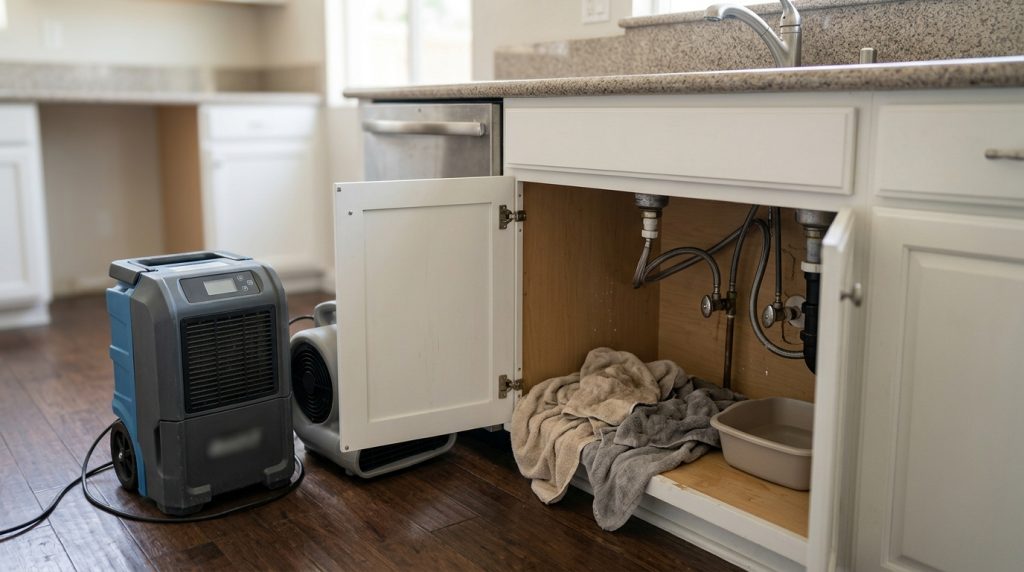
Fast answer: if a supply line starts leaking and water reaches floors, cabinets, drywall, or baseboards, stop the water if you can do it safely, move valuables out of the wet area, document what you see, and call for help before the moisture spreads. A supply line leak can look small at the fitting or hose, but the water can travel behind a vanity, under flooring, or into the ceiling below.
For Glendale homeowners, the first few minutes matter because many local homes and apartments have older plumbing layouts, tight bathroom and kitchen spaces, and shared walls or upstairs/downstairs areas where water can move quickly. The goal is not to diagnose the whole problem yourself. It is to limit the damage, avoid unsafe cleanup, and get the leak and wet materials checked by someone who can see the system in person.
What counts as a supply line leak?
A supply line is the pipe, valve, or flexible connector that brings clean water to a fixture or appliance. Common examples include the line feeding a toilet, bathroom faucet, kitchen sink, dishwasher, refrigerator ice maker, washing machine, or water heater. These lines can leak from a loose connection, old shutoff valve, worn hose, cracked fitting, corrosion, or movement behind the wall.
Some leaks are obvious: water spraying under a sink or pooling around a toilet. Others are slower and harder to spot. You may notice a soft cabinet floor, bubbling paint, a damp baseboard, a stained ceiling, or a musty odor near the leak area. If the leak is upstairs, the first visible sign may be water below the room where the line failed.
First step: stop the water if it is safe
If you can clearly identify the fixture shutoff valve, turn it clockwise to stop water to that fixture. Under-sink valves and toilet valves are usually close to the fixture. If the leak is heavy, the valve is stuck, or you cannot tell where the water is coming from, use the main water shutoff if you know where it is.
Do not force a stuck valve so hard that it breaks. Do not open walls, disturb electrical areas, or keep walking through standing water if outlets, appliances, or wiring may be involved. If there is any electrical concern, step away from the area and wait for professional help.
Move what you can, but do not over-clean the evidence
After the water is stopped or slowed, move towels, rugs, storage boxes, and personal items out of the wet area. Place a bucket or pan under an active drip if it helps contain water. Take quick photos or video of the leak source, wet flooring, cabinets, baseboards, walls, and any ceiling staining. These photos can help you explain what happened later.
At the same time, avoid tearing out drywall, pulling up flooring, or applying chemicals. Wet materials can hide water in layers, and aggressive DIY cleanup can make it harder to tell how far the moisture traveled. The safer approach is to remove loose items, improve airflow if conditions are safe, and have the affected area evaluated.
Why supply line leaks can spread farther than they look
Water follows gravity, seams, and hidden gaps. A leak under a vanity may run behind the cabinet and into the wall. A kitchen supply line can move under base cabinets before it becomes visible at the toe kick. A refrigerator or dishwasher line may leak behind the appliance for a while before a homeowner sees water on the floor.
In Glendale condos, apartments, and two-story homes, water from an upstairs bathroom or laundry area can also show up in the ceiling or wall below. That does not automatically tell you exactly where the leak started. It means the wet path needs to be traced carefully instead of guessed at from the stain alone.
When the plumbing repair and restoration side overlap
A supply line leak usually has two parts: the plumbing source and the materials that got wet. Fixing the valve, hose, fitting, or pipe stops the leak from continuing. But wet drywall, cabinets, flooring, and baseboards may still need drying attention after the plumbing problem is controlled.
That is why a water damage response should look at both issues. If you need help after a supply line leak in Glendale, Zenon’s Glendale water damage restoration page explains the local restoration support path for plumbing-related water damage. The key is to avoid assuming everything is dry just because the visible puddle is gone.
Signs the area should be checked soon
Call for help sooner if you see any of these warning signs:
- Water coming from a ceiling, wall, cabinet, or baseboard
- A shutoff valve that will not turn or does not stop the leak
- Swollen cabinet panels, soft drywall, buckled flooring, or lifted baseboards
- Water near appliances, outlets, or light fixtures
- A leak that may have been running while nobody was home
- Moisture that keeps returning after towels or fans are used
None of these signs proves the full scope of the problem by itself. They are reasons to have the plumbing and affected materials looked at before the damage becomes harder to manage.
What Glendale homeowners should mention when they call
When you call, give a simple timeline. Say where the leak appears to be, whether you were able to shut off the fixture or main water, how long the water may have been running, and what materials are wet. Mention whether the leak is upstairs, near a shared wall, below a sink, behind an appliance, or close to electrical fixtures.
Photos help, but do not wait to call if water is still moving. If the situation is active, a clear description is enough to start the conversation. Phone answered 24/7, on-site service Mon-Sat 9 AM–6 PM.
How to lower the risk next time
Supply line leaks are not always predictable, but a few habits help. Look under sinks occasionally for staining, corrosion, or damp cabinet bottoms. Check toilet and appliance supply hoses for kinks, bulges, rust, or old-looking connectors. Learn where the fixture shutoffs and main water shutoff are before there is an emergency.
Older Glendale homes and remodeled apartments can have a mix of old valves, newer fixtures, and tight access points. If a valve looks frozen, corroded, or difficult to reach, do not wait for a leak to discover it will not close. A plumber can inspect the setup in person and explain what should be repaired or replaced.
Bottom line
If a supply line leak causes water damage, treat it as both a leak problem and a moisture problem. Stop the water if safe, move belongings, document the area, avoid risky demolition or electrical-adjacent cleanup, and get the source and wet materials checked. For general plumbing service questions or to understand Zenon’s core plumbing support, you can also visit the Plumbing & Drains hub.
Zenon Plumbing & Restoration
Need help with this plumbing problem in Burbank? Call (818) 640-2944. Phone answered 24/7; on-site service Mon-Sat 9 AM–6 PM.


