 Mon-Sat 9AM-6PM
 Make an
Appointment (818) 640-2944
Make an
Appointment (818) 640-2944 2115 W Magnolia Blvd Unit C, Burbank, CA 91506
Glendale Water Heater Leak Near the Garage: First Checks for Homeowners
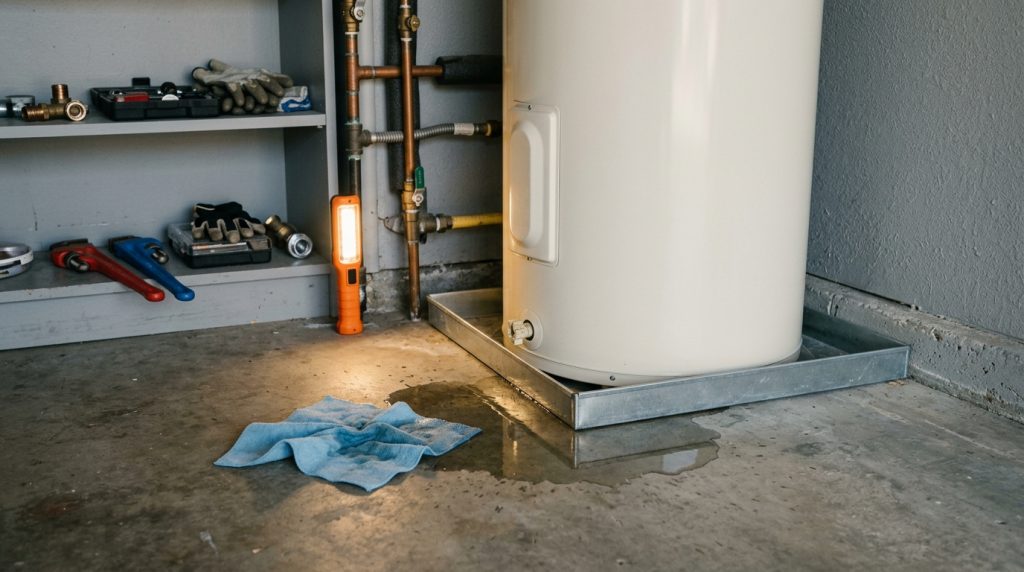
A water heater leak near the garage can be stressful because it is easy to underestimate at first. A small drip may come from a fitting, valve, drain pan, or nearby pipe. A spreading puddle, active spray, wet drywall, or water moving toward stored items needs faster attention.
The safest first move is to slow the damage without guessing at the repair. If you can reach the water shutoff safely, turn it off. Keep people away from wet areas near electrical outlets or appliances. Then document what you see and call for help if the leak is active, growing, or coming from the tank itself.
Fast answer: what should you check first?
For most homeowners, the first checks are simple observation steps, not repair steps:
- Look for where the water is starting: top connection, side valve, bottom of tank, drain pan, wall, or floor.
- Check whether water is actively flowing or only damp from an earlier drip.
- Move boxes, rugs, tools, and stored items away from the wet area if it is safe.
- Take photos before cleanup, especially if water has reached drywall, flooring, or cabinets.
- Call a plumber if you see active leaking, rusty water, a bulging tank, unusual sounds, or repeated puddles.
Do not open panels, tamper with gas components, or work around wet electrical areas. A water heater leak can involve plumbing, appliance, flooring, and moisture issues at the same time, so the goal is to reduce risk and get the right diagnosis.
Where garage water heater leaks often start
Water heaters installed in or near garages can leak from several different places. The location of the water gives helpful clues, but it does not prove the cause by itself.
If the puddle starts at the top of the unit, the leak may be near a water supply connection or nearby pipe. If water is collecting around a valve or short pipe on the side, a pressure-relief or drain connection may need attention. If the water appears to come from the bottom of the tank, that can be more serious, especially if it keeps returning after you dry the floor.
Sometimes the water heater gets blamed when the source is actually nearby. A garage wall pipe, washer connection, condensate line, or floor slope can send water toward the heater. That is why a careful inspection matters before replacing parts or assuming the tank has failed.
When a small puddle is more urgent than it looks
A small puddle near a garage water heater is not always an emergency, but there are situations where waiting can make the damage worse. Treat it as urgent if the water is actively spreading, if the floor stays wet after cleanup, if the tank or fittings are dripping again within hours, or if moisture has reached drywall or baseboards.
It is also worth acting quickly if the heater is raised on a platform and water is running down into framing or stored items. In many Glendale and Los Angeles-area homes, garages double as storage areas. A leak that looks contained can still soak cardboard boxes, wood shelving, wall edges, or flooring transitions before anyone notices.
If the leak is heavy, shut off water to the unit if you can do so safely. If you are not sure which valve controls the heater, do not force a stuck valve. Call for help and explain what you are seeing. Zenon’s phone is answered 24/7, on-site service Mon-Sat 9 AM–6 PM.
What homeowners should not try to fix themselves
It is reasonable to place a towel, move belongings, take photos, and dry standing water if the area is safe. It is not a good idea to troubleshoot gas lines, open electrical covers, replace valves without knowing the system, or ignore wet drywall because the floor looks mostly dry.
Avoid pouring sealants, tightening every fitting you can reach, or using the water heater normally if the leak is active and the source is unclear. Over-tightening can create a bigger problem. Temporary patches can also hide useful evidence the plumber needs to see.
If the tank is old, corroded, making new noises, or leaking from the lower body, a repair may not be the right answer. But that decision should come after an in-person inspection. A blog post can explain common patterns; it cannot diagnose the condition of your specific water heater from a description alone.
Why garage leaks can lead to water damage
Garage leaks are easy to miss because the area is not always part of daily living space. A water heater may drip behind boxes or near the wall for days before the puddle becomes obvious. If water reaches drywall, baseboards, framing, or adjacent rooms, the plumbing issue can turn into a moisture cleanup issue.
That does not mean every small drip causes major damage. It does mean homeowners should watch for spread. Look for soft drywall, staining, musty odors, swollen trim, damp storage, or water moving under a wall. If those signs are present, mention them when requesting service so the visit can focus on both the leak source and the affected area.
For Glendale homeowners who want local help with a leaking unit, Zenon’s Glendale water heater repair page is the best next step for this specific service.
How to describe the problem when you call
You do not need plumbing vocabulary to make a useful service request. A clear description helps more than a guessed diagnosis. Try to note:
- When you first noticed the water
- Whether the leak is dripping, spraying, or only leaving dampness
- Where the water seems to start: top, side, bottom, wall, or floor
- Whether hot water still works normally
- Whether any stored items, drywall, flooring, or nearby rooms are wet
- Whether you were able to shut off the water safely
Photos can also help, especially before towels or cleanup hide the pattern. Take one wide photo of the whole area and a few closer photos of the leak source, valves, pan, and floor.
A local note for Glendale and LA-area garages
Many homes around Glendale, Burbank, and the greater Los Angeles area use garages for storage, laundry, utility access, or converted work space. That makes water heater leaks more disruptive than they may look on day one. A small leak can affect boxes, tools, finished wall surfaces, or the threshold into the home.
Older homes may also have mixed plumbing updates over time, so the water heater may sit near older valves, newer supply lines, patched wall areas, or uneven garage floors. Those details matter during inspection. The goal is not just to stop visible water for the moment; it is to understand why it happened and whether nearby materials were affected.
When to request service
Request service if the puddle keeps returning, the leak is active, the tank appears to be the source, water has touched drywall or storage, or you are not comfortable shutting off the unit yourself. Waiting may be fine for minor condensation or an old spill, but repeated moisture around a water heater deserves a professional look.
If you need help figuring out the right next step, start with Zenon’s plumbing and drains service hub or call (818) 640-2944. Keep the message simple: “I have a water heater leak near the garage, and I need someone to check where it is coming from.” That gives the team enough information to route the request without turning your first call into guesswork.
Zenon Plumbing & Restoration
Need help with this plumbing problem in Burbank? Call (818) 640-2944. Phone answered 24/7; on-site service Mon-Sat 9 AM–6 PM.


