 Mon-Sat 9AM-6PM
 Make an
Appointment (818) 640-2944
Make an
Appointment (818) 640-2944 2115 W Magnolia Blvd Unit C, Burbank, CA 91506
Hydro Jetting After Tree Root Intrusion: When Cleaning Is Only Part of the Fix
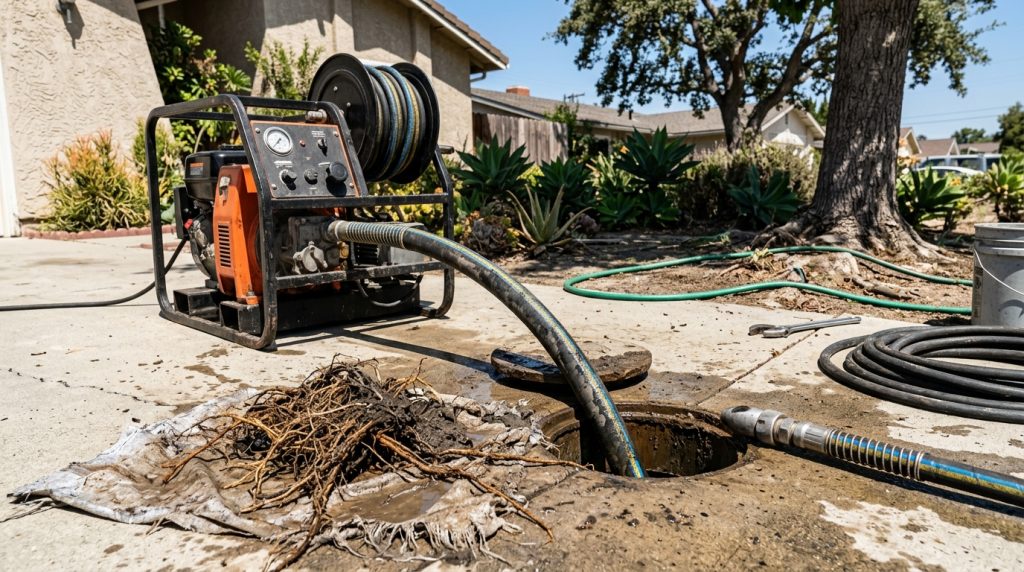
If tree roots have pushed into a sewer line, hydro jetting may be part of the cleanup, but it is not always the whole repair. The fast answer is this: hydro jetting can clear roots, sludge, and debris from inside the line, but a plumber still needs to understand how the roots entered and whether the pipe is cracked, offset, collapsed, or likely to clog again.
For Los Angeles homeowners, that distinction matters. Older clay, cast iron, and aging sewer laterals can run under driveways, yards, hardscape, or mature landscaping. A powerful cleaning may restore flow today, while a damaged pipe section keeps inviting roots back later. If drains keep slowing down or backing up after prior cleanings, the right next step is usually inspection first, then cleaning or repair based on what the line actually shows.
Can hydro jetting remove tree roots from a sewer line?
Hydro jetting uses high-pressure water through a specialized nozzle to scour the inside of a drain or sewer line. When the line is a good candidate, it can cut through root masses, flush loose debris, and remove buildup that a basic cable may leave behind.
That said, hydro jetting is a cleaning method, not a pipe replacement. It can open a line and improve flow, but it does not seal cracks, fix separated joints, lift a belly in the pipe, or rebuild a collapsed section. If roots entered because a joint separated or the pipe wall is damaged, the opening can still be there after the line is cleaned.
This is why homeowners should be careful with any one-size-fits-all answer. A sewer line that is structurally sound but packed with roots may respond well to professional cleaning. A line with damage may need a different plan after the blockage is cleared.
Why tree roots keep coming back after a drain cleaning
Tree roots are drawn toward moisture and nutrients. A tiny opening in a sewer line can be enough for roots to find their way in. Once they enter, they can catch toilet paper, grease, wipes, and other debris. Over time, that small intrusion can become a recurring clog or a full backup.
If a drain cleaning temporarily restores flow but the same symptoms return, common possibilities include:
- Cracked or aging pipe: roots may be entering through a break in the pipe wall.
- Separated joints: older pipe sections can shift and leave gaps.
- A pipe belly: a low spot can hold water and debris, making backups easier.
- Heavy grease or sludge: roots can combine with buildup and make the clog more stubborn.
- Incomplete cleaning: a partial opening may drain for a while, then close again.
Repeated backups are a sign to slow down and diagnose the line instead of simply clearing the same clog again and again.
When a camera inspection should come before hydro jetting
A sewer camera inspection can help a plumber see where the blockage is, how severe it looks, and whether the pipe appears safe to clean with high-pressure water. It can also help identify bends, bellies, offsets, root intrusion points, or broken sections.
Camera inspection is especially important when:
- multiple fixtures are backing up at once
- toilets bubble or gurgle when other drains run
- the same main line clog keeps returning
- there are mature trees near the sewer path
- the home has older sewer piping
- there has already been a previous root-related cleaning
Inspection does not replace professional judgment, but it gives everyone a better starting point. It can also prevent the wrong tool from being used on a line that may already be compromised.
Signs hydro jetting may be the right cleaning step
Hydro jetting is often considered when a sewer or drain line has recurring buildup that ordinary snaking does not fully remove. For tree root intrusion, it may be useful when the line needs a more thorough cleaning after the condition of the pipe has been checked.
Possible signs that hydro jetting may be part of the solution include slow drains throughout the home, repeat clogs after prior cable cleaning, sewage odors near drains, backups that start in the lowest fixtures, or heavy buildup visible during inspection. In LA homes, mature trees and older sewer materials can make those symptoms more common, but symptoms alone do not prove the cause.
If the line appears stable enough for cleaning, a plumber may use hydro jetting to flush roots and debris from the pipe. If the line is damaged, the cleaning may be paired with a repair recommendation, maintenance plan, or further evaluation.
When cleaning is only part of the fix
The biggest mistake is thinking “the water drains now” means the problem is permanently solved. Sometimes clearing the blockage is only the first step. If roots entered through a damaged spot, they can return. If the pipe has a belly, waste and water may continue collecting in the low area. If a section has collapsed, cleaning will not restore the pipe’s shape.
In those cases, the conversation may shift from cleaning to repair. That does not mean every root problem requires replacement. It means the line should be evaluated carefully so the homeowner is not paying for repeated short-term cleanings when a structural issue is driving the same backup.
A practical approach is to ask: What caused the blockage, where did it happen, how much of the line is affected, and what is the risk of the same backup returning?
What Los Angeles homeowners can do before calling
If you suspect a main sewer issue, avoid adding more water to the system. Do not keep flushing toilets to “test” the line if fixtures are backing up. Stop running the dishwasher, washing machine, or shower until the situation is checked. If sewage is present, keep people and pets away from the affected area and avoid direct contact.
It is also helpful to note which fixtures are affected. A single slow sink may point to a local clog. Multiple drains backing up at the same time can point closer to the main line. If you know where the cleanout is, keep the area accessible, but do not force open caps or attempt unsafe sewer work yourself.
For sewer-line cleaning and hydro jetting help, Zenon’s Los Angeles hydro jetting service page explains the local service path and when professional drain equipment may be needed.
A local note for LA-area sewer lines
Many Los Angeles-area homes have a mix of older plumbing materials, additions, mature landscaping, and hard-to-access sewer paths. That can make tree-root problems more complicated than a simple surface clog. Burbank, Glendale, and Los Angeles homeowners may also deal with narrow lots, older yards, driveway runs, or shared access challenges that make inspection and planning important before major work is discussed.
Zenon Plumbing & Restoration works in this local environment, so the goal is not to scare homeowners into unnecessary repairs. It is to separate a normal clog from a recurring main-line problem that deserves a closer look.
When to schedule professional help
Call a plumber if drains are backing up in more than one fixture, sewage is appearing in a tub or floor drain, the same line keeps clogging, or you suspect tree roots are involved. Main sewer work is not a safe DIY project, and harsh chemicals are not a reliable fix for roots or damaged pipe sections.
If the situation is active, limit water use and get the line checked. If it is recurring but not currently overflowing, schedule an inspection before the next backup causes more disruption.
Need help with a drain or sewer problem? Call (818) 640-2944 — Phone answered 24/7, on-site Mon-Sat 9 AM–6 PM — or contact Zenon Plumbing & Restoration online.
Zenon Plumbing & Restoration
Need help with this plumbing problem in Burbank? Call (818) 640-2944. Phone answered 24/7; on-site service Mon-Sat 9 AM–6 PM.


