 Mon-Sat 9AM-6PM
 Make an
Appointment (818) 640-2944
Make an
Appointment (818) 640-2944 2115 W Magnolia Blvd Unit C, Burbank, CA 91506
Main Line Cleanout Basics: Why Plumbers Look There During Backups
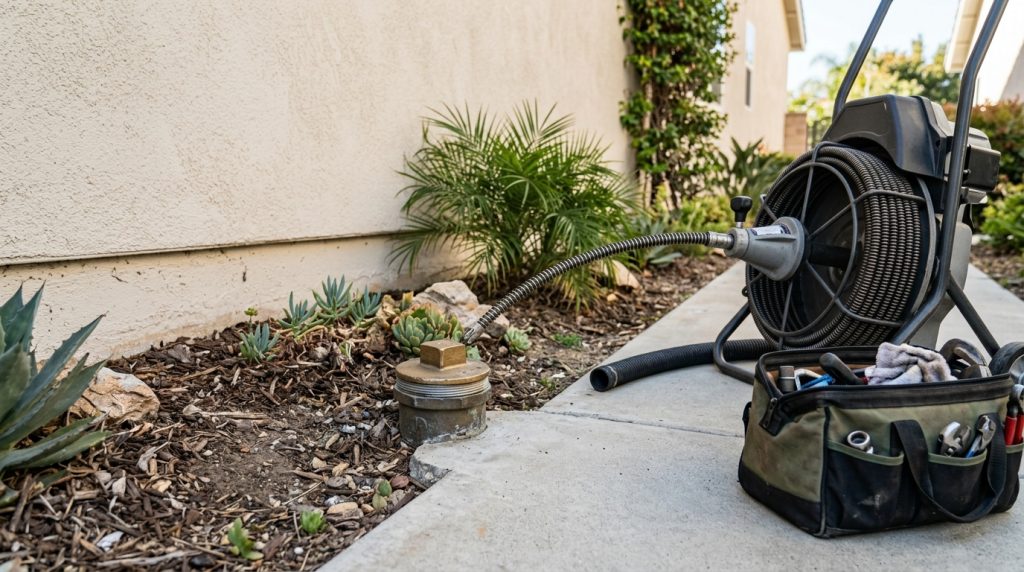
Fast answer: a main line cleanout is an access point plumbers use to inspect, clear, and test the larger drain line that carries wastewater away from the home. When sinks, tubs, showers, or toilets start backing up in more than one area, the cleanout can help a plumber find whether the problem is in one fixture drain or deeper in the main sewer line.
If you are dealing with an active backup, avoid running more water, stop using affected fixtures, and keep people away from contaminated water. A plunger may help with a single toilet or sink clog, but multiple slow drains, gurgling, or wastewater coming up through a tub or shower usually means it is time to stop DIY troubleshooting and call for help.
What Is a Main Line Cleanout?
A main line cleanout is a capped opening connected to the home’s main drain or sewer line. Depending on the property, it may be outside near the foundation, in a garage, along a side yard, in a basement or crawlspace, or near where the building drain exits the home. Some older Burbank and Los Angeles-area homes have cleanouts that are hard to spot, partly buried, painted over, or added during a prior repair.
The cleanout is not there for everyday use. It gives a plumber a safer, more direct way to reach the main line with inspection or drain-clearing equipment. Instead of removing a toilet or opening a fixture trap first, a plumber may be able to work through the cleanout and see what is happening farther downstream.
Why Plumbers Look for the Cleanout During a Backup
During a backup, the first question is location: is the clog limited to one fixture, or is the main line affected? The cleanout helps answer that question. If the backup involves the main line, clearing only the sink, shower, or toilet may not solve the real problem. Water can seem to drain for a short time, then come back once the line fills again.
A cleanout can also reduce unnecessary disruption. When the access point is usable, a plumber may be able to inspect or clear the line without pulling fixtures apart. That matters in busy homes, apartments, and older properties where repeated backups can quickly become messy.
For recurring backups, sewer odors, or several slow drains at once, Zenon’s drain and sewer repair service can help determine whether the issue is a blockage, damaged pipe, root intrusion, heavy buildup, or another line problem that needs more than a quick clearing.
Signs the Problem May Be in the Main Line
Not every clogged drain is a sewer issue. A slow bathroom sink may simply have hair and soap buildup near the trap. A kitchen sink may be dealing with grease, food residue, or disposal-related debris. Main line problems tend to show a wider pattern.
- More than one drain is slow at the same time.
- A toilet bubbles or gurgles when a shower, tub, or washing machine drains.
- Water backs up into the tub or shower when another fixture is used.
- A floor drain or lowest-level fixture backs up first.
- Sewer smell appears along with slow drainage.
- The same “clog” keeps coming back after temporary clearing.
These signs do not prove exactly what is wrong. They are clues. A plumber still needs to evaluate the system in person, because the cause could be buildup, a partial obstruction, pipe slope, roots, a broken section, or a city-side issue depending on the property.
What Homeowners Should Do Before Help Arrives
The safest first step is to stop adding water to the system. Do not run the dishwasher, washing machine, shower, tub, or extra toilet flushes if wastewater is backing up. More water can push the backup into other fixtures and make cleanup harder.
If water is already on the floor, avoid walking through it when possible, especially if it may contain sewage. Keep children and pets away from the area. If the backup is near electrical outlets, cords, or appliances, do not try to handle the situation yourself. Let a qualified professional evaluate it.
It can help to note what happened first: which drain slowed down, whether there was gurgling, whether rain or heavy water use was involved, and whether this has happened before. That information helps the plumber narrow down where to start.
What Not to Do With a Main Line Backup
Avoid pouring harsh chemical drain cleaners into a system that may be backed up. If the chemical does not reach or clear the obstruction, it can sit in the line or come back up through another fixture. That can create a more difficult and unpleasant work area.
Also avoid forcing repeated plunging across several fixtures if wastewater is moving between drains. A single fixture clog is different from a main line symptom. When the whole system is affected, aggressive DIY attempts can push dirty water where you do not want it.
If you know where the cleanout is, you can tell the plumber, but do not remove the cap during an active backup unless you know it is safe. Pressure in the line can release wastewater quickly. In many cases, it is better to leave the cleanout closed until the plumber is ready to control the opening.
How a Cleanout Helps With Inspection and Clearing
Once the plumber finds a usable cleanout, the next step depends on the symptoms. For some clogs, mechanical drain cleaning may be enough to restore flow. For heavier buildup, repeated clogs, roots, or grease in the line, a camera inspection or hydro jetting may be considered after the basic problem is understood.
The cleanout gives access, but it does not automatically tell the whole story. A line can drain after clearing and still have a damaged section, heavy buildup, or a root problem that returns later. That is why recurring backups should be treated differently from a one-time clog. The goal is not just to get water moving for the next few hours; it is to understand why the backup happened.
Local Factors in Burbank and LA-Area Homes
Many homes around Burbank, Glendale, and older Los Angeles neighborhoods have a mix of aging drain materials, additions, mature trees, and prior repairs. A cleanout may have been added years after the original plumbing was installed, or the main access point may not be obvious from the surface. In some homes, landscaping or hardscape changes make access harder than it used to be.
That local context matters because two homes with the same symptom can have different causes. A newer property with one backed-up bathroom may need a different approach than an older home where every low drain gurgles after laundry day. A careful inspection helps avoid guessing.
When to Call Zenon
Call when more than one drain is affected, wastewater is coming up through a lower fixture, sewer odor appears with slow drainage, or the same drain problem keeps returning. You can also start from the main plumbing and drains hub if you are comparing services and trying to understand which type of help fits your situation.
For active backups, the practical move is simple: stop using water, keep the area clear, and get the line checked before the problem spreads. A plumber can locate the cleanout, evaluate the backup pattern, and decide whether the line needs clearing, inspection, or a deeper repair plan.
Zenon Plumbing & Restoration
Dealing with a drain backup or recurring sewer line issue? Call (818) 640-2944. Phone answered 24/7, on-site Mon-Sat 9 AM–6 PM.


