 Mon-Sat 9AM-6PM
 Make an
Appointment (818) 640-2944
Make an
Appointment (818) 640-2944 2115 W Magnolia Blvd Unit C, Burbank, CA 91506
Mystery Ceiling Stain: Plumbing Clues to Check Before It Gets Worse
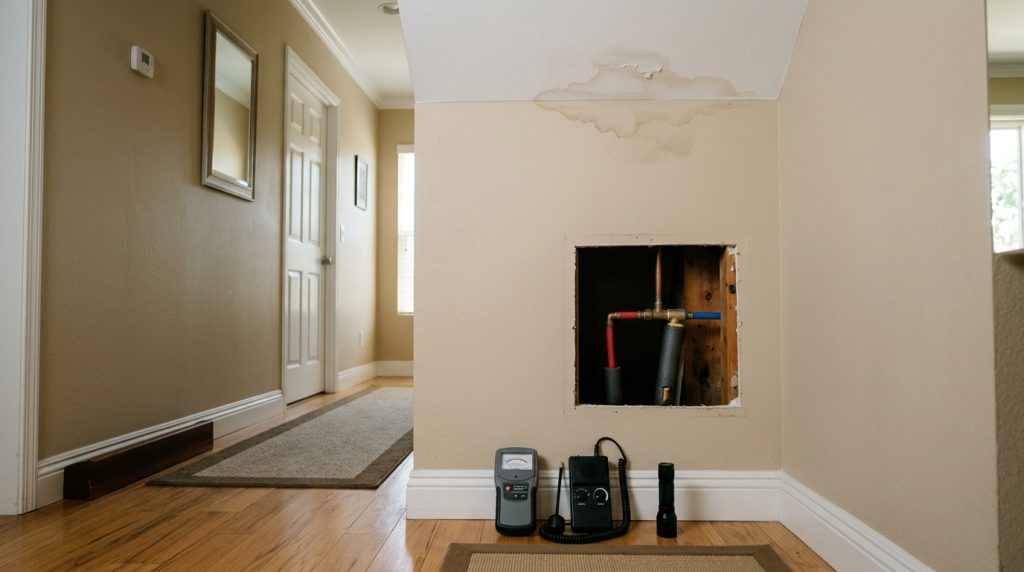
A mystery ceiling stain usually means moisture has reached the drywall from somewhere above. It might be an old spill, a roof issue, condensation, or a plumbing leak from an upstairs bathroom, kitchen, laundry area, or supply line. The safest first step is not to cut into the ceiling or assume the source. Check what is directly above the stain, look for active dripping or spreading, and shut off nearby water if you see signs of an active plumbing leak.
If the stain is growing, feels soft, smells musty, or appears after someone uses an upstairs fixture, it is time to have the source checked. A ceiling stain can look small from below while the leak path above it is larger than expected.
Start With the Fast Clues
Before you panic, take a few minutes to gather simple clues. These details help you explain the situation clearly when you call for help, and they can keep a small problem from turning into a bigger one.
- Is the stain dry or damp? Lightly touch near the edge, not the center. If it feels soft, cool, or damp, treat it as active moisture.
- Is the stain getting bigger? Mark the edge with a small piece of painter’s tape and check again in an hour.
- What is above it? A bathroom, kitchen, laundry room, water heater closet, or HVAC drain area can point the investigation in the right direction.
- When does it appear? A stain that darkens after showers, toilet use, laundry, or dishwasher cycles may suggest a plumbing-related source.
- Do you hear dripping? Sound can travel through framing, so it may not be directly above the stain, but it is still important.
Do not poke a hole in the ceiling unless water is actively pooling and you need to relieve pressure safely. Even then, keep clear of electrical fixtures and call for professional help if the ceiling looks bowed or unstable.
Common Plumbing Sources Above a Ceiling Stain
Ceiling stains often show up under rooms with fixtures or supply lines. The stain may be several feet away from the actual leak because water can follow pipes, joists, or drywall seams before it appears below.
Upstairs bathroom leaks
Bathrooms are one of the most common areas to check. A tub drain, shower valve, toilet wax ring, sink supply line, or loose connection can let water escape into the floor system. If the stain darkens after a shower or bath, that timing matters. If it appears after the toilet is flushed, the toilet or nearby drain line may need a closer look.
Kitchen or laundry supply lines
Dishwashers, refrigerator water lines, washing machine hoses, and under-sink supply lines can leak slowly before anyone notices. A small drip inside a cabinet or behind an appliance can travel down into the ceiling below. If the room above has appliances that use water, check for damp flooring, swollen cabinet bases, or water near the wall.
Water heater or mechanical-area leaks
If a water heater or plumbing manifold is above the stain, look for moisture around the pan, valves, or nearby pipes. Do not attempt gas or electrical work yourself. If water is active, shut off the water supply if you can do so safely and keep people away from wet electrical areas.
When a Ceiling Stain May Not Be Plumbing
Not every ceiling stain is caused by a plumbing leak. In Los Angeles-area homes, stains can also come from roof leaks after rain, condensation around ducts, exterior wall intrusion, old patched damage, or spills from above. The timing usually tells the story.
If the stain appears only after rain, plumbing may not be the first suspect. If it appears after fixture use, plumbing becomes more likely. If it comes and goes during warm weather when air conditioning is running, condensation or a drain line issue may be worth checking. The point is not to guess; it is to narrow the source before opening walls or ceilings.
What Homeowners Can Safely Do First
Safe first steps are about slowing damage and avoiding unnecessary risk. You do not need to diagnose the whole system on your own.
- Move furniture, electronics, rugs, and valuables away from the stained area.
- Place a bucket or towel below any active drip.
- Take photos of the stain and the room above it for your own records.
- Check nearby shutoff valves if the source seems tied to a sink, toilet, appliance, or water heater.
- Stop using the fixture above the stain until the source is checked.
- Keep children and pets away from sagging drywall, wet flooring, or electrical fixtures.
If the ceiling is bulging, cracking, or actively dripping near a light fixture, do not stand under it and do not touch the fixture. Shut off power to the affected area if it can be done safely from the breaker, then call for help.
Why Stains Can Be Hard to Trace
Water rarely travels in a straight line. It can run along a pipe, settle on top of drywall, move across framing, or appear at a seam far from the original leak. That is why a stain in the living room does not always mean the leak is directly above the living room.
A careful leak check may include fixture testing, moisture readings, visual inspection above and below the stain, and a look at nearby supply and drain lines. The goal is to find the source before repairs are made, not just paint over the stain and hope it stays dry.
For homeowners dealing with a ceiling stain that may be plumbing-related, Zenon’s leak detection service can help narrow down the source before the damage spreads or the wrong area is opened up.
Local Notes for LA and Burbank Homes
Many Burbank, Glendale, and Los Angeles homes have a mix of older plumbing, remodeled bathrooms, add-on laundry areas, and tight crawl or attic spaces. A small stain can come from newer fixture work, aging supply lines, a drain connection, or a slow leak that only appears when a fixture is used heavily.
Apartment and condo buildings add another wrinkle: the source may be inside another unit or a shared wall/floor assembly. Renters should notify the property manager or owner right away, especially if water is active. Owners should document the timing, location, and any fixture use before the stain appeared.
When to Call Instead of Waiting
Some stains are old and stable. Others are early warnings. Call sooner if the stain is spreading, damp to the touch, near a light fixture, connected to an upstairs bathroom or appliance, or paired with a musty smell. You should also call if you have repeated stains in the same area after cleaning or repainting.
Waiting can make the repair more complicated because drywall, flooring, trim, and framing can hold moisture longer than the visible surface suggests. The source should be found first, then the drying and repair plan can make sense.
Need Help Checking a Ceiling Stain?
If a stain looks active or you are not sure what is above it, stop using the nearby fixture and get the source checked before it gets worse. For questions or scheduling, you can contact Zenon Plumbing & Restoration or call (818) 640-2944. Phone answered 24/7, on-site service Mon-Sat 9 AM–6 PM.
Zenon Plumbing & Restoration
Need help with this plumbing problem in Burbank? Call (818) 640-2944. Phone answered 24/7; on-site service Mon-Sat 9 AM–6 PM.


