 Mon-Sat 9AM-6PM
 Make an
Appointment (818) 640-2944
 2115 W Magnolia Blvd Unit C, Burbank, CA 91506

Pinhole Leaks in Copper Pipes: Small Clues Older Burbank Homes Should Not Ignore
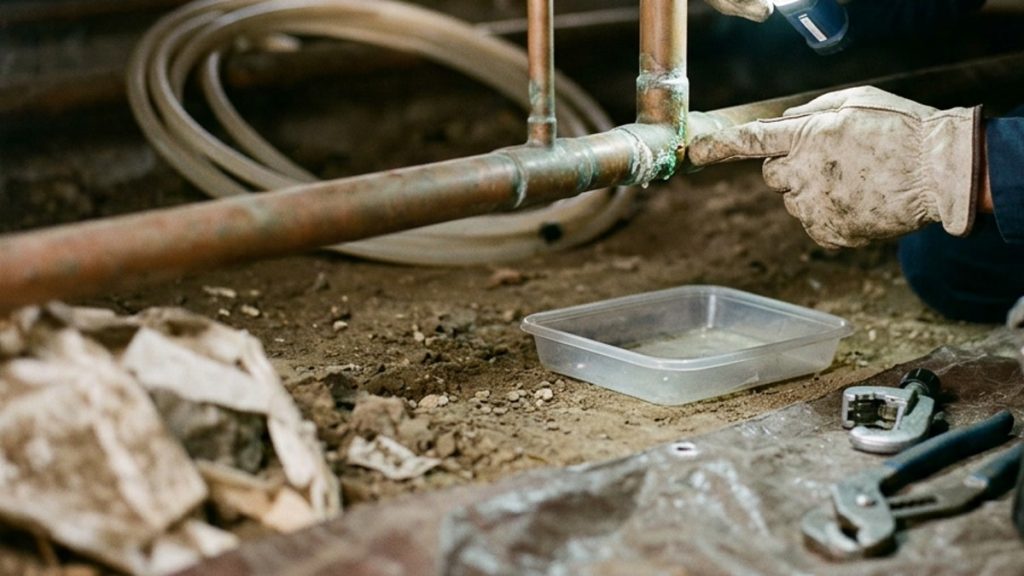
A pinhole leak in a copper pipe can start with a clue so small that it is easy to dismiss: a green spot on exposed pipe, a faint musty odor inside a cabinet, a tiny ceiling mark, or an unexplained damp patch that returns after drying. The safest short answer is to stop using the nearby fixture if you can do so without creating another problem, contain any dripping water, and arrange an in-person plumbing inspection. A small visible spot does not reveal how much pipe is affected or what caused it.
In older Burbank homes, copper lines may run through walls, ceilings, crawl spaces, garages, and slabs. That makes careful observation useful, but it also means homeowners should avoid guessing based on one stain or one exposed section. The goal is to notice the pattern early, limit additional water spread, and let a professional determine whether the issue is a single fitting, a localized pipe defect, or something broader.
What is a pinhole leak in a copper pipe?
A pinhole leak is a very small opening in the wall of a copper water line. It may release a fine spray, form a slow bead of water, or stay hidden behind a finished surface until nearby material becomes damp. Despite the name, the surrounding damage is not always small. A slow leak can continue between fixture uses because a pressurized supply line normally holds water even when a faucet is off.
The visible opening is only one piece of the problem. Corrosion, a damaged section, movement at a connection, installation conditions, or other system factors may be involved. It is not possible to identify the cause reliably from a photo or stain alone. The pipe location, water pattern, nearby fittings, and condition of the surrounding line all matter.
What small clues should homeowners watch for?
A pinhole leak does not always create an obvious puddle. Early clues may include:
- blue-green or white residue on an exposed copper line;
- a dark spot, tiny bead, or recurring dampness on the pipe;
- a cabinet floor that feels damp even though the drain area looks dry;
- paint that bubbles or drywall that softens near a supply line;
- a small ceiling or wall stain that grows between checks;
- a faint dripping or spraying sound when nearby fixtures are off;
- a water meter that appears to move while known water-using fixtures are off; or
- an unexplained increase in water use.
None of these signs confirms a pinhole leak by itself. Condensation, a drain leak, a roof or exterior leak, a loose fixture connection, or moisture from another source can look similar. A homeowner can document the clue, but an on-site inspection is needed before calling it a copper-pipe failure.
Why can a tiny leak cause a larger problem?
Water often travels before it becomes visible. A leak inside a wall can run along a pipe, framing member, or cable opening and appear several feet from its source. A stain below a bathroom, for example, does not automatically identify which fixture or line is responsible.
Porous materials can also hold moisture after the surface looks dry. Drywall paper, cabinet panels, insulation, baseboards, and some flooring materials may absorb water. That is why repeatedly wiping a spot without finding the source is not a lasting solution. If dampness returns, the water source still needs to be located and the affected area evaluated.
What should you do when you notice a suspected pinhole leak?
- Move belongings away from the area. Protect items stored under a sink or near a damp wall before more water reaches them.
- Place a container under a visible drip. Use towels or a shallow pan only when the area is safe and there are no electrical concerns.
- Stop using the nearby fixture. This may help if the source is fixture-related, although it will not stop every supply-line leak.
- Shut off water if the leak is active and you know the correct valve. Use a working fixture valve or the main shutoff only if it is safe and familiar. Do not force a corroded or stuck valve.
- Take clear photos and note the time. Mark the edge of a stain lightly with painter’s tape or record its size so you can tell whether it changes.
- Arrange an inspection. If water is spraying, spreading, entering a ceiling, or reaching electrical components, keep clear of the area and treat it as urgent.
Temporary tape, putty, or a clamp may hide the symptom without answering why the pipe leaked. A repair method that is appropriate for one exposed section may be wrong for a line inside a wall or slab. Avoid cutting drywall, opening a ceiling, or handling wet materials near electrical wiring unless the area has been evaluated and made safe.
Can you find the source without opening the wall?
Sometimes a plumber can narrow the source before a large opening is made, but the right approach depends on the building and the leak. An inspection may begin with accessible pipes, fixture connections, shutoff valves, water-use patterns, and the meter. Moisture readings or other detection methods may help define the affected area.
Detection is not the same as guessing at the nearest stain. The nearest pipe may not be the source, and more than one issue can exist at the same time. If the suspected line runs below a slab or behind finished material, the inspection should be matched to that location before repair decisions are made.
Does one pinhole leak mean all the copper piping must be replaced?
Not necessarily. One leak may be localized, while repeated leaks in different places may point to a broader concern. The age printed on a home’s paperwork, the color of a stain, or the presence of copper piping alone cannot answer whether a spot repair or a larger project makes sense.
Useful questions to ask after the source is found include:
- Is the leak at a fitting, valve, damaged section, or pipe wall?
- Does the nearby accessible copper show similar wear?
- Have there been previous leaks in separate parts of the home?
- Will the proposed repair address the confirmed source?
- What surfaces must be opened, and how will the area be checked afterward?
A clear explanation should separate what has been observed from what still needs to be confirmed. Be cautious of anyone making a whole-house recommendation without seeing the system and explaining the evidence behind it.
What is different about checking older Burbank homes?
Burbank has homes from different building eras, additions completed at different times, and plumbing that may have been partly updated rather than replaced all at once. A house can contain more than one pipe material or repair style. Supply lines may also pass through tight crawl spaces, garages, cabinets, finished walls, or slab areas. Those variations make a room-by-room assumption unreliable.
Local help matters most when it is practical: someone should inspect the actual routing, identify which fixtures share the line, and explain the least disruptive next step. For an active leak or fast-spreading water, Zenon’s emergency plumbing service in Burbank can evaluate the situation in person rather than trying to diagnose it from a description alone.
When should a suspected pinhole leak be treated as urgent?
Act promptly when water is spraying, the damp area is expanding, a ceiling is bulging, flooring is becoming wet, the main shutoff will not operate, or water is near an outlet, fixture, appliance connection, or electrical panel. Keep people and pets away from a sagging ceiling or an electrically unsafe area. If you are unsure which valve controls the line, do not force hardware or begin opening finished surfaces.
A slow mark that is not visibly changing still deserves attention. Document it, avoid repeatedly using the nearby fixture, and schedule an inspection. Waiting for a small leak to become obvious usually makes the source harder—not easier—to manage.
Need help with a suspected pipe leak?
Call (818) 640-2944. Phone answered 24/7, on-site Mon-Sat 9 AM–6 PM. You can also contact Zenon online to request help.


