 Mon-Sat 9AM-6PM
 Make an
Appointment (818) 640-2944
Make an
Appointment (818) 640-2944 2115 W Magnolia Blvd Unit C, Burbank, CA 91506
Sewer Smell in the House: Plumbing Causes Homeowners Should Check
A sewer smell inside the house is not something most homeowners want to ignore. Sometimes the cause is simple, like a dry drain trap in a guest bathroom that has not been used in weeks. Other times, the odor can point to a clogged vent, drain blockage, cracked line, or sewer backup risk that needs a professional plumber to inspect in person.
The fast answer: start by checking whether the smell is coming from one drain, one room, or the whole house. Run water in rarely used sinks, tubs, and floor drains for a minute, open windows for fresh air, and avoid using chemical drain cleaners or taking apart sewer piping if the odor is strong. If the smell keeps coming back, shows up near multiple drains, or comes with slow drains, gurgling, wet spots, or backups, it is time to schedule a professional drain and sewer inspection.
First, narrow down where the sewer smell is coming from
Before assuming the worst, take a few minutes to locate the odor. Sewer smells can travel, especially in bathrooms, laundry rooms, kitchens, and older Los Angeles-area homes with multiple plumbing lines behind walls or below slabs.
Ask a few simple questions:
- Is the smell strongest near one sink, shower, tub, toilet, floor drain, or laundry standpipe?
- Does it happen only after running water, flushing, using the washing machine, or draining the dishwasher?
- Are there slow drains, bubbling toilets, or gurgling sounds at the same time?
- Does the odor show up after rain, heavy water use, or several fixtures draining at once?
- Is the smell constant, or does it come and go?
A one-room odor often points to a local fixture issue. A whole-house odor, especially with drain problems, deserves faster attention because it may involve the sewer line, venting system, or a backup starting downstream.
Common plumbing causes of sewer smell in a house
A sewer odor does not automatically mean the main sewer line is broken, but it does mean something in the plumbing system is letting gases or contaminated water go where they should not. These are some of the most common causes a plumber will consider.
A dry P-trap
Every sink, tub, shower, and floor drain should have a curved trap that holds water. That water creates a seal between your living space and the drain system. If a bathroom, guest shower, laundry floor drain, or utility sink has not been used in a while, the trap can dry out and let sewer odor rise through the drain.
This is one of the few simple checks homeowners can do safely. Run water into the drain for a minute or two and see whether the smell fades over the next few hours. If it returns quickly, there may be another issue, such as a leak, cracked trap, blocked vent, or drain buildup.
Drain buildup inside the pipe
Kitchen drains, bathroom sinks, and shower drains collect grease, soap film, hair, toothpaste, food particles, and other residue. That buildup can smell bad even before the drain fully clogs. If the odor is musty, sour, or strongest right at one drain, the problem may be inside the branch line rather than the main sewer line.
Avoid pouring harsh chemicals down the drain, especially if the drain is slow or fully stopped. Chemical products can splash back, damage finishes, and make the job more hazardous if a plumber needs to open the line. A plumber can inspect the issue and choose the right cleaning method without guessing.
A clogged or blocked plumbing vent
Plumbing vents help air move through the drain system so water can drain correctly and traps do not get siphoned dry. If a vent is blocked by debris, nesting material, or another obstruction, you may notice gurgling drains, slow drainage, or sewer smell after fixtures are used.
Vent issues are easy to misread because the problem may appear at a sink or toilet even though the blockage is somewhere else. This is not a good DIY ladder or roof project for most homeowners. It is safer to have the system inspected properly.
A loose toilet seal
If the smell is strongest near a toilet, the wax ring or toilet seal may be loose, damaged, or no longer seated correctly. You might also notice movement at the toilet base, moisture around the floor, staining, or odor that gets worse after flushing.
Do not ignore this one. A bad toilet seal can allow odor out, but it can also let water reach flooring or subfloor materials. In apartments, condos, and older Burbank homes, water can travel farther than expected before it becomes visible.
A partial sewer line blockage
If several fixtures are slow at the same time, or a toilet bubbles when another fixture drains, the issue may be deeper in the sewer line. Tree roots, grease, old pipe material, bellies in the line, or heavy buildup can restrict flow and create odor before a full backup happens.
This is where professional help matters. Zenon’s drain and sewer repair service can help homeowners identify whether the problem is a simple drain issue, a sewer-line restriction, or a repair that needs a closer inspection.
When sewer smell is more urgent
Some sewer odor situations can wait long enough to schedule a normal appointment. Others should be treated as more urgent because they may involve active backup, water damage, or unsafe conditions around the home.
Call for help sooner if you notice:
- Wastewater or dirty water backing up into a tub, shower, toilet, or floor drain
- Multiple drains slowing down at once
- Gurgling sounds from toilets or drains after water use
- Sewer smell plus wet flooring, damp drywall, or staining near plumbing fixtures
- Odor that returns shortly after you run water in a dry drain
- A toilet that rocks, leaks, or smells strongly at the base
If there is active wastewater, do not walk through it barefoot, do not let children or pets near it, and do not try to push the problem farther down the line with repeated flushing. Stop using the affected fixtures if you can and get the plumbing checked.
What homeowners can safely check before calling
There are a few reasonable first steps that do not involve opening pipes or using chemicals:
- Run water in drains that are rarely used, especially guest bathrooms, tubs, and floor drains.
- Check whether the smell is tied to one room, one fixture, or the whole house.
- Look for obvious moisture around toilet bases, under sinks, near the washing machine, and around walls that share plumbing.
- Listen for gurgling after flushing toilets or running nearby sinks.
- Make a note of when the smell appears so the plumber has a clearer starting point.
Those notes can save time during the visit. They help separate a simple dry-trap issue from a drain, vent, or sewer-line problem that needs equipment and experience to diagnose correctly.
Why Burbank and LA-area homes can be tricky
Homes around Burbank, Glendale, and Los Angeles can vary a lot by age, layout, pipe material, remodel history, and landscaping. Some properties have older drain lines, long runs to the sewer connection, large trees near laterals, or additions where plumbing was changed over time. That mix can make sewer odors harder to trace from the smell alone.
A sewer smell in a newer kitchen may actually be tied to an old branch line. A bathroom odor may come from a trap, vent, toilet seal, or main-line restriction. In multi-unit buildings, one unit’s symptoms may also be affected by shared lines. That is why the right answer usually starts with inspection, not guessing.
How a plumber may diagnose the problem
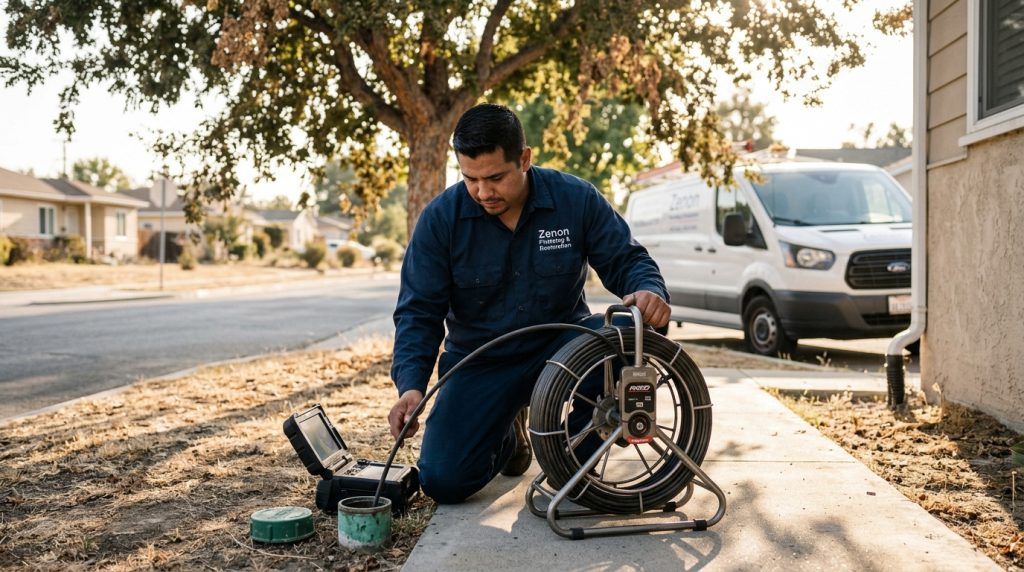
Depending on the symptoms, a plumber may inspect fixture traps, check for visible leaks, test drainage, look at toilet seals, evaluate venting clues, or recommend camera inspection for a sewer-line concern. If the issue is buildup, drain cleaning may be enough. If there is a damaged section, repeated blockage, or root intrusion, sewer repair options may need to be discussed.
The goal is not to sell the biggest repair. The goal is to find why the smell is happening, stop it from coming back, and protect the home from backups or hidden water damage.
Need help with a sewer smell at home?
If the smell is mild and clearly coming from an unused drain, try running water first. If it keeps returning, affects multiple fixtures, or comes with slow drains or backups, schedule service before it becomes a bigger mess.
For help in Burbank or nearby LA-area neighborhoods, you can contact Zenon Plumbing & Restoration or call (818) 640-2944. Phone answered 24/7, on-site Mon-Sat 9 AM–6 PM.
Zenon Plumbing & Restoration
Need help with this plumbing problem in Burbank? Call (818) 640-2944. Phone answered 24/7; on-site service Mon-Sat 9 AM–6 PM.


