 Mon-Sat 9AM-6PM
 Make an
Appointment (818) 640-2944
Make an
Appointment (818) 640-2944 2115 W Magnolia Blvd Unit C, Burbank, CA 91506
Slab Moisture After a Recent Pipe Repair: When to Recheck for Leaks
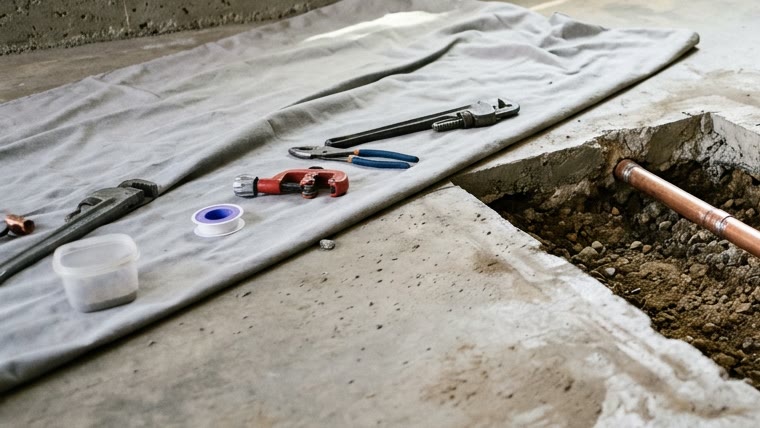
If you still notice damp flooring, a musty smell, or unexplained slab moisture after a recent pipe repair, do not assume the problem is automatically fixed. The safest next step is to document what you are seeing, limit water use in the affected area if possible, and schedule a recheck so a plumber can look for an active leak, trapped moisture, or a separate issue that was not visible during the first repair.
In many Los Angeles-area homes, especially older houses with pipes under or near the slab, moisture can linger for several reasons. Some are not plumbing emergencies. Others are signs that the original leak needs another look. The goal is not to diagnose the system from the surface. It is to know when the situation is normal, when it is worth monitoring, and when it is time to call for help.
Why slab moisture can show up after a pipe repair
A pipe repair stops the water source that was found at the time of service. It does not always make the surrounding concrete, flooring, baseboards, or underlayment dry out immediately. Concrete can hold moisture, and flooring materials can hide dampness below the surface even when the room looks mostly normal.
After a repair, homeowners may notice:
- a cool or damp-feeling area on tile, vinyl, laminate, or carpet
- baseboards that still look swollen or stained
- a musty odor near the repaired area
- paint or drywall that continues to bubble near the floor
- moisture meter readings that do not drop as expected
Those signs do not automatically prove there is still a leak. They do mean the area deserves attention, especially if the moisture is spreading, the smell is getting stronger, or the floor feels wetter than it did after the repair.
How long should a slab or flooring area take to dry?
There is no one-size-fits-all drying timeline. Drying depends on how much water escaped, how long the leak was active, what materials were affected, whether cabinets or flooring trapped moisture, and how much ventilation or drying equipment is being used.
For a small leak that was caught quickly, surface moisture may improve within a short period. For a leak that reached flooring layers, wall cavities, or the slab, drying can take longer and may require restoration equipment. If the area feels the same or worse several days after the repair, that is a good reason to ask for a recheck rather than waiting indefinitely.
Be careful with online timelines. A Burbank condo with slab-on-grade construction, a hillside Los Angeles home, and an older Glendale house with previous plumbing changes can all behave differently. What matters most is the trend: is the affected area improving, staying the same, or getting worse?
Signs the repaired area should be rechecked
Call for a professional recheck if you notice a pattern that points to ongoing water movement rather than old moisture slowly drying out. Watch for these warning signs:
- the damp area is expanding instead of shrinking
- water meter movement continues when all fixtures are off
- you hear running water when no fixtures are being used
- flooring feels warmer, cooler, softer, or more raised than nearby areas
- baseboard staining keeps growing after the repair
- water pressure changes at nearby fixtures
- the same symptom returns after normal household water use
These signs still need an in-person inspection. A plumber may need to confirm whether the repaired pipe is holding, whether another nearby line has a problem, or whether the moisture is from a different source such as a fixture, drain line, appliance connection, or irrigation-related intrusion near the foundation.
What homeowners can safely check first
There are a few safe steps you can take before the recheck. Keep them simple. Do not open walls, remove flooring, break concrete, or attempt slab leak repair yourself.
- Take photos at the same time each day. This helps show whether stains or damp areas are spreading.
- Check the water meter if it is safe and accessible. With fixtures off, unexpected movement may be useful information for the plumber.
- Note when the moisture appears. Does it get worse after showers, laundry, irrigation, or dishwasher use?
- Keep the area ventilated. Air movement can help surface drying, but do not rely on a fan alone if water may be trapped under flooring.
- Avoid chemical or sealant shortcuts. Coatings and sealers can trap moisture or hide the symptom without fixing the source.
If there is active water, shut off the water if you can do so safely. If the area is near electrical outlets, appliances, or standing water, keep distance and call for help.
Could it be a new slab leak?
It could be, but it should not be guessed from one symptom. Slab moisture after a pipe repair may come from old water drying slowly, a nearby line that was not part of the original repair, a failed fitting, a drain issue, or moisture that moved under flooring before the repair was completed.
A proper recheck may include visual inspection, pressure testing, meter observation, listening equipment, moisture readings, and a review of where the first repair was made. If slab leak symptoms are still present, Zenon’s slab leak repair team can help evaluate the situation and explain the next practical step without guessing from surface signs alone.
Why older LA-area homes deserve extra caution
Many homes in Burbank, Glendale, and Los Angeles have a mix of original plumbing, past repairs, remodel work, and different flooring layers. That can make moisture problems harder to read. A repaired pipe may be only one part of the story, especially if the home has aging supply lines, previous slab repairs, or flooring installed over older materials.
Local soil movement, tree roots, older shutoff valves, and patchwork plumbing changes can also make symptoms confusing. That is why a calm recheck is often better than assuming the worst or ignoring the problem. The goal is to separate residual moisture from an active plumbing issue while the damage is still manageable.
When moisture becomes a restoration concern
Plumbing repair and drying are related, but they are not the same thing. Once water reaches flooring, drywall, cabinets, or baseboards, the repair may stop the leak while the surrounding materials still need drying or evaluation. If moisture remains trapped, odors and material damage can become harder to manage.
Do not make health assumptions from smell alone, and do not disturb materials that may be wet or damaged without proper guidance. If the area is not drying or if materials are swelling, a restoration evaluation may be needed in addition to plumbing work.
Questions to ask during the recheck
When the plumber returns, ask practical questions that help you understand the next step:
- Does the water meter suggest an active leak?
- Is the repaired line holding pressure?
- Could the moisture be from a nearby fixture, drain, or appliance instead?
- Do the moisture readings show improvement since the repair?
- Is flooring or drywall trapping moisture?
- What should I monitor over the next few days?
Good answers should be specific to what the plumber can observe. Be wary of anyone who gives a certain diagnosis without checking the system in person.
Do not wait if the symptom is getting worse
If the damp area is spreading, water use makes the symptom return, or you hear water running when fixtures are off, treat the situation as something that needs attention. Slab-related leaks can be expensive when they are ignored, but panic does not help either. Shut off water if safe, document what you see, and get the area rechecked.
Need help reviewing moisture after a pipe repair? Contact Zenon Plumbing & Restoration or call (818) 640-2944. Phone answered 24/7, on-site Mon-Sat 9 AM–6 PM.
Zenon Plumbing & Restoration
Need help with this plumbing problem in Burbank? Call (818) 640-2944. Phone answered 24/7; on-site service Mon-Sat 9 AM–6 PM.


