 Mon-Sat 9AM-6PM
 Make an
Appointment (818) 640-2944
 2115 W Magnolia Blvd Unit C, Burbank, CA 91506

Toilet Bowl Water Level Drops Between Uses: Drain and Vent Clues to Check
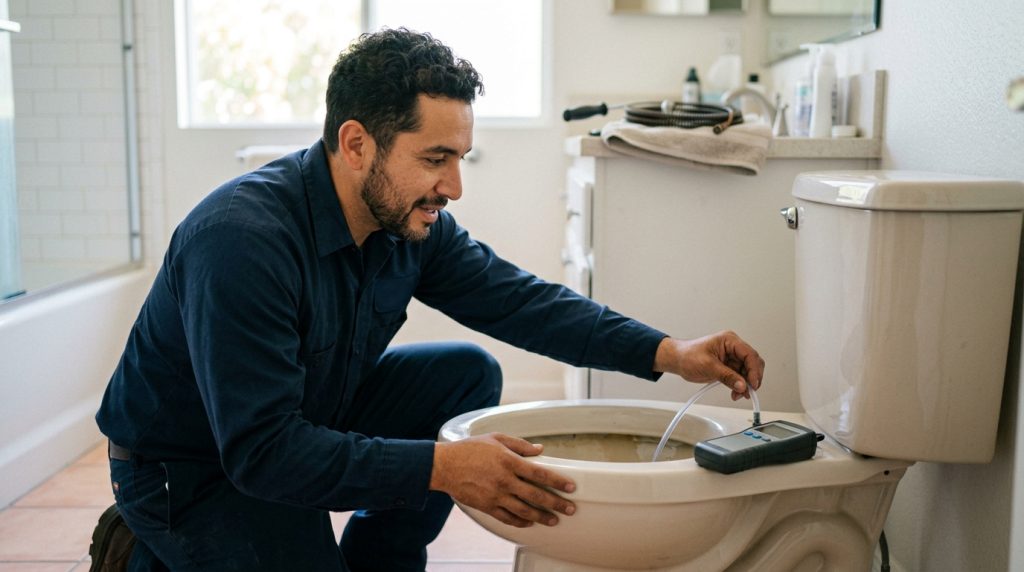
If the water level in your toilet bowl looks normal after a flush but is noticeably lower the next time you use it, the toilet may be losing water through slow siphoning, a partial blockage, a venting problem, or a less common fixture defect. The pattern matters: note whether the level drops after another fixture drains, during windy weather, or even when no water is being used.
A single low bowl does not identify the cause by itself. You can make a few safe observations, but recurring changes, gurgling, sewer odors, or trouble with nearby drains are good reasons to have the drain and vent system inspected rather than repeatedly adjusting the toilet.
Why does the toilet bowl need to hold a consistent water level?
The water that remains in the bowl is part of the toilet’s trap. Its job is to maintain a water seal between the bathroom and the drainage system. The normal level varies by toilet design, so the useful comparison is not one toilet against another. It is whether your toilet has started holding less water than it normally does.
A bowl that fills low immediately after every flush may point toward a refill or setup issue. A bowl that fills normally and then slowly drops suggests a different group of possibilities. That timing is one of the most helpful details you can give a plumber.
First, confirm that the bowl is actually losing water
Before assuming there is a drain problem, flush the toilet once and let the tank and bowl finish refilling. Mark the bowl’s waterline with a small piece of removable tape on the outside of the porcelain, or take a photo from the same angle. Avoid putting ink, chemicals, or objects in the bowl.
Check it again after a few hours when nobody has used the toilet. Then repeat the observation after someone uses a nearby shower, sink, washing machine, or another toilet. Write down what happened and approximately how long the drop took.
- The level falls only after another fixture drains: pressure changes in the drain system or a vent issue may be involved.
- The level falls after the toilet gurgles: air may be moving through the toilet trap because the system is not venting or draining normally.
- The level falls steadily with no other water use: the toilet itself may need inspection for a hidden defect or slow loss.
- The level is low immediately after each flush: the refill components, refill tube position, or toilet design may be more relevant than a slow drain-side loss.
These observations narrow the conversation, but they do not prove a specific diagnosis.
Can a partial drain blockage pull water from the bowl?
It can. A partial obstruction in the toilet trapway or nearby drain may let waste and water pass while still disturbing normal flow. That is why a toilet can appear usable even when something is developing below the surface.
Watch for a weaker flush, water that rises before draining, bubbles in the bowl, or a nearby tub or shower that drains more slowly than usual. If more than one fixture is affected, the issue may extend beyond the toilet itself.
Avoid repeatedly flushing a toilet that is rising unusually high. Do not keep adding chemical drain cleaner; it may not reach the cause, and it can leave irritating product in the line for whoever opens or services it. If the bowl is close to overflowing, close the toilet’s supply valve if it turns easily and stop using the fixture.
How can a plumbing vent affect toilet bowl water?
Drain vents let air enter the plumbing system so wastewater can move without creating disruptive pressure changes. If airflow is restricted or the drain system is not behaving normally, one fixture can react when another fixture releases water. A toilet bowl may gurgle, ripple, or lose some of its water seal.
This is especially worth considering when the water level changes after a washing machine discharges, a bathtub drains, or another toilet flushes. You may also notice sounds from a sink or shower drain.
Vent inspection is not a roof-level DIY task. Roof access introduces fall risk, and inserting tools or water into a vent without understanding the layout can create a new problem. A plumber can evaluate the fixture, branch drain, and venting together instead of guessing from one symptom.
Could the toilet itself be the problem?
Yes. Not every low bowl is caused by the building’s drain or vent system. A misplaced refill tube can leave too little water in the bowl after flushing. Mineral buildup may affect internal passages on an older fixture. Less commonly, a crack or defect in the bowl’s internal trapway can allow water to disappear gradually.
Check the floor around the toilet without moving or rocking the fixture. If you see moisture at the base, staining on the ceiling below, or a visible crack in the porcelain, stop using the toilet and arrange an inspection. Do not sit on or attempt to repair cracked porcelain; sharp edges and sudden fixture failure are possible.
If the tank keeps running, that is a separate clue. Tank water usually enters the bowl through the overflow and refill system, so a running tank does not necessarily explain why a bowl that initially filled correctly later dropped. Mention both symptoms when requesting service.
What if evaporation is the only cause?
Evaporation can lower the bowl in a rarely used bathroom, particularly over a long period in warm, dry conditions. A noticeable change over several hours or between normal daily uses is less likely to be explained by ordinary evaporation alone.
For a guest bathroom that sits unused, compare the level after one day and again after several days. If the bowl loses water quickly, gurgles, produces an odor, or changes when other fixtures run, treat it as a plumbing symptom rather than assuming the room is simply warm.
When should you stop using the toilet?
Stop flushing and arrange service when the bowl rises toward the rim, wastewater backs up into another fixture, several drains become slow at once, water appears around the toilet base, or the porcelain is cracked. If there is active leaking, shut off the toilet’s supply valve if it is safe and easy to reach. For a larger uncontrolled leak, use the home’s main shutoff only if you already know where it is and can reach it safely.
If there is no overflow or active leak, a small level change may not require panic. Still, recurring gurgling or water loss deserves attention because the visible bowl may be showing what is happening elsewhere in the drain system.
What should you tell the plumber?
A short symptom log can save time. Note when you first saw the change, how far the water falls, whether it happens after another fixture drains, and whether there are odors, bubbles, slow drains, or unusual sounds. Mention any recent toilet replacement, drain clearing, remodeling, or periods when the bathroom was unused.
Depending on the pattern, an in-person evaluation may include checking the toilet’s refill setup and trapway, testing nearby drains, and reviewing whether the branch drain or vent needs further inspection. For recurring symptoms in a Burbank home, Zenon’s Burbank drain cleaning team can evaluate the system before recommending a next step.
Why local housing details can matter
Burbank and the greater Los Angeles area include homes and apartment buildings from many construction periods, with plumbing that may have been repaired or remodeled in stages. Fixture type, pipe layout, shared drain connections, and previous alterations can all change what a low toilet bowl means. That is why Zenon does not diagnose the cause from one symptom alone; the right answer depends on seeing how the fixture and nearby plumbing behave in person.
Get help without guessing at the cause
A toilet bowl that loses water between uses is a clue, not a diagnosis. Observe the timing, avoid aggressive DIY drain treatments, and stop using the toilet if there is an overflow, leak, backup, or cracked porcelain.
Request a plumbing evaluation
If the problem keeps returning, contact Zenon Plumbing & Restoration to request an in-person evaluation, or call (818) 640-2944. Phone answered 24/7, on-site Mon-Sat 9 AM–6 PM.


