 Mon-Sat 9AM-6PM
 Make an
Appointment (818) 640-2944
Make an
Appointment (818) 640-2944 2115 W Magnolia Blvd Unit C, Burbank, CA 91506
Toilet Supply Valve Leaking at the Wall: Safe First Steps Before It Spreads
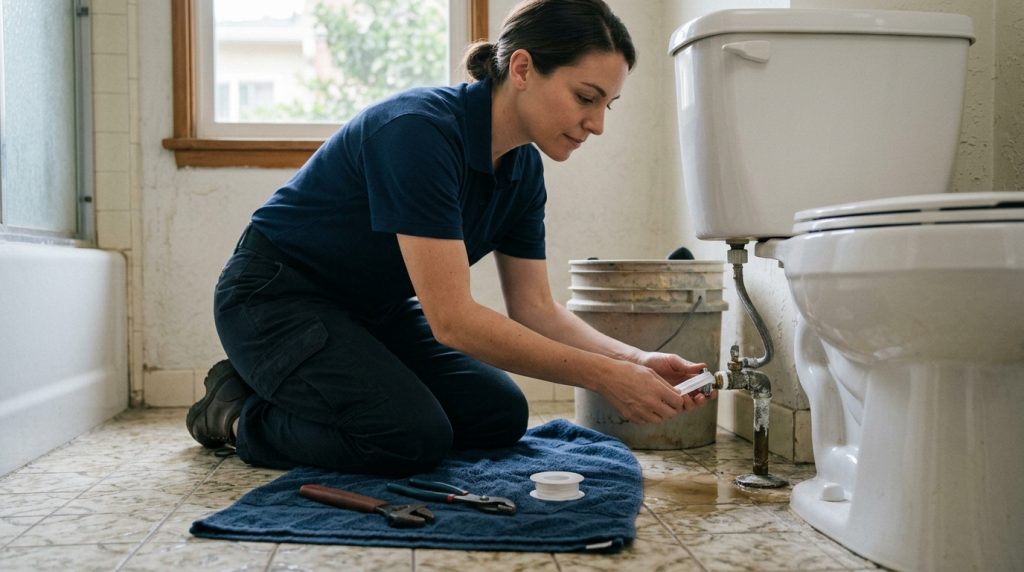
A toilet supply valve leaking at the wall is a small-looking problem that can spread fast. The safe first move is to stop using that fixture, keep water away from nearby flooring or drywall, and shut off the water if you can do it without forcing a stuck valve. If the leak is coming from inside the wall, the valve will not fully close, or the drywall is already soft or wet, it is time to call a plumber instead of trying to tighten parts blindly.
For Burbank homeowners and renters, the goal is simple: limit the water, protect the area around the toilet, and get the leak checked before it turns into cabinet, flooring, baseboard, or wall damage. Here is how to think through the problem without making it worse.
What Is the Toilet Supply Valve?
The toilet supply valve is the small shutoff valve usually located low on the wall or floor behind the toilet. A short supply line runs from that valve to the bottom of the toilet tank. When everything is working, you can turn the valve clockwise to stop water feeding the toilet while the rest of the home’s plumbing keeps working.
When water appears near that valve, the leak may come from a few places:
- the connection between the valve and the supply line
- the packing nut or stem on the valve handle
- the pipe connection behind the valve escutcheon plate
- the wall opening around the pipe
- the toilet tank, base, or nearby bathroom fixture making the valve area look wet
That last point matters. Water travels along tile, grout lines, baseboards, and supply lines. The visible drip is not always the source. A plumber may need to inspect the valve, line, toilet, and nearby wall area before confirming what is actually leaking.
First Step: Do Not Keep Flushing to “Test” It
If you see water collecting near the shutoff valve, avoid repeated flushing. Flushing can keep refilling the tank and add more water to the area if the supply line or valve is part of the problem. If the toilet is already full and not actively overflowing, leave it alone while you check the valve and floor.
Use towels to blot standing water so you can see whether new water is still appearing. Do not use a fan or heater as a substitute for finding the source. Drying the surface may hide the problem for a short time while moisture continues behind the wall or under the flooring.
If the Valve Turns Easily, Shut It Off Gently
If the valve handle turns smoothly, turn it clockwise until it stops. Do not crank down hard. Older valves can be brittle, corroded, or already weakened, and forcing the handle can make a small leak worse.
After closing the valve, watch the area for a few minutes. If the dripping stops, the leak may be on the toilet side of the valve or at the supply connection. If water keeps appearing from the wall opening, baseboard, or behind the trim plate, the issue may be on the pipe side and the local toilet shutoff may not be enough.
If the valve does not turn, spins without stopping water, or feels like it may break, stop. That is a good point to bring in help rather than risking a larger leak.
Know Where the Main Water Shutoff Is
If water continues to come from the wall or the valve cannot stop the leak, the next safe step may be the home’s main water shutoff. In many Burbank homes, the main shutoff may be near the front of the property, by an exterior wall, in a garage, or close to the water meter. Apartments and condos can be more complicated because shutoffs may serve multiple units or require building access.
Only use the main shutoff if you can identify it confidently and access it safely. If you are renting, notify the landlord or property manager right away. If water is reaching electrical outlets, light fixtures, or appliances, stay clear of that area and get professional help.
Common Reasons a Toilet Supply Valve Leaks at the Wall
A leak around the wall valve can happen for several reasons, and the repair depends on the actual source.
Loose supply line connection
The flexible line between the valve and toilet tank can loosen, age, crack, or fail at the connection. This may show up as a drip that runs down the line and pools near the wall.
Worn valve packing
Some valves leak around the handle stem, especially after being turned for the first time in years. A small drip can appear when the valve is partially closed or reopened.
Aged or corroded valve
Older angle stops can corrode, seize, or fail internally. In older Los Angeles-area housing stock, a valve that looks simple from the outside may be connected to older piping behind the wall.
Pipe movement or hidden wall leak
If the leak seems to come from the hole in the wall, not the visible valve body, there may be a hidden connection issue behind the finished surface. That is not something to open up casually without knowing where the water is coming from.
What Not to Do
A toilet supply valve leak can tempt homeowners into quick fixes, but some shortcuts create bigger problems.
- Do not force a stuck valve handle.
- Do not keep flushing to see whether the leak is “still there.”
- Do not overtighten the supply line until the fitting strips or cracks.
- Do not cut into drywall unless the water is controlled and the source is understood.
- Do not ignore wet baseboards, bubbling paint, soft drywall, or a damp smell after the drip stops.
If the area has been wet for more than a short period, the plumbing fix and the moisture issue may need to be treated separately. Stopping the drip is important, but so is making sure hidden moisture is not left behind.
When to Call a Plumber
Call a plumber if the valve will not shut off, the leak appears to be coming from inside the wall, water is spreading under flooring or behind baseboards, or you are not sure which shutoff controls the fixture. You should also call if the valve is old, corroded, or connected to piping that moves when you touch it.
Zenon’s Burbank leak detection service can help narrow down whether the moisture is from the toilet supply valve, the toilet itself, or a hidden plumbing issue nearby. The right repair depends on what is actually leaking, not just where the water first becomes visible.
Local Notes for Burbank Bathrooms
Burbank homes and apartments can have a mix of older plumbing, remodel work, tight bathroom layouts, and tile or flooring that hides water movement. A small valve leak behind a toilet may run under trim or along grout before anyone notices it. In multi-unit buildings, it is also important to coordinate quickly with the owner, manager, or HOA if a shutoff affects more than one unit.
The practical move is to control the water first, then document what you see. Take a few clear photos of the valve area, the floor, and any wall damage before everything is wiped down. That can help explain the problem when you request service or talk with a property manager.
Before the Technician Arrives
If the leak is controlled and the area is safe, clear items away from the toilet so the plumber can access the valve and wall area. Keep towels down if moisture is still appearing, but do not cover the area so heavily that the source cannot be seen. If you used the main shutoff, let the technician know exactly where it is and whether any other fixtures were affected.
If you need help with a leaking toilet valve or another bathroom plumbing problem, you can start with Zenon’s plumbing and drains hub to choose the right service path. For urgent leaks, call (818) 640-2944. Phone answered 24/7, on-site Mon-Sat 9 AM–6 PM.
Zenon Plumbing & Restoration
Need help with this plumbing problem in Burbank? Call (818) 640-2944. Phone answered 24/7; on-site service Mon-Sat 9 AM–6 PM.


