 Mon-Sat 9AM-6PM
 Make an
Appointment (818) 640-2944
Make an
Appointment (818) 640-2944 2115 W Magnolia Blvd Unit C, Burbank, CA 91506
Wall Stains Near a Shower: Plumbing Leak Clues Before Opening Drywall
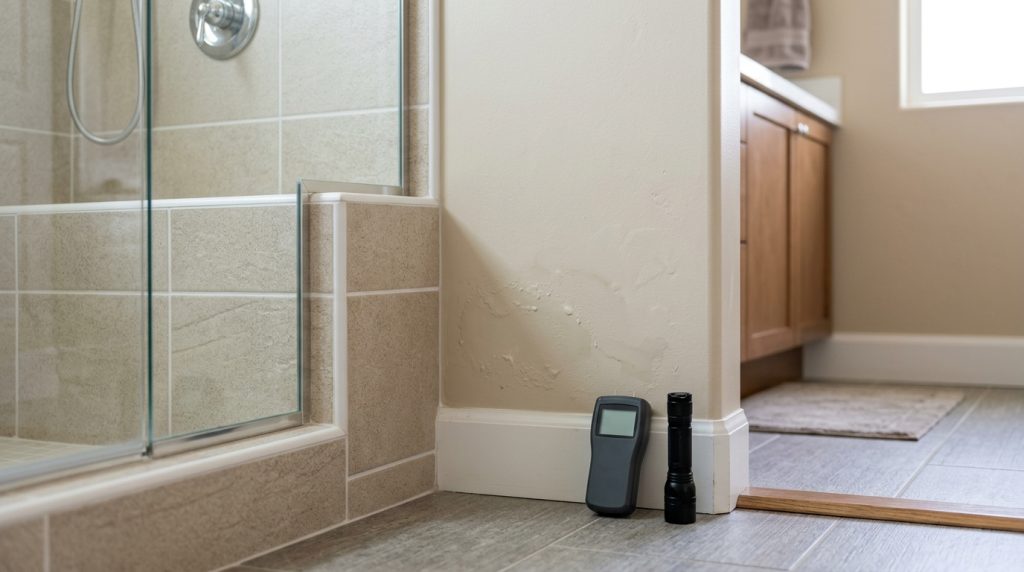
A stain near a shower can be easy to ignore at first. It may look like a small brown mark, a soft patch of paint, or a little discoloration near the baseboard. But when that stain keeps coming back, spreads after showers, or feels damp to the touch, it is worth slowing down and checking for plumbing leak clues before anyone opens the drywall.
The fast answer: shut the shower off for a short period if you can, dry the area, note when the stain changes, and avoid cutting into the wall unless you know what is behind it. A shower leak can come from several places, including worn caulking, a loose drain connection, a supply line, a valve body, or water escaping past tile and grout. The right next step depends on what you see, where the stain is located, and whether moisture is active.
Why a Wall Stain Near a Shower Deserves Attention
Bathrooms hide a lot of plumbing behind finished surfaces. A stain on the wall outside or beside a shower may be the first visible clue that water is getting somewhere it should not. In Glendale and nearby Los Angeles homes, this can be especially common in older bathrooms where tile, grout, shower doors, and plumbing connections have been repaired in layers over time.
Not every stain means there is a major leak. Sometimes the cause is surface moisture, condensation, a splash pattern, or a gap in caulking. Still, water that reaches drywall, baseboards, subflooring, or framing can create more repair work if the source is not found. The goal is not to panic. The goal is to separate simple surface issues from signs that a plumber should inspect the shower before the wall is opened.
First Clues to Check Before Opening Drywall
Start with what you can see safely. A few observations can help narrow down the likely source without guessing.
- Location of the stain: A stain low on the wall may point toward a shower pan, drain, baseboard, or splash issue. A stain higher up may point toward the shower valve, shower arm, or water getting behind tile.
- Timing: If the stain darkens during or shortly after a shower, the leak may be tied to active use. If it changes even when the shower has not been used, a supply line or another plumbing source may be involved.
- Texture: Bubbling paint, soft drywall, swelling trim, or a musty smell suggests moisture has reached building materials, not just the surface.
- Nearby fixtures: A toilet, vanity, tub, or adjacent bathroom wall can sometimes be the true source. Water travels, so the stain may not sit directly below the leak.
Take photos before anything is disturbed. If the stain grows, those photos can help show the direction and speed of the moisture pattern.
Could It Be Caulking, Grout, or a Plumbing Leak?
Shower stains are tricky because surface failures and plumbing failures can look similar from the outside. Cracked caulking at the corners, missing grout, a loose shower door frame, or a gap where tile meets the tub can let water escape during normal use. These problems often show up only after the shower runs and may be worse when water hits a specific wall or corner.
A plumbing leak can be different. If the wall stain appears near the shower valve, behind the handle, on the opposite side of the wall, or below the shower floor, the source may be hidden. A loose drain assembly, worn gasket, shower valve issue, or water supply connection can continue causing damage even if the visible tile looks fine.
One practical check is to dry the area completely, then run the shower while aiming water at one area at a time. Do not remove trim, cut drywall, or force open plumbing access if you are unsure. The goal is only to notice whether the stain reacts to splashing, shower drainage, or the fixture being turned on.
When the Stain Points to a Hidden Leak
A hidden leak becomes more likely when the stain keeps returning after cleaning and drying, when paint bubbles, when drywall feels soft, or when nearby flooring starts to lift. You should also pay attention if the bathroom is above another room and a ceiling mark appears below it.
If the shower has not been used but the wall still feels damp, that is a stronger reason to call for help. Supply-side leaks can stay active under pressure. Drain-side leaks usually show up when water is running down the drain, but they can still create serious moisture problems if the shower is used every day.
For leak tracing around bathrooms, Zenon’s local Glendale leak detection service page is the best next read. A plumber can inspect the likely source, test moisture levels, and look for the least invasive way to confirm what is happening before demolition starts.
What Not to Do Before the Source Is Confirmed
It can be tempting to patch, paint, recaulk, or open the wall immediately. Some of those steps may be useful later, but doing them too soon can hide the evidence or make the repair path less clear.
- Do not paint over a stain that still feels damp.
- Do not assume new caulking will fix a leak behind the wall.
- Do not keep using the shower normally if the stain is growing.
- Do not cut drywall near plumbing, electrical, or structural areas unless you know what is behind the surface.
- Do not ignore soft flooring, swollen trim, or a musty odor.
If there is active dripping, a spreading wet spot, or water near electrical fixtures, stop using the area and get professional help. For a major active leak, shut off the water if you can do so safely.
How a Plumber Narrows Down the Problem
A careful inspection usually starts with the simplest possibilities first. The plumber may look at the shower trim, caulking, grout lines, drain area, access panels, nearby fixtures, and the room below if there is one. Moisture readings can help show whether the stain is old and dry or part of an active moisture path.
Depending on the layout, the next step may be a controlled water test. That might mean running the shower, testing the drain, checking the valve, or isolating areas one at a time. The point is to avoid opening more wall than necessary. In many homes, the cleanest repair starts with knowing whether the leak is coming from the fixture, the drain, the waterproofing surface, or another nearby plumbing line.
Local Notes for Glendale and LA-Area Homes
Many Glendale, Burbank, and Los Angeles-area homes have bathrooms that have been remodeled more than once. Older tile work, mixed plumbing materials, tight crawl spaces, and shared walls can make shower leak clues harder to read. In apartments and condos, a stain near a shower may also involve unit boundaries, downstairs neighbors, HOA rules, or landlord documentation.
That is why it helps to document what you see before repairs start. Take photos, write down when the stain appears, and note whether it changes after shower use. If you rent or share a wall with another unit, notify the right property contact early so the repair process does not get delayed.
When to Call Zenon
Call a plumber when the stain is spreading, the wall feels soft, the area smells musty, the shower is above another finished room, or you cannot tell whether the issue is surface water or a hidden leak. A small stain can sometimes be simple, but guessing can lead to unnecessary drywall work or missed plumbing damage.
Zenon Plumbing & Restoration helps homeowners think through plumbing problems without pressure. For general plumbing questions, service options, or the right place to start, you can also visit the Plumbing & Drains service hub.
Zenon Plumbing & Restoration
Need help with a wall stain, bathroom leak, or plumbing concern? Call (818) 640-2944. Phone answered 24/7, on-site Mon-Sat 9 AM–6 PM.


