 Mon-Sat 9AM-6PM
 Make an
Appointment (818) 640-2944
Make an
Appointment (818) 640-2944 2115 W Magnolia Blvd Unit C, Burbank, CA 91506
Water Behind a Bathroom Mirror or Vanity: Plumbing Clues to Check First
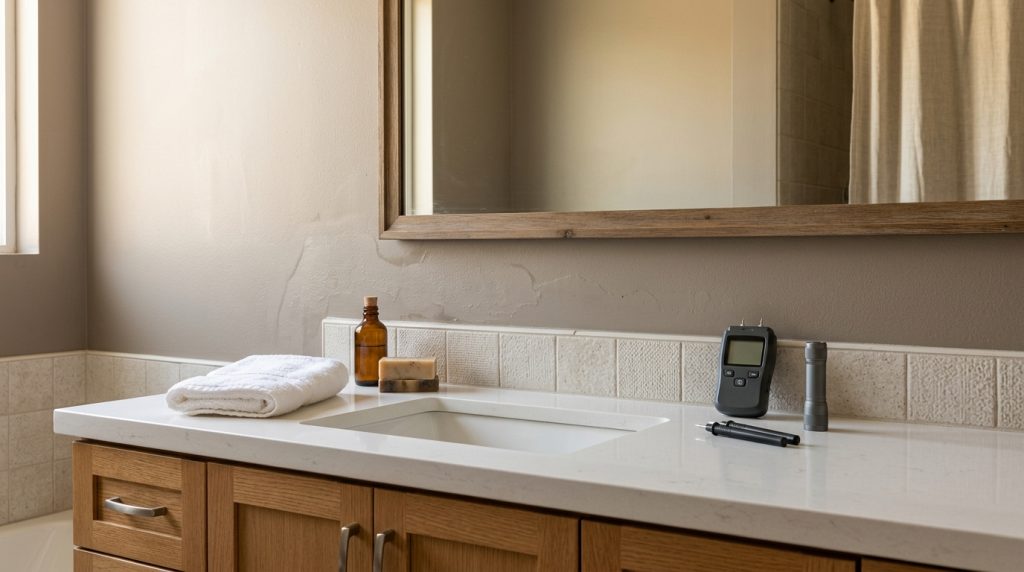
Fast answer: if you see staining, swelling, damp paint, musty odor, or active moisture behind a bathroom mirror or vanity, stop using nearby fixtures for a moment and look for the source before the wall or cabinet absorbs more water. The problem may be a loose faucet connection, a drain leak, condensation, a supply line issue, or moisture traveling from another part of the bathroom. If the wall feels soft, water keeps returning, or the area is near electrical outlets or lights, pause DIY work and call a professional.
Bathroom leaks can be tricky because the first visible clue is not always where the leak begins. Water can run behind a mirror, down the back of a vanity, along a backsplash seam, or inside the wall before it shows up. For Burbank homeowners, especially in older homes and apartment-style bathrooms with compact layouts, catching the pattern early can help limit drywall, cabinet, and flooring damage.
First, decide whether this is active water or old staining
Start with a simple observation: is the area wet right now, or does it look like an old mark? Fresh moisture usually feels cool, tacky, or soft. Paint may bubble. Caulk may separate from the counter or backsplash. A cabinet floor may feel spongy near the back wall. Old staining may be dry and stable, but it still deserves a closer look if the mark grows after showers or sink use.
Use a towel to dry the visible surface, then wait a few minutes without running the sink or shower. If moisture comes back quickly, treat it as active. If it only returns after someone uses the sink, shower, or tub, that timing gives a plumber useful clues. Do not cut into the wall just to investigate unless you already know what is behind it and can do it safely.
Common plumbing clues around a bathroom vanity
A bathroom vanity has several possible leak points packed into a small space. The most common places to check first are:
- Faucet supply lines: small hot and cold lines under the sink can seep at the connection points.
- Shutoff valves: older angle stops can drip around the stem or handle, especially after being bumped or turned.
- Drain assembly: the pop-up drain, trap, or tailpiece can leak only when water runs through the sink.
- Backsplash and caulk seams: water splashed behind the faucet can slip behind a failed seam and mimic a wall leak.
- Overflow opening: some sinks leak around the overflow path when the basin is filled high or cleaned aggressively.
Place a dry paper towel under the drain trap and supply connections, then run the faucet briefly. If the towel spots immediately, you have a useful clue. If you see dripping, do not keep running water to “test it” over and over. That can send more moisture into the vanity and nearby flooring.
When moisture behind a mirror points to the wall
Water behind a mirror is not always from the sink. In some bathrooms, moisture can come from a shower valve wall, tub surround, upstairs fixture, roof or exterior wall issue, or a pipe inside the wall cavity. A mirror can hide staining until the moisture has already spread beyond the first leak point.
Watch for signs like a widening stain at the mirror edge, paint bubbling above the backsplash, a musty odor when the bathroom door has been closed, or drywall that feels soft when pressed gently. Those signs do not prove exactly what failed, but they do suggest the problem should be inspected before the surface is patched or repainted.
If the mirror is mounted near a light fixture, outlet, or switch, be extra careful. Do not remove fixtures or touch wet electrical areas. Shut off water if you can identify an active plumbing source, keep the area clear, and bring in help before the problem spreads.
Condensation can look like a leak, but it still needs attention
Bathrooms collect steam, and condensation can gather behind mirrors, on cold walls, and along vanity backsplashes. This is more common when the exhaust fan is weak, the bathroom has no window, or showers run hot for a long time. Condensation usually appears after bathing and may dry evenly across the mirror or wall.
A plumbing leak behaves differently. It may show up even when no one has showered, appear in one concentrated spot, return after sink use, or leave swelling at wood and drywall edges. If you are not sure which pattern you have, track when the moisture appears for a day or two, but do not wait if the area is actively wet, spreading, or starting to smell musty.
What to do before the wall or vanity gets worse
Once you notice water behind a vanity or mirror, the goal is to reduce additional moisture while preserving useful evidence. Take photos of the stain, cabinet, floor, and any visible drip. Remove stored items from the vanity so they do not trap moisture. Put towels down only as a temporary catch; do not pack towels tightly into a cabinet and leave them there, because wet fabric can hold moisture against wood.
If you can safely identify a dripping supply line or valve, turn off that fixture’s shutoff valve. If the leak continues or you cannot tell where the water is coming from, stop using the nearby sink, shower, tub, or toilet until the source is checked. For Burbank-area plumbing leaks that have already affected drywall, cabinets, or flooring, Zenon can inspect the plumbing side and help homeowners understand the next step for Burbank water damage restoration.
Why surface-dry does not always mean the problem is solved
The front of a cabinet or wall can look dry while moisture remains behind the surface. Drywall paper, particleboard, baseboards, and vanity backs can absorb water and release it slowly. If the leak ran down inside the wall, the visible stain may be only one part of the affected area.
That is why repainting, recaulking, or installing a new mirror too soon can hide the problem instead of solving it. The better sequence is source first, drying second, cosmetic repair last. A plumber can help determine whether water is coming from supply piping, a drain line, a fixture seal, or another bathroom source. If materials are already damp, restoration assessment may be needed before closing the wall or replacing the vanity.
Local bathroom issues Burbank homeowners often run into
Many Burbank and greater Los Angeles homes have bathrooms that have been updated in stages. A newer vanity may sit in front of older shutoff valves. Tile or backsplash work may cover old seams. Apartment and condo bathrooms may share walls with neighboring plumbing lines. Older drain assemblies can also loosen after years of routine use.
None of those details mean the problem is automatically serious, but they do mean guessing can get expensive. A small vanity leak can become a cabinet, baseboard, or wall repair if it is ignored. A moisture mark near a mirror can also be a clue that water is traveling from somewhere less obvious. Local inspection matters because bathroom layouts, building age, and prior remodeling all affect where water can hide.
When to call instead of keep checking
Call for help if moisture returns after you dry it, the wall or vanity feels soft, water is near electrical fixtures, the leak involves a shutoff valve that will not close, or the bathroom has a musty smell that does not go away. Also call if more than one fixture seems connected to the problem, such as a vanity stain that gets worse after shower use.
You do not need to diagnose the exact pipe or fixture before calling. Clear photos, timing notes, and the location of the moisture are enough to start. If the situation is active, call (818) 640-2944. Phone answered 24/7, on-site Mon-Sat 9 AM–6 PM.
For non-emergency questions or to request service online, you can also contact Zenon Plumbing & Restoration and describe what you are seeing behind the mirror, vanity, wall, or cabinet.
Zenon Plumbing & Restoration
Need help with this plumbing problem in Burbank? Call (818) 640-2944. Phone answered 24/7; on-site service Mon-Sat 9 AM–6 PM.


