 Mon-Sat 9AM-6PM
 Make an
Appointment (818) 640-2944
Make an
Appointment (818) 640-2944 2115 W Magnolia Blvd Unit C, Burbank, CA 91506
Water Damage Under Flooring After a Plumbing Leak: What Homeowners Should Know
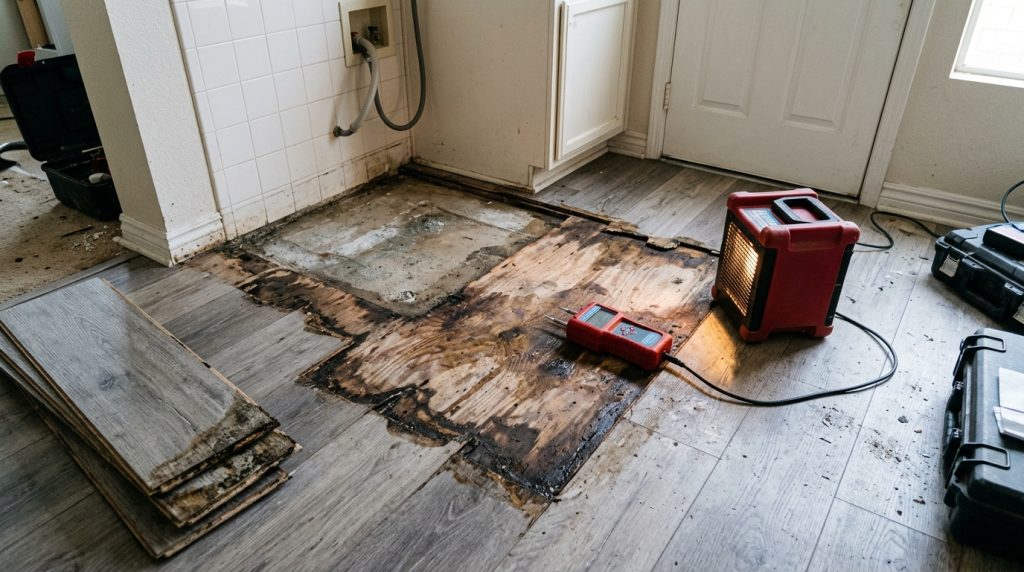
Water under flooring after a plumbing leak can be easy to underestimate. The surface may look only slightly damp while moisture is still trapped under wood, laminate, vinyl, tile, or baseboards.
Fast answer: stop the water source if you can do it safely, move anything dry away from the area, avoid walking across soft or buckling flooring, and get the moisture checked before assuming the floor is fine. If the leak happened in a Burbank home or apartment and the flooring is still damp, warped, stained, or giving off a musty smell, it may be time to have the area evaluated for water damage restoration in Burbank.
Why flooring can hide water damage after a plumbing leak
Floors are built in layers. What you see on top is only part of the system. Under the visible material may be padding, underlayment, adhesive, subfloor, concrete, or wood framing. When water travels under the surface, those lower layers may stay wet longer than the top layer.
That is why a floor can look “mostly dry” a few hours after a leak but still have moisture underneath. A towel, mop, or household fan can help with surface water, but it does not always reach trapped moisture under the floor. The concern is not just appearance. Lingering moisture can lead to staining, swelling, loose flooring, musty odors, and damage that spreads beyond the original leak area.
This is especially common after leaks from dishwashers, refrigerators, washing machines, toilet supply lines, sink cabinets, water heaters, and upstairs bathrooms. Water follows gravity and small gaps, so the wettest spot may not be directly next to the fixture that leaked.
First steps to take before the damage spreads
If water is still active, handle the leak first. Shut off the fixture valve or main water supply if you know where it is and can reach it safely. If the leak involves a ceiling, electrical outlet, sagging material, or standing water near appliances, keep distance from the area and call for help rather than trying to investigate aggressively.
Once the active water is stopped, take a few practical steps:
- Move dry rugs, boxes, furniture, and personal items away from the wet area.
- Blot or remove visible surface water with towels if it is safe to do so.
- Do not peel up flooring unless a professional tells you to; pulling materials too early can make restoration harder.
- Take photos of the affected area before moving too much around.
- Keep children and pets away from damp, soft, or slippery flooring.
- Write down when the leak started, when it was stopped, and what fixture or pipe seemed involved.
These steps help limit damage and make the next inspection more useful. They do not replace a moisture assessment, but they give you a safer starting point.
Signs water may be trapped under the floor
Not every plumbing leak ruins flooring. A small spill that is cleaned quickly may leave no lasting issue. The question is whether moisture reached the layers underneath or stayed long enough to affect the material.
Watch for these warning signs:
- Edges of wood, laminate, or vinyl planks lifting or curling
- Flooring that feels spongy, uneven, or soft underfoot
- Dark staining near baseboards, thresholds, cabinets, or walls
- Loose tiles or grout changes after the leak
- A musty odor that remains after surface cleanup
- Water reappearing from seams after you already wiped the floor
- Baseboards swelling, cracking, or separating from the wall
- Ceiling staining below an upstairs bathroom, laundry area, or kitchen
If the floor is changing shape, the safest assumption is that water reached below the surface. A plumber or restoration technician may use moisture readings to understand where the water traveled instead of guessing from appearance alone.
Different flooring materials react differently
Wood flooring can cup, crown, or separate when moisture reaches the boards or subfloor. Laminate may swell at the edges because the core material absorbs moisture. Vinyl plank can trap water beneath the surface even when the top layer looks intact. Tile may appear durable, but water can still move through grout lines, edges, cracks, and adjacent baseboards.
Carpet and padding are a separate concern. The carpet surface may dry faster than the padding below it, especially after a leak from a wall, upstairs fixture, or appliance. If the padding stays wet, the room can keep smelling damp even after the carpet feels better to the touch.
Concrete slab homes have their own challenge. Moisture may travel across low spots, along baseboards, or under finished flooring. In older Los Angeles-area homes, previous remodels can add layers that make water movement less obvious. That is why it is risky to diagnose the full extent of flooring damage by looking only at the first wet spot.
When it is more than a simple cleanup
A quick cleanup may be enough when the water was clean, the leak was small, and the surface dried quickly. It becomes more serious when water sat for hours, reached walls or baseboards, came from an upstairs leak, or affected more than one room.
You should also be cautious if the leak came from a toilet overflow, sewer backup, or unknown drain issue. Those situations can involve contamination concerns and should not be treated like a normal clean-water spill. Avoid DIY demolition or deep cleaning in those cases until the problem is properly evaluated.
If the plumbing issue is not fully fixed, restoration work can also be wasted. Drying a floor before the leak source is handled can lead to repeat damage. The practical sequence is usually: stop the leak, identify the affected area, dry what needs drying, and then decide whether flooring, baseboards, drywall, or cabinets need repair.
What a local moisture check may include
A professional inspection does not have to mean tearing everything out. In many cases, the first step is a careful look at the leak source, nearby flooring, baseboards, and adjacent rooms. Moisture meters or thermal clues may help identify damp areas that are not obvious by touch.
Good restoration decisions are measured, not dramatic. The goal is to avoid ignoring hidden water while also avoiding unnecessary tear-out. If the floor can be dried and preserved, that is different from a floor that has already swollen, separated, or stayed wet long enough to affect the subfloor.
Burbank and LA-area homes have a few common risk factors
Burbank and greater Los Angeles homes often have mixed-age plumbing, additions, remodels, slab foundations, older supply lines, and flooring installed over previous layers. Apartments and condos can add another complication because a leak may affect a neighboring unit, a ceiling below, or a shared wall.
That does not mean every leak is a disaster. It does mean homeowners, renters, and property managers should take under-floor moisture seriously. A small supply line leak under a sink, a dishwasher leak, or an upstairs bathroom leak can spread farther than expected if it finds a path under cabinets or flooring.
If you are in a multi-unit building, notify the owner, manager, or HOA as needed while you work on stopping the water source. Keep notes and photos. Clear communication early can prevent confusion later about when the leak started and where the water traveled.
What not to do after water gets under flooring
It is tempting to point a fan at the room and wait. Airflow can help with surface drying, but it may not solve trapped moisture. It is also tempting to cover the area with a rug once it looks better. That can slow drying and hide warning signs.
Avoid these common mistakes:
- Do not assume the floor is dry because the top feels dry.
- Do not ignore baseboard swelling or musty odors.
- Do not keep using a leaking appliance until the source is fixed.
- Do not cut into walls or floors near electrical, plumbing, or unknown utilities.
- Do not make health or mold assumptions without an in-person assessment.
The safer approach is to confirm what is wet, address the plumbing source, and decide on drying or repairs based on the actual conditions in the home.
When to call Zenon
Call when the leak is active, the floor is warping, water may have reached walls or baseboards, or you are not sure where the moisture traveled. You should also call if the same area keeps getting damp again after cleanup, because that may point to a leak that has not been fully found.
For help, call (818) 640-2944 — Phone answered 24/7, on-site Mon-Sat 9 AM–6 PM. You can also contact Zenon Plumbing & Restoration online to request service or ask about the next step.
Zenon Plumbing & Restoration
Need help with this plumbing problem in Burbank? Call (818) 640-2944. Phone answered 24/7; on-site service Mon-Sat 9 AM–6 PM.


