 Mon-Sat 9AM-6PM
 Make an
Appointment (818) 640-2944
 2115 W Magnolia Blvd Unit C, Burbank, CA 91506

Water Heater Drain Valve Keeps Dripping After Flushing: What Homeowners Should Notice
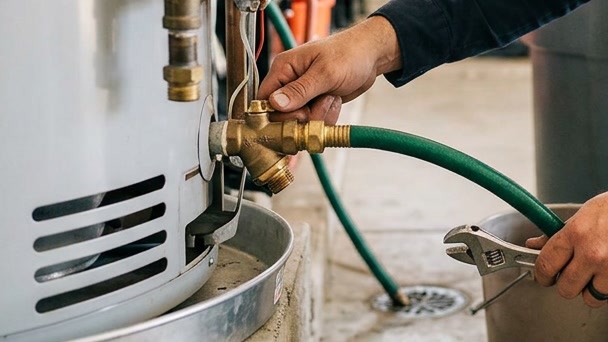
Fast answer: A water heater drain valve that keeps dripping after a flush may have sediment caught in the valve, a worn seal, a loose connection, or damage to the valve itself. Put a container under the drip if you can do so safely, keep people away from hot water, and do not force the handle or cap. If the dripping continues, becomes a stream, or reaches nearby walls or flooring, have the water heater inspected rather than assuming the valve will reseal on its own.
A slow drip can look minor, but the valve sits near the bottom of the tank. The useful question is where the water begins and whether the valve still controls the flow. Those details separate a few leftover drops from a problem needing prompt attention.
Why can a water heater drain valve drip after flushing?
Flushing moves water and loose sediment through the drain opening. When the valve closes again, a small piece of mineral buildup can remain on the sealing surface. That can prevent the valve from closing completely. The drip may also reveal wear that was already present but was not obvious before the valve was opened.
Common possibilities include:
- Sediment at the seal: A small particle may keep the internal seal from seating evenly.
- A worn internal washer or seal: Older valve parts can lose flexibility and stop closing tightly.
- A damaged handle or stem: The handle may appear closed even though the internal part is not fully seated.
- A leak at the threaded connection: Water may be coming from where the valve joins the tank rather than from the outlet.
- A cracked or weakened valve body: Plastic valves can become brittle, while any valve can be damaged by age, heat, or excess force.
These causes can look similar from a quick glance. A plumber can inspect the exact source before recommending a repair. Zenon does not diagnose a water heater based on a description alone because the valve, tank condition, installation, and water temperature all matter.
How can you tell where the drip is coming from?
Without taking anything apart, dry the outside of the valve and watch where the next drop first appears. A drop forming at the outlet suggests a different issue from moisture appearing around the valve threads or running down from above.
Use a flashlight and look from a safe distance. Check these areas:
- the valve outlet where a hose attaches;
- the handle or stem;
- the joint between the valve and the tank;
- the tank surface above the valve;
- the drain pan and nearby floor.
Is a few drops after flushing normal?
A small amount of water left in a hose connection or valve outlet may drip briefly after flushing. It should taper off. A drip that continues, returns after the area is dried, or creates fresh water in the pan is worth attention.
Do not confuse the drain valve with the temperature-and-pressure relief valve, which is usually higher on the tank and has a discharge pipe. Water from that area requires a different evaluation. Do not cap, plug, or obstruct a relief-valve discharge pipe.
What should you do right now?
If the drip is slow and contained, place a stable container beneath it and keep the area clear. Protect nearby stored items and check whether water has reached drywall, baseboards, cabinets, or flooring. Take a few photos of the valve and surrounding area so you can compare the condition later.
If water is spraying, running steadily, or spreading beyond the pan, treat it as an active leak. Keep children and pets away because water from a heater can be very hot. Do not handle wet electrical components, remove access panels, adjust gas controls, or attempt to replace a pressurized valve yourself. If you know the correct shutoff for the heater and can reach it without crossing wet flooring or touching hot components, you may close it. Otherwise, step back and call for help.
Avoid forcing the drain-valve handle. More force does not guarantee a tighter seal, and a brittle or damaged valve may break. Also avoid installing a cap as a permanent fix without an inspection. A cap can hide ongoing leakage and does not repair a failing valve or connection.
When does the valve need professional attention?
Arrange an inspection when the valve continues to drip after the flushing equipment has been removed and the area has been dried. Prompt attention is especially sensible when:
- the drip becomes faster or turns into a steady flow;
- water appears around the valve threads or tank opening;
- the handle is loose, stuck, cracked, or difficult to position;
- the valve body looks corroded, distorted, or damaged;
- water reaches the drain pan, platform, drywall, or flooring;
- the tank shows corrosion or moisture in more than one area;
- you cannot confirm whether the water is coming from the drain valve.
A technician may check whether the valve can be serviced, whether replacement is appropriate, and whether the tank connection is sound. The right next step depends on the water heater’s condition and the exact leak location. For homeowners who need a local inspection, Zenon’s Los Angeles water heater repair page explains the service path.
Can sediment make the problem return?
Yes, sediment can contribute to a valve that does not reseal cleanly, but repeated dripping should not automatically be blamed on sediment. The valve may also be worn or damaged. Reopening and closing it repeatedly in hopes of clearing debris can make the situation worse, particularly on an older plastic valve.
Why this matters in Los Angeles-area homes
Water heaters around Los Angeles are often installed in garages, closets, or utility areas where a small leak can reach stored belongings or finished materials. Local conditions do not identify the cause, but they are good reasons to check the pan, nearby surfaces, and shutoff access instead of focusing only on the visible drop.
What information helps when you call?
Be ready to describe where the first drop forms, how quickly it returns, when the flushing was completed, and whether the leak rate changes while the heater is operating. Mention any water in the pan and any moisture on nearby surfaces. If you can read the unit information without moving equipment or touching wet components, keep that information available for the technician.
Clear observations are more useful than trying to name the failed part yourself. A continuing drip may be limited to the valve, or it may be the visible endpoint of water traveling from another area. An in-person inspection is the safest way to tell.
Water heater valve still dripping?
Call (818) 640-2944. Phone answered 24/7, on-site Mon-Sat 9 AM–6 PM. You can also contact Zenon online to request help.


