 Mon-Sat 9AM-6PM
 Make an
Appointment (818) 640-2944
Make an
Appointment (818) 640-2944 2115 W Magnolia Blvd Unit C, Burbank, CA 91506
Water Heater Maintenance Before a Summer Trip: What to Check Before You Leave
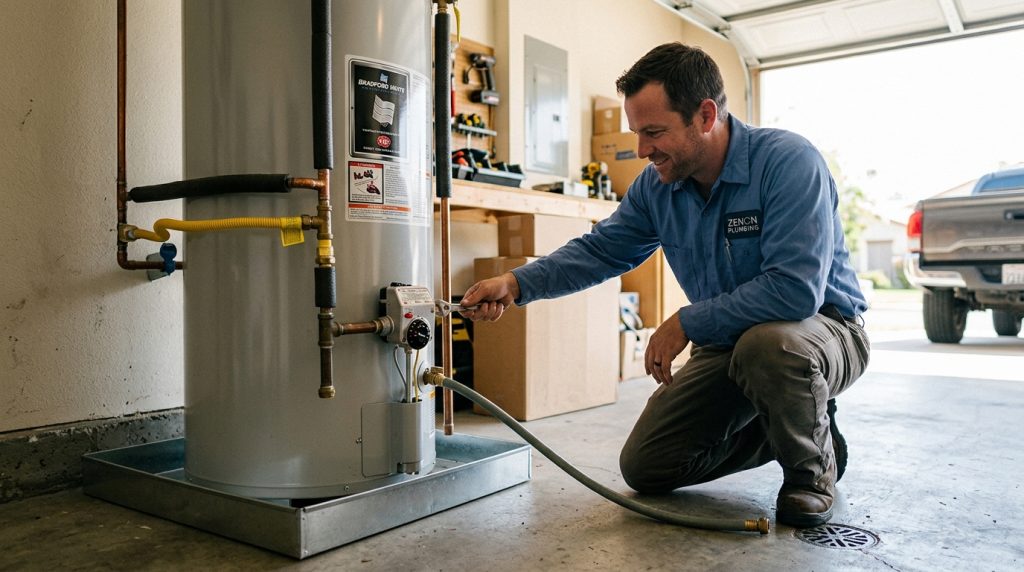
Before a summer trip, most people check the doors, thermostat, lights, and pet care. The water heater is easy to forget until a leak shows up while no one is home. A quick pre-trip check can lower the chance of coming back to a wet garage, closet, utility room, or damaged flooring.
The fast answer: look for visible leaks, rust, moisture around the pan, unusual sounds, and signs that the shut-off valve is usable. If anything looks wrong, do not ignore it just because you are busy packing. A small water heater issue can become a much bigger cleanup when the house is empty.
Why Check the Water Heater Before Leaving Town?
A water heater works quietly in the background, which is why it often gets ignored. But it is connected to a pressurized water supply and usually sits near walls, flooring, boxes, stored items, or finished living space. If a tank, valve, fitting, or supply line leaks while you are away, water can keep running until someone notices or the water is shut off.
A pre-trip check is not a full inspection and it does not guarantee that nothing will happen. It is a practical homeowner habit. You are looking for warning signs that deserve attention before the home is unattended for several days.
If you find a leak, active dripping, or signs of water around the unit, Zenon Plumbing & Restoration’s water heater repair service can help evaluate the issue before it turns into a bigger problem.
Start With a Visual Leak Check
Begin by looking around the base of the water heater. Check the floor, drain pan, nearby wall, platform, and any stored items close to the unit. You are looking for standing water, dampness, mineral crust, rust stains, warped flooring, or any sign that water has been present recently.
Then look at the top of the unit, including the hot and cold water connections. A slow drip at a fitting can be easy to miss. Also check the side of the tank, the drain valve near the bottom, and the temperature and pressure relief valve discharge pipe. If you see water where it should not be, treat it as a real warning sign.
Do not open panels, work on gas connections, or attempt electrical repairs. The goal is simply to spot visible problems and decide whether a plumber should look before you leave.
Listen for Unusual Sounds
Some water heaters make mild operating sounds, but loud popping, rumbling, hissing, or banging can be a sign that the unit needs attention. Sediment buildup, pressure concerns, or other issues may change how the unit sounds during operation.
If a sound is new or getting worse, do not assume it is normal. A plumber can help determine whether the unit needs service, whether a part is failing, or whether replacement should be discussed. For a trip, the main question is whether you feel comfortable leaving the unit running unattended after noticing a new symptom.
Check the Area Around the Drain Pan
If your water heater has a drain pan, make sure it is dry and not full of debris. A pan is meant to help catch small amounts of water and direct it toward a drain when installed that way, but it is not a fix for a leaking tank. If the pan already has water in it, that water came from somewhere.
Also look at the path around the unit. If the water heater is in a closet or garage, move boxes, paper, fabric, and stored items away from the base. Keeping the area clear makes it easier to spot leaks and reduces the chance that stored items soak up water before anyone notices.
Know How to Shut Off the Water
Before leaving, make sure you know where the water heater shut-off valve is and where the home’s main water shut-off is. If you have a trusted neighbor, family member, or property manager checking the home, tell them where those valves are in case they see a leak.
Do not force a stiff or corroded valve. If a valve will not turn with reasonable hand pressure, leave it alone and schedule service. A valve that breaks while you are trying to leave for a trip can create the exact emergency you were hoping to avoid.
If you plan to shut off water to the home while away, consider the needs of appliances, irrigation, pets, house sitters, and any system that depends on water. Different homes are set up differently, so when in doubt, ask a plumber what is appropriate for your setup.
Do Not Ignore Water Heater Age and Condition
An older water heater is not automatically unsafe, and a newer one is not automatically problem-free. Still, age and condition matter. Rust, repeated pilot or heating issues, leaks at fittings, water pooling, or frequent repair calls are all reasons to take the pre-trip check more seriously.
If you already know the unit has been acting up, a vacation is not the best time to “wait and see.” Have it checked before you leave, especially if the water heater is located inside the home, upstairs, in a closet, or near finished surfaces that could be damaged by a leak.
What to Do If You Find a Problem Right Before the Trip
If you see active leaking, shut off the water if it is safe and you know how. Keep people away from wet areas near electrical equipment. Move nearby belongings away from the water if you can do so safely. Take photos if there is water damage, then call for help.
If the issue is only a possible warning sign, such as rust staining, a damp pan, or a valve that looks questionable, do not panic. But do not dismiss it either. A quick professional look may give you a clearer answer before you leave the property unattended.
For gas or electrical concerns, do not attempt DIY repairs. Water heaters can involve gas, combustion, electricity, pressure, and hot water. Those are good reasons to keep homeowner checks visual and basic.
Local Notes for Burbank and Los Angeles Homes
Many Burbank and greater Los Angeles homes have water heaters in garages, closets, utility areas, or tight side-yard spaces. Some homes have older plumbing mixed with newer remodel work. That can make it harder to know which valve controls what, where a small leak is coming from, or whether a damp spot is recent.
Summer travel also means a home may sit quiet for days while a leak goes unnoticed. If you have a neighbor or family member checking mail or plants, ask them to glance near the water heater too. They do not need to diagnose anything. They just need to know that new water on the floor is a reason to call you.
The Bottom Line
A water heater check before a summer trip is simple: look for leaks, listen for unusual sounds, clear the area, know the shut-off plan, and get suspicious symptoms checked before you leave. You are not trying to repair the unit yourself. You are trying to avoid an unattended leak and make a smarter decision before the house is empty.
Zenon Plumbing & Restoration
Noticed water, rust, or a questionable shut-off valve before leaving town? Call (818) 640-2944 or contact Zenon online. Phone answered 24/7, on-site service Mon-Sat 9 AM–6 PM.


