 Mon-Sat 9AM-6PM
 Make an
Appointment (818) 640-2944
Make an
Appointment (818) 640-2944 2115 W Magnolia Blvd Unit C, Burbank, CA 91506
Wet Cabinet Floor Under the Kitchen Sink: Leak Clues Before It Spreads
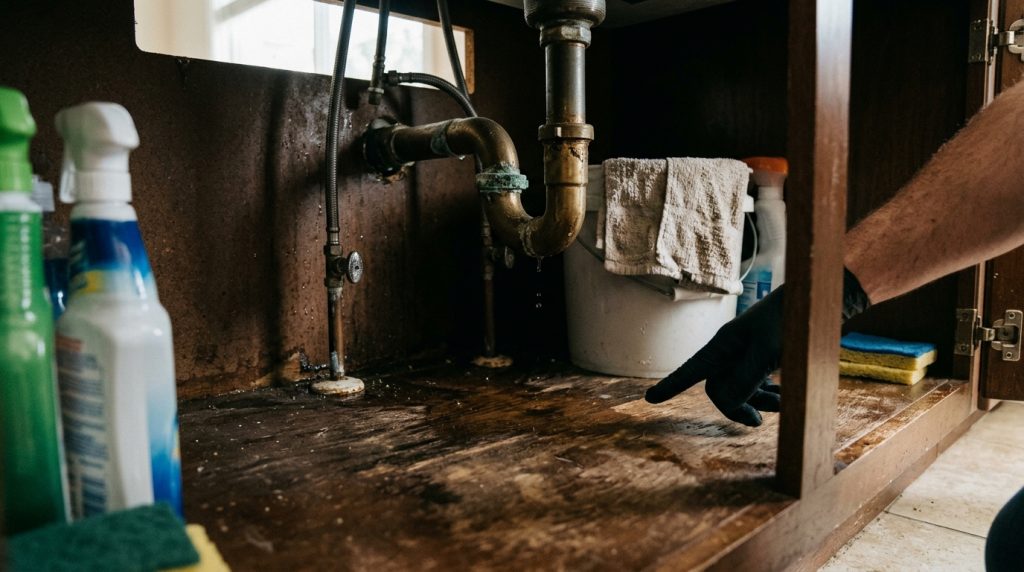
A wet cabinet floor under the kitchen sink is usually a sign that water is escaping somewhere nearby, even if the leak is not obvious yet. The safest first move is simple: clear the cabinet, dry the area enough to see what is happening, avoid using the sink for a bit, and check whether new water appears around the supply lines, drain connections, disposal, dishwasher line, or the wall/floor area.
If water keeps returning, the cabinet bottom feels soft, or you see moisture near the wall, it is time to stop guessing. A small under-sink leak can spread into cabinet wood, flooring, drywall, and nearby baseboards before it looks dramatic from the outside.
Fast answer: what to do first when the cabinet floor is wet
Start with the least risky steps. Remove stored items from the cabinet and set aside anything that is soaked. Place towels down, then gently dry the cabinet floor so you can tell whether fresh water comes back. If water is actively dripping from a supply line or shutoff valve, turn off the small valve under the sink if it moves easily. If the valve is stuck, corroded, or makes the leak worse, leave it alone and call for help.
Avoid using the sink, garbage disposal, dishwasher, or nearby water fixture until you narrow down the source. If the water only appears after the faucet runs, the problem may be with the drain, trap, disposal, or sink connection. If the water appears even when nobody uses the sink, a pressurized supply line, valve, or hidden pipe may be involved.
Common places kitchen sink leaks start
Kitchen sink cabinets have more plumbing connections than many homeowners realize. A wet floor may come from one obvious drip, but it can also come from a small leak that only shows up under certain conditions.
- Supply lines: The hot and cold flexible lines can loosen, age, kink, or seep near the shutoff valves.
- Angle stops and shutoff valves: A slow drip at the valve stem can run down the pipe and collect on the cabinet floor.
- P-trap and drain nuts: Drain connections can loosen slightly and leak when the sink is full or water drains quickly.
- Garbage disposal connections: Water can leak around the disposal flange, side inlet, or discharge pipe.
- Dishwasher drain line: A loose hose or clamp can send water into the cabinet during dishwasher cycles.
- Faucet base or sprayer hose: Water can travel from the deck of the sink down into the cabinet, making it look like a pipe leak.
The clue is timing. A leak that appears only after running the faucet points one direction. A leak that appears after the dishwasher runs points another. Moisture that returns without using the sink is more urgent because it may involve a supply-side leak or a hidden line.
How to narrow the clues without making the problem worse
You do not need to take plumbing apart to gather useful information. In fact, if the cabinet is already wet, it is usually better not to loosen connections or force old valves. Instead, watch carefully.
After drying the area, place a dry paper towel under each likely spot: below the shutoff valves, under the P-trap, beneath the disposal, and near the back wall. Run a small amount of water in the sink for a short time, then check which towel shows moisture first. If everything stays dry, wait and check again after the dishwasher runs or after normal faucet use.
If water appears near the wall or floor instead of directly below a visible fitting, do not assume the cabinet is the only problem. That can be a sign of water traveling from behind the cabinet, from a pipe in the wall, or from another nearby fixture. At that point, a plumber can use a more systematic inspection instead of opening walls blindly. Zenon’s leak detection service can help identify the source when the signs are not clear from the cabinet alone.
When a wet cabinet floor is more than a small nuisance
Some under-sink leaks look minor because the water is hidden. The cabinet door stays closed, towels absorb a little moisture, and the floor looks normal from the kitchen. But inside the cabinet, water may keep soaking the particleboard or plywood. Over time, that can lead to swelling, odors, stains, peeling finish, or soft spots.
Call sooner if you notice any of these warning signs:
- Water keeps coming back after you dry the cabinet.
- The cabinet bottom is warped, soft, bubbling, or crumbling.
- You see staining at the back wall, baseboard, or flooring edge.
- There is a musty smell that was not there before.
- The shutoff valve will not turn easily or starts dripping when touched.
- The leak appears even when the sink has not been used.
These signs do not prove there is a major hidden leak, but they do mean the problem deserves a closer look. It is better to find a small plumbing issue early than wait until the cabinet, flooring, or drywall needs more work.
Why Burbank and LA-area homes can hide kitchen leaks
Many Burbank and greater Los Angeles homes have a mix of older plumbing, remodeled kitchens, add-on dishwasher or disposal connections, and cabinets that have been modified over time. That mix can make leak clues confusing. A newer faucet may be connected to older shutoff valves. A remodeled sink may have drain parts that were adjusted to fit tight cabinet space. In some homes, the visible cabinet plumbing is only the last stop before water shows up from a pipe route behind the wall.
Local homeowners also tend to use kitchens heavily, and small leaks can be missed because the cabinet stores cleaners, bags, and other supplies. If you pull everything out and find damp items, stains, or swollen cabinet material, treat it as a real clue even if you cannot see active dripping right away.
What not to do with an under-sink leak
A few common reactions can make the situation harder to fix. Do not keep using the sink to “test it” over and over if water is already showing up. Do not pour chemical drain cleaner into a sink when you are not sure whether the leak is from the drain assembly, disposal, or a loose fitting. Chemicals can sit in leaking pipes and create a mess that is harder to inspect safely.
Do not force a stuck shutoff valve. Older valves can break or start leaking more when turned. If the leak is active and the small valve will not close easily, use the main water shutoff if you know where it is and can reach it safely. If you are unsure, call a plumber instead of guessing.
What a plumber may check during the visit
A careful inspection usually starts with the visible fixtures: faucet connections, supply lines, shutoff valves, the P-trap, drain tailpiece, disposal, dishwasher hose, and nearby seals. The goal is to reproduce the leak without causing extra damage and then confirm whether water is coming from a visible part or a hidden location.
If the visible plumbing does not explain the moisture, the next step may include checking nearby walls, flooring edges, moisture patterns, or other fixtures that share the same plumbing area. The answer should be based on what the technician can verify in person, not a guess from the cabinet floor alone.
When to request service
If the cabinet floor is wet once and you clearly find a loose bottle or spilled item, clean it up and watch the area. But if the wet spot returns, the cabinet material is changing, or the source is not obvious, do not wait for the leak to become easier to see. Kitchen leaks are easier to handle before they spread.
For help with a kitchen sink leak or hidden moisture concern, call (818) 640-2944 — phone answered 24/7, on-site service Mon-Sat 9 AM–6 PM — or use the contact page to request help from Zenon Plumbing & Restoration.
Zenon Plumbing & Restoration
Need help with this plumbing problem in Burbank? Call (818) 640-2944. Phone answered 24/7; on-site service Mon-Sat 9 AM–6 PM.


