 Mon-Sat 9AM-6PM
 Make an
Appointment (818) 640-2944
Make an
Appointment (818) 640-2944 2115 W Magnolia Blvd Unit C, Burbank, CA 91506
When a Water Heater Leak Is an Emergency and When It Can Wait
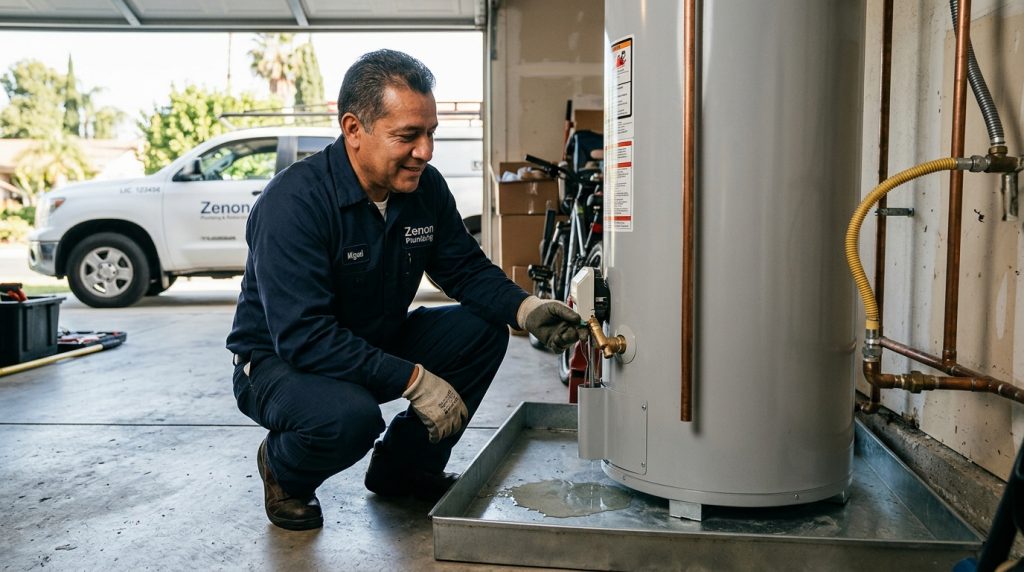
A leaking water heater can be a small maintenance issue, or it can be the start of a bigger plumbing problem. The fast answer: if you see active water spreading, water near electrical components, a leaking tank body, rusty water, a hot-water shutoff you cannot safely reach, or any sign of gas odor around a gas unit, treat it as urgent and call for help. If the leak is a slow drip from a connection or drain valve and the area is dry and stable, you may have time to schedule service, but it should still be checked before it damages flooring, drywall, or nearby storage.
For homeowners in Burbank and nearby Los Angeles neighborhoods, the safest first step is to slow the damage without taking apart the water heater. Move items away from the area, avoid standing water, and shut off water to the unit if you know how to do it safely. Then use the guide below to decide how quickly to call a plumber.
First: where is the water coming from?
Before you decide whether a water heater leak is an emergency, look at the general source of the water. You do not need to diagnose the system yourself, and you should not open panels, disconnect gas lines, or attempt electrical work. The goal is simply to notice what you can see safely.
- Water around the base of the tank: This can be serious, especially if water appears to be coming from the tank itself rather than a nearby pipe or valve.
- Dripping from the temperature and pressure relief valve: A small discharge can point to pressure or temperature issues that need professional evaluation.
- Dripping from a supply line or fitting: This may be repairable, but it can still cause water damage if ignored.
- Water from the drain valve: Sometimes this is a loose or worn valve; sometimes it is a sign the unit needs attention.
- Condensation or nearby plumbing water: Not every puddle is a failed water heater, but it still matters if water keeps returning.
If the leak is active or you are not sure where it is coming from, it is better to pause and get a professional opinion than to keep running hot water and hope it stops.
When a leaking water heater is an emergency
Treat the situation as urgent when the leak can damage the home, create unsafe conditions, or leave the plumbing system unstable. A water heater often sits in a garage, closet, laundry area, or utility space where water can quickly reach drywall, flooring, stored boxes, or electrical equipment.
Call for help promptly if you notice any of the following:
- Water is spreading across the floor or returning after you wipe it up.
- The tank appears to be leaking from the body or bottom seam.
- You hear hissing, popping, or unusual sounds along with the leak.
- There is water near outlets, switches, appliance cords, or electrical panels.
- The water is hot enough to create a burn risk.
- The shutoff valve is stuck, corroded, hidden, or difficult to reach.
- You smell gas near a gas water heater.
- You have no hot water and the leak is getting worse.
If you smell gas, leave the area and contact the appropriate emergency utility or emergency services. Do not test switches, relight pilots, or troubleshoot gas components yourself.
What to do in the first few minutes
If it is safe, start with damage control. You are not trying to repair the water heater. You are trying to reduce the chance of water damage while you wait for help.
- Keep people and pets away from standing water. This is especially important if water is near electrical items or the water is hot.
- Move nearby belongings. Cardboard boxes, rugs, wood items, and stored household goods can absorb water quickly.
- Shut off the cold-water supply if safe. Many water heaters have a valve on the cold-water line above the unit. If it does not turn easily, do not force it.
- For gas or electrical concerns, step back. Do not remove panels, handle wiring, or work on gas parts.
- Take photos of the area. Photos can help a plumber understand what changed and can be useful for your own records.
- Call a plumber if water is active, spreading, or unclear. A small leak can become a flooring or drywall problem faster than most homeowners expect.
For water heater problems that need professional repair, Zenon’s water heater repair page is the right place to start.
When it may be able to wait for a scheduled visit
Some leaks are not immediate emergencies, but “can wait” does not mean “ignore it for weeks.” A slow drip from a visible pipe connection, a small amount of moisture around a valve, or a puddle that appears after heavy hot-water use may be less urgent than water actively flowing from the tank. Still, those signs should be checked because they can point to worn parts, pressure issues, sediment, corrosion, or a leak that is only beginning.
You may be able to schedule a normal service visit if all of these are true:
- The leak is slow and contained.
- There is no water near electrical components.
- The unit is not making unusual noises.
- There is no gas smell.
- The water is not damaging drywall, flooring, or cabinets.
- The shutoff valve works and you know how to stop the water if it worsens.
Even then, keep checking the area. A drip that fills a pan, spreads under flooring, or returns after cleanup should move up the priority list.
Why Burbank homeowners should not brush off a small leak
Many Burbank-area homes have tight utility spaces, older plumbing, slab foundations, garages with stored belongings, and interior water heater closets where a slow leak can stay hidden. A small amount of water can soak into baseboards, drywall, or flooring before anyone notices. If the water heater is near a hallway, laundry area, or garage wall, the visible puddle may be only part of the problem.
Local homes also see mineral buildup and wear on fixtures and valves over time. That does not mean every leak is a failed tank, but it does mean a plumber should look at the full setup: the supply lines, shutoff valve, drain valve, relief valve, pan, venting area, and nearby signs of moisture. The real question is not only “where is the drip?” It is also “what caused it, and what could it damage next?”
Common causes a plumber may check
A water heater leak can come from several places. During a visit, a plumber may inspect the unit and surrounding plumbing for issues such as:
- Loose or worn supply connections
- A failing drain valve
- Relief valve discharge
- Corrosion around fittings or the tank
- Excess pressure or temperature concerns
- Condensation that looks like a leak
- Nearby plumbing leaks that only appear to come from the heater
- Damage to the pan or missing drainage path
A professional inspection matters because the right repair depends on the source. Tightening the wrong part or ignoring pressure-related symptoms can leave the real problem unresolved.
Should you repair or replace a leaking water heater?
Homeowners often ask this as soon as they see water. The honest answer is that it depends on what is leaking, the unit’s condition, and whether the tank itself is compromised. A leaking fitting or valve may be repairable. A tank leak is usually more serious because the tank is not meant to be patched like a simple pipe connection.
Before making that decision, get the leak source identified. Ask what failed, whether the surrounding plumbing is in good condition, and whether the repair would address the cause or only slow the symptom. A clear explanation is more useful than guessing based on a puddle.
How to reduce damage while waiting
After you have called for help or scheduled service, keep the area as dry and clear as you safely can. Put towels only where they will not create a slip or electrical hazard. If water reached drywall, baseboards, cabinets, or flooring, avoid sealing the area back up before it is properly evaluated. Hidden moisture can linger even after the surface looks dry.
If the water heater leak caused broader moisture damage, use Zenon’s main plumbing services hub to find the right next step for related plumbing issues.
Zenon Plumbing & Restoration
Dealing with an active water heater leak in Burbank? Call (818) 640-2944. Phone answered 24/7, on-site Mon-Sat 9 AM–6 PM.


